
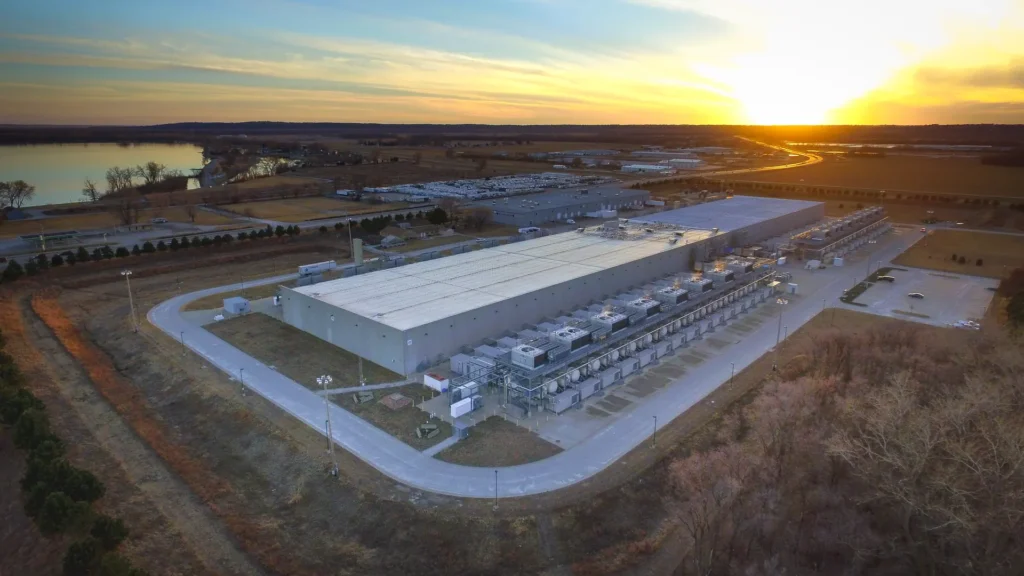
Google Told to Halt Belgian Datacentre Over Revoked Permit
Last Updated on November 27, 2026 11:33 pm by Tayyab
Belgian authorities have ordered Google to stop building a huge datacentre in the south of the country, after inspectors found construction had carried on for months after the project’s planning permit was revoked.
Inspectors visited the site at Aiseau-Presles, near Charleroi, on Thursday and found the building almost finished, with its structural work completed, even though the permit covering the work had been refused. About 300 workers were on site at the time, and they were given a verbal order to stop work that was then confirmed in writing to Google.
The order is the latest twist in a long-running dispute over the site, which sits on a former coalmine on the Ecopole business park, about 15 kilometres west of Charleroi. Google began building there in April 2024, under a permit for three smaller, air-cooled datacentres. In 2025 the company asked to change the plan, merging two of the buildings into one much larger facility and switching to liquid cooling that would draw water from the nearby River Sambre.
Permit revoked over water fears
The local administration approved the amended plan in April 2026, but residents appealed within a month. In August, Francois Desquesnes, the Walloon minister responsible for spatial planning, revoked the modified permit. He pointed to the datacentre’s water needs after an exceptionally hot and dry summer, noting that Google’s existing project at Saint-Ghislain, near Mons, uses about one billion litres of water a year for cooling, returning only a quarter of it and evaporating the rest.
Google appealed against the revocation to Belgium’s Council of State in October, and a ruling is expected on 7 January. The company’s original 2024 permit remains valid, so it may build under those terms, but not under the amended plans.
The push for enforcement came from Greenpeace Belgium. The environmental group used satellite images to show that work had continued after the permit was pulled, and on 23 November it filed an urgent request with the Walloon administration for the site to be halted immediately. Within days, a senior regional official, Raphael Stokis, said the project had been forced to a halt.
Prosecutors to receive a report
The regional government is now taking the matter further. A spokesperson, Nicolas Yernaux, told the AFP news agency on Friday that a report was being submitted to public prosecutors alleging a major offence: the illegal construction of a building covering three hectares. The building is one of three originally planned by Google on the 50-hectare site.
Greenpeace said the case showed the company had pressed ahead regardless of the law. Its spokesperson, Joeri Thijs, said: “That Google continues to build without a permit is disrespectful to the environment, local residents, and the law.” The group has said it will keep monitoring the site.
Google said in a statement that it was committed to maintaining an open and collaborative dialogue with the regional authorities. The company had planned to invest 5 billion euros in cloud and artificial intelligence infrastructure in Belgium over the next two years, and the Farciennes site was a central part of that expansion.
A wider fight over datacentre water
The dispute is part of a much wider argument across Europe about how much water and electricity the new generation of datacentres should be allowed to use. As artificial intelligence drives demand for computing power, tech companies are building ever larger facilities, and local communities are increasingly pushing back over the strain on rivers, drinking water supplies and power grids.
Belgium’s Walloon government published a framework on 12 November that presents datacentres as support for AI and cloud development while identifying electricity, land and water as strategic constraints. Under the framework, large projects must sign a partnership contract with the region before they can go ahead.
For now, the Google site stands still while the courts decide. Regulators have also just approved SpaceX to deploy up to a million satellites carrying datacentres in space, and Google has been expanding free high-definition video for all of its Meet users — a reminder that the race to build computing capacity is accelerating even as the rules around it tighten.