
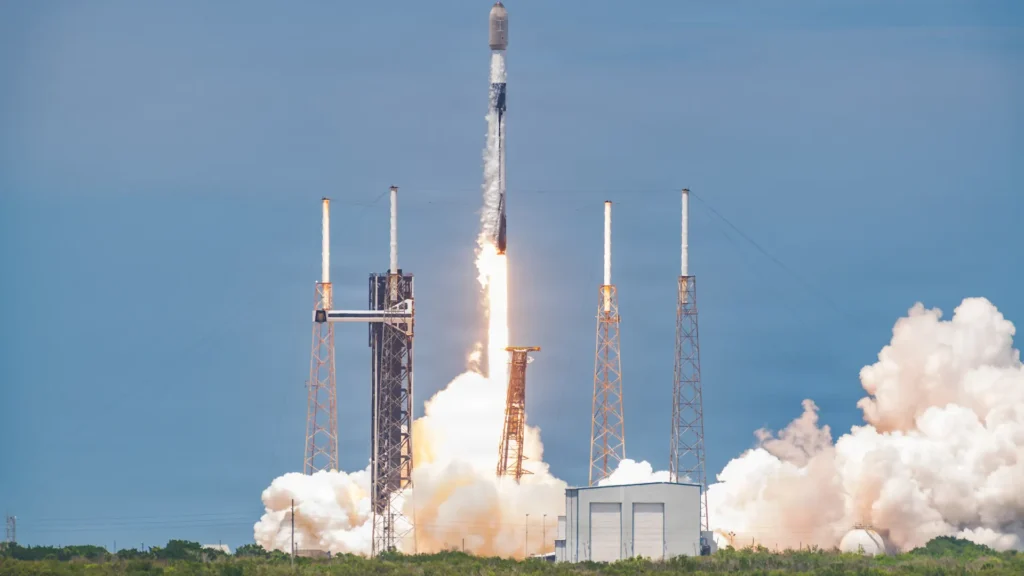
FCC Approves SpaceX Plan to Launch One Million Satellites
Last Updated on November 26, 2026 11:50 am by Tayyab
The US Federal Communications Commission has authorised SpaceX to deploy as many as one million satellites that will work as data centres in orbit, clearing the way for the largest satellite network ever approved and the first of its kind anywhere in the world.
The regulator announced the decision on Wednesday, describing it as the first authorisation in American history for a constellation of data centres in space. SpaceX calls the network Starmind, and it is designed to handle the heavy computing work behind artificial intelligence, processing huge amounts of data above the Earth and sending the results back down.
SpaceX first asked for permission on 30 January, and the FCC opened the proposal to public comment a few days later. Ten months on, the agency has said yes, while attaching conditions and holding back on one part of the plan.
What Starmind is supposed to do
Each Starmind satellite would carry computer chips powered by sunlight, and the satellites would talk to each other through high-speed laser links. Instead of sending raw data down to server farms on the ground, the network would crunch numbers in orbit, where solar power is plentiful and there is no need for land, water cooling or a connection to the electricity grid.
That idea has become more attractive as demand for AI computing keeps climbing. Training and running large AI systems already consumes enormous amounts of electricity, and companies are hunting for new places to put the machines that do the work. SpaceX argues that orbit offers almost unlimited sunshine and room to grow, and the FCC echoed that language in its announcement, saying the decision would support American leadership in space and artificial intelligence.
Google and Blue Origin are working on similar plans, and the FCC said it was still reviewing their proposals and intended to decide on them quickly.
A timetable stretching to 2040
The approval comes with a long runway. SpaceX must put its first working Starmind satellite into operation by November 2033, then deploy 10 percent of the constellation, or 100,000 satellites, by November 2035, and half of it by November 2038. The full million must be in place by 2040.
The scale is hard to overstate. SpaceX already operates just over 11,000 Starlink internet satellites, the biggest fleet in orbit, and there are only about 17,000 satellites of all kinds circling the Earth today. A complete Starmind network would multiply that total many times over, and it is far from certain that the company will ever build all one million of them. The licence sets a ceiling, not a promise.
Engineers will also have to solve problems nobody has faced at this scale, from manufacturing a million spacecraft to keeping them from colliding and managing the traffic of launches needed to carry them up.
The objections, and what the FCC held back
Not everyone welcomed the decision. Amazon and the satellite operator Viasat objected, and the American Astronomical Society warned about the effect on the night sky, arguing that so many bright objects could interfere with telescopes and with the view of the stars. The FCC rejected those objections but attached conditions, including backup communication systems, regular progress updates and a detailed plan for dealing with orbital debris.
The agency also refused, for now, one request from SpaceX. The company had asked to move dead satellites operating above 600 kilometres into so-called graveyard orbits instead of bringing them down to burn up in the atmosphere. The FCC said SpaceX had not provided enough information to judge whether that was safe, and deferred the decision. The company will have to apply again with a fuller case if it wants that waiver.
For now, the approval is a starting gun rather than a finish line. SpaceX has 14 years to turn a million-satellite idea into hardware, and the rest of the space industry will be watching whether the economics and the engineering hold up.
SpaceX’s ambitions in orbit come as NASA’s Voyager 1 has gone silent one light-day from Earth, and as S&P has put chipmaker Nvidia on downgrade watch over governance concerns.