
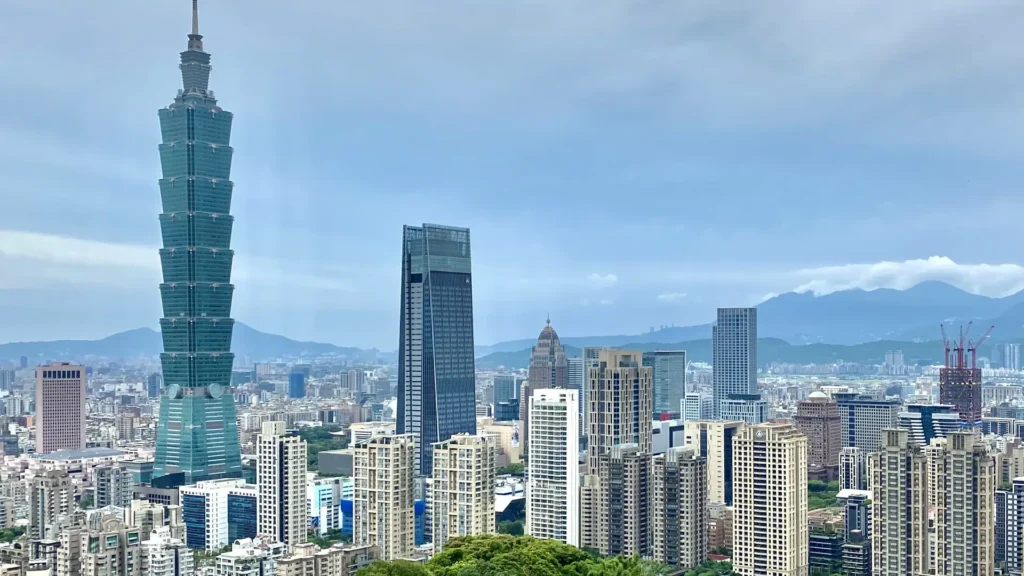
Taiwan Votes in Local Elections and Nuclear Power Referendum
Last Updated on November 28, 2026 7:23 am by Muhammad
Nearly 20 million Taiwanese voters are heading to the polls on Saturday in local elections and a referendum on nuclear power, a day after 30 Chinese military aircraft flew near the island in a reminder of the pressure hanging over the vote.
Polling stations opened at 8 a.m. local time and are scheduled to close at 4 p.m., with results expected later in the evening. The elections, known as the nine-in-one vote, are being held across all 22 cities and counties, choosing mayors, county magistrates, councillors and other local officials — 11,051 posts in total, from big-city mayors down to village chiefs.
The vote is widely regarded as an important test of public support for President Lai Ching-te’s ruling Democratic Progressive Party, the DPP, and the opposition Kuomintang, the KMT, ahead of Taiwan’s presidential and parliamentary elections in 2028. It is the first big electoral test for Lai since he took office, and both parties will read the results as a snapshot of their standing with voters.
What is at stake
Although the campaigns have largely focused on local concerns such as transport, housing and urban development, the elections are taking place against a backdrop of growing military and political pressure from Beijing. China claims Taiwan as part of its territory despite never having ruled the self-governing island, and Taiwanese officials have raised the alarm over thousands of incidents of suspected misinformation or election interference.
The most closely watched race is for Taipei mayor, an office the DPP has not held for nearly three decades. The incumbent, Chiang Wan-an of the KMT, is facing a challenge from the DPP’s Puma Shen, an academic-turned-lawmaker and an expert on Chinese disinformation. In neighbouring New Taipei City, the DPP’s Su Chiao-hui is mounting a strong challenge to the incumbent KMT mayor. Analysts caution, however, that local results should not be read as a direct verdict on Taiwan’s relationship with China, since municipal issues and candidate popularity often decide these races.
The day before the vote, Taiwan’s defence ministry reported the presence of 30 Chinese military aircraft around the island, including 26 that crossed the Taiwan Strait’s median line. It was a familiar show of force on the eve of an election, and a reminder that Beijing will be watching the results for clues about Taiwan’s political direction.
The nuclear question
Voters are also deciding a nationwide referendum on whether the government should promote nuclear power as part of Taiwan’s future energy policy. The ballot asks whether voters support the government using nuclear power to revitalise the economy and abolishing the nuclear-free homeland energy policy. The referendum, Case No. 22, was proposed by the opposition-controlled Legislative Yuan, and the voting age is 18 for the referendum and 20 for the local elections.
The question matters because Taiwan’s last nuclear power plant shut in 2025, leaving the island dependent on imported fossil fuels and renewables at a time when demand for electricity is surging from the artificial intelligence and semiconductor industries. The government has already signalled it is open to restarting nuclear power plants, and the referendum result will shape how far and how fast it can move.
How the day works
The Central Election Commission has mobilised an enormous operation for the day: 18,248 polling stations nationwide, 368 election operation centres and around 310,000 election workers. Voters need to bring their national ID card, a seal and their voting notice, and phones and cameras are banned inside polling stations, with fines of 30,000 to 300,000 New Taiwan dollars for breaking the rule.
Whatever the outcome, the manoeuvring for the 2028 presidential election will begin in earnest once Saturday’s vote is done. The local elections are, in the end, about mayors and councils — but in Taiwan, no election is ever only local. Spain holds a snap election on Sunday, while Serbia has set its presidential election for 27 December — and in Taipei, the counting starts tonight.