
AI Labs Sit on Unpublished Crypto ‘Bombshells’, Experts Warn
Last Updated on November 28, 2026 11:53 am by Ayesha
Artificial intelligence laboratories are sitting on unpublished breakthroughs that could cause chaos around the world, experts have warned, after a claimed proof of the most famous unsolved problem in mathematics stunned the field. The warning is that the pace of AI-assisted discovery has outrun the ability of humans to check it.
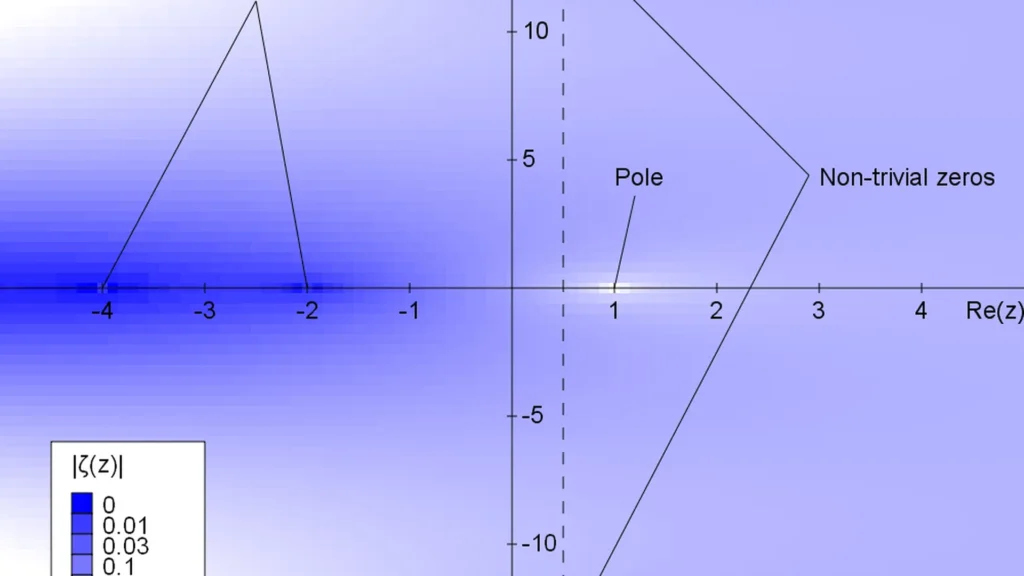
The story behind the warning is a claim made on 20 November by Levent Alpoege, a mathematician working at Anthropic, who posted that he had proved the Riemann Hypothesis while working with the company’s AI system, Claude. The Riemann Hypothesis, first proposed in 1859, is one of the seven Millennium Prize Problems, each worth a million dollars, and it concerns the distribution of the prime numbers, the building blocks of arithmetic. A proof would be one of the greatest achievements in the history of mathematics.
A proof no human has read
What makes Alpoege’s claim so extraordinary is not just the result but the form it takes. The proof is 17 million lines long, written in Lean, a computer language used to check mathematical arguments, and no human being has read it in full. A readable version, if one could be produced, would run to more than 250,000 pages. The proof was checked not by a person but by a machine: Andrew Sutherland of MIT said the Lean kernel had rechecked the argument using only three standard axioms, and the Lean Formalised Results Organisation and the Mathlib project certified it on 21 November.
The Clay Mathematics Institute, which administers the Millennium Prize, has moved the problem on its website but still lists it as unsolved, and that caution is shared by many mathematicians. A machine-checked proof is a powerful thing, but it is not the same as a proof that the mathematical community has understood and accepted. Until human mathematicians can read the argument, or at least understand its structure, the claim remains exactly that: a claim, albeit one that has passed a formal check that no human could perform by hand.
Why it matters, and what it does not do
The Guardian’s report raised the alarm about encryption, and that part of the story needs care. The Riemann Hypothesis concerns the distribution of prime numbers, not the problem of factoring large numbers into primes, and factoring is what the RSA encryption system, which protects much of the internet, depends on. A proof of the Riemann Hypothesis would not, by itself, break RSA or bring down the world’s banking systems. The experts quoted in the report were making a different point: that the speed at which AI systems are now producing mathematical results means that a genuinely dangerous discovery, one that did affect encryption, could arrive with little warning and be held back, unpublished, by the laboratory that made it.
That is not a hypothetical worry. In the past month alone, the AI laboratories have announced a string of mathematical results that would once have been the work of years. OpenAI claimed a refutation of the exponential time hypothesis on 26 October. Anthropic posted a proof that VP does not equal VNP, a result in complexity theory, on 24 November, with a note that it does not settle the famous P versus NP question. OpenAI published a preprint on 24 November claiming a new exponent for matrix multiplication, the basic operation behind much of modern computing.
A flood of machine-made mathematics
None of this means the Riemann proof is wrong, or that AI is about to break the internet. It means that mathematics has entered a new era, and that the rules for how results are verified, published and trusted need to catch up. The proof, if it stands, is a triumph. The warning is that the next proof might not be published at all.
The technology world is already wrestling with the speed of AI development, from US chip curbs that are slowing Chinese AI models to talks between Anthropic, Meta and a Japanese energy giant over data centres. In mathematics, though, the question is simpler and harder: when a machine proves something no human can read, who gets to say it is true?