
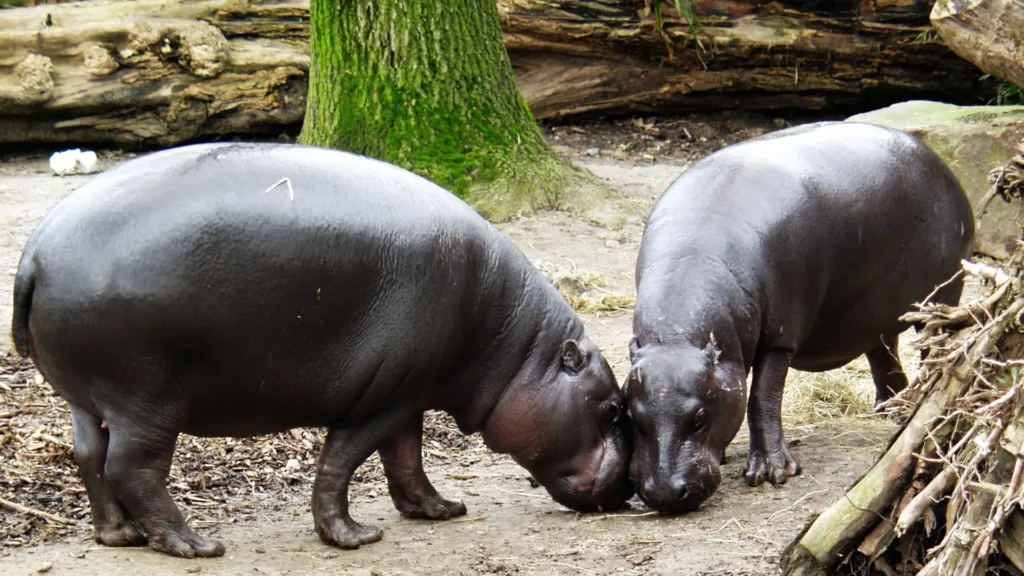
First Hippo Born at Longleat Safari Park in Over 40 Years
Last Updated on November 28, 2026 3:22 pm by Rehan
A baby hippopotamus has been born at Longleat Safari Park in Wiltshire, the first hippo birth at the estate in more than 40 years.
The calf, whose sex is not yet known, was born last week to mother Matylda as part of the European breeding programme for the species. It is also the first hippo birth anywhere in the UK since May 2024, and keepers at the park say the first few weeks of the calf’s life are critical.
Darren Beasley, head of animal operations at Longleat, said staff were over the moon to have hippos back at the safari park. He described the calf as a special Christmas gift, arriving as Longleat celebrates 60 years since it opened as the first drive-through safari park outside Africa.
A new family, years in the making
The birth is the result of careful planning that began years ago. Matylda arrived at Longleat in the summer of 2025 from the Czech Republic, travelling with her sister Manon. They were later joined by Hodor, the father of the newborn calf, and his mother Lola, who came from Whipsnade Zoo near Dunstable in Bedfordshire.
Work on a purpose-built hippo complex started on the estate earlier, with the new house completed in June, and the arrivals were timed to give the animals months to settle in before breeding. The birth took several hours, and keepers say mother and calf will spend the winter bonding indoors, growing stronger before the calf is eventually seen following its mother outside.
Longleat’s last hippos were a pair called Sonia and Spot, who lived at the park’s Half Mile Pond for decades. Sonia arrived in 1976 and died in April 2023, aged almost 50. Spot died in early 2025, just before her 50th birthday. Both had calves in the early 1980s, and no hippo had been born at Longleat since.
Why the birth matters for conservation
Hippos are listed as vulnerable in the wild, with populations under pressure from habitat loss and hunting across sub-Saharan Africa. The European breeding programme coordinates births across zoos and safari parks to keep the captive population genetically healthy, and every calf is a small step towards a safety net for the species.
The programme works by matching animals from different collections, which is why Matylda and Manon travelled from the Czech Republic while Hodor and Lola came from Whipsnade. The aim is to avoid inbreeding and to keep enough genetic diversity in the captive population that it could, in theory, support wild populations in the future.
What happens next
Keepers will watch the calf closely through its first weeks, when the risk is highest. If it keeps feeding well and gaining weight, it will gradually spend more time outside with Matylda as the weather improves, and visitors should get their first proper look at the youngster in the spring.
For Longleat, the calf is also a symbol of renewal. The park opened in 1966 as the first safari park outside Africa, and its 60th anniversary year has brought a string of milestones. Scientists have had their own year of discovery, from asteroid images to new clues about the structure of space itself, and fresh evidence about the hidden structure of the vacuum has kept researchers talking. At Longleat, though, the news is simpler and warmer: a baby hippo, healthy so far, sleeping curled against its mother as winter closes in.