
Houthi Attacks Put Saudi Arabia’s Security Image to Test
Last Updated on November 27, 2026 5:34 pm by Usman
Saudi Arabia is facing a sustained campaign of drone and missile attacks that is testing the kingdom’s image as a safe place to live, work and invest, according to a BBC investigation published on Friday.
Analysis of data from the US-based Armed Conflict Location and Event Data Project, known as Acled, identified 274 Houthi attacks on Saudi Arabia in almost five months, between 1 July and 25 November. In the previous five months, the organisation recorded just one attack on the country. Most of the incoming threats were intercepted, but at least 41 were not, and in some cases debris from interceptions also caused damage. Drones featured in almost two-thirds of the attacks, while ballistic missiles were used in more than half.
The escalation followed the unravelling of an informal ceasefire in Yemen in July. The Houthis, who control much of northern Yemen, have said they were retaliating against deadly Saudi air strikes in Yemen and what they describe as a Saudi blockade of ports and airports in territory under their control. Backed by Iran, the group has developed an increasingly sophisticated arsenal, dramatically extending its ability to strike deep inside Saudi territory.
The deadliest attack in years
The most serious single incident came on 10 October, when a Houthi strike hit King Khalid International Airport in Riyadh, killing 13 people and injuring more than 300. It was the deadliest attack on Saudi soil in years. One witness described watching a mother push her children in a pushchair when the terminal was hit, and finding a man covered in blood. “I went to him in shock, asking him, ‘Are you OK?'” he said. “The threat is real. But I will not let the Houthis make me feel unsafe in my own country.”
The airport attack was far from isolated. The Houthis said they were responsible for an attack on an oil facility south of Riyadh on 3 October, one of a growing number of strikes on the kingdom’s infrastructure. For years, Houthi attacks were largely concentrated near the Yemeni border, with Riyadh targeted far less frequently. But since the collapse of the ceasefire, the Saudi capital, more than 700 kilometres from the Yemeni border, is now coming under regular attack.
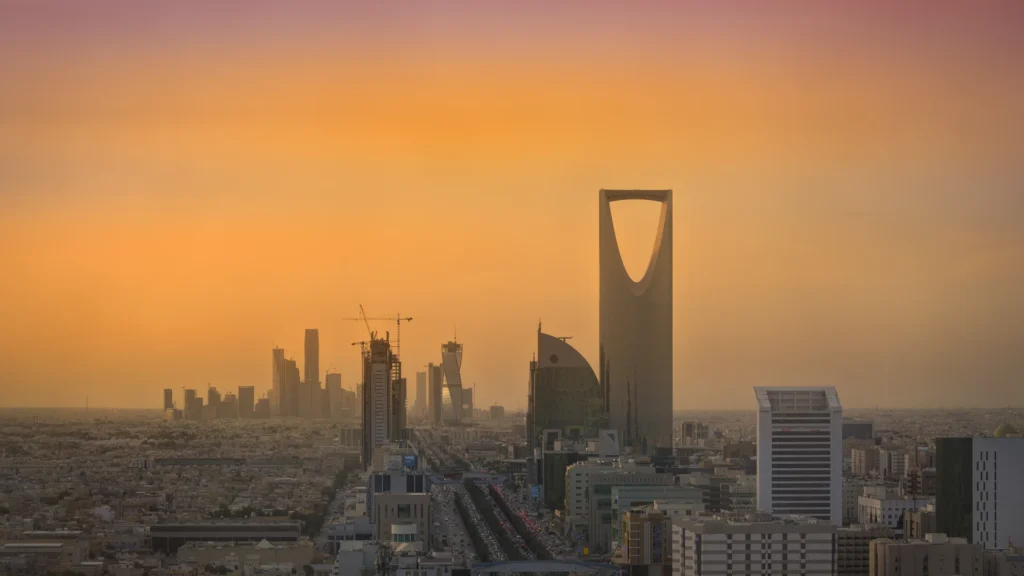
Two prominent skyscrapers were hit in Riyadh’s financial district this month. Saudi Arabia’s tallest skyscraper, the Public Investment Fund Tower, which is the headquarters of the country’s sovereign wealth fund, was struck on 19 November, injuring 11 people. The other was the Aramco building, home to the state oil company. Within days, the building’s exterior had been completely repaired, any visible sign of the attack erased.
Life goes on, but the image is tested
Saudi Arabia has spent billions transforming its cities, attracting international investment and presenting itself to the world as a safe place to live, work and visit, and the attacks have put that promise to the test. Despite the strikes, markets and restaurants in Riyadh remain busy, and residents express trust in the government to protect them. Daily life, on the surface, carries on as usual.
But the numbers tell a different story. The jump from one recorded attack in five months to 274 in the next five represents a fundamental change in the security situation, and the targets chosen by the Houthis are symbolic as well as strategic. Striking the towers of the King Abdullah Financial District, where international companies and regional headquarters are concentrated, is designed to call into question Saudi Arabia’s ability to protect its strategic centres, and to put pressure on its political decision-making.
What comes next
The Saudi government’s response will be closely watched, both at home and abroad, as it seeks to maintain its image of security and stability. The Houthis’ campaign shows no sign of easing, and the kingdom’s air defences, however effective, cannot intercept every threat. For a country that has staked its future on becoming a global hub for business, tourism and investment, the coming months will test whether that promise can hold. The Houthis have also claimed a strike on the Ras Tanura oil terminal, sending oil prices higher, while the Saudi-led coalition says it has intercepted Houthi missiles in the west of the country.