
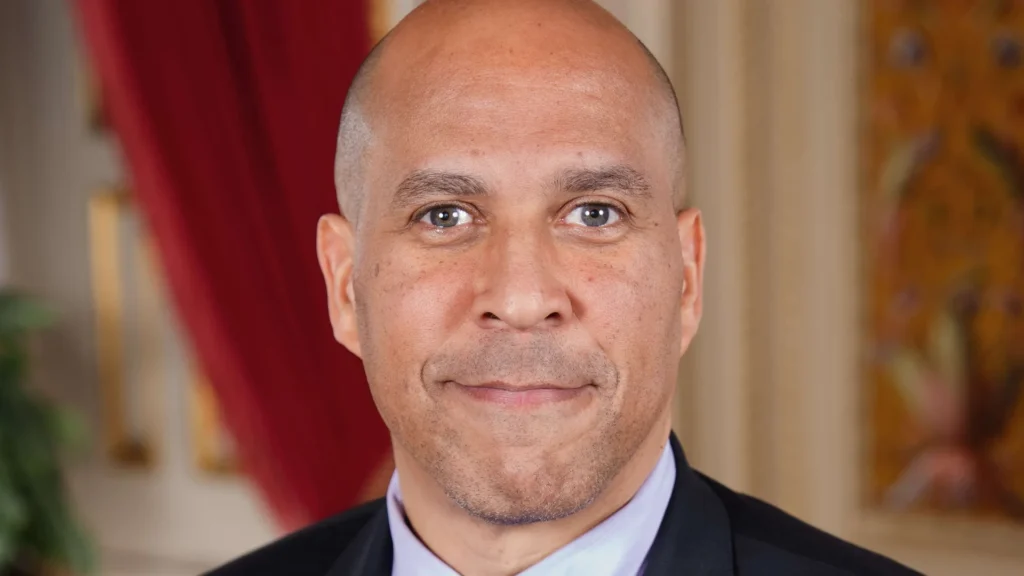
Senator Booker Demands Answers Over Nvidia CEO Comeback
Last Updated on November 27, 2026 6:28 am by Sara
Senator Cory Booker has demanded answers from Nvidia about Donald Trump’s personal intervention in the decision to bring back chief executive Jensen Huang, warning that the chipmaker may have become too powerful for regulators to hold to account. Booker, the top Democrat on the Senate’s antitrust subcommittee, sent the demand in a letter to Nvidia board chair Harvey C. Jones on Wednesday, according to a copy seen by Reuters.
Huang resigned as head of one of the world’s most valuable companies on 12 November, amid reports of extramarital affairs, including one with a woman alleged to have spied for China. The board reversed course just eleven days later, reinstating him on Monday after Trump called for his return, and Nvidia’s market value rose by nearly 1 trillion dollars following the decision. Booker is now asking what the White House told the board, and what the board was promised in return.
The senator’s move adds to growing congressional scrutiny of Huang’s return and of Nvidia’s business links to China. Booker is the ranking member of the Senate Judiciary Subcommittee on Antitrust, Competition Policy and Consumer Rights, and is likely to lead it when the next Congress begins in January, which would put him in charge of any formal inquiry into the company.
What Booker wants to know
The letter asks for details of communications between Nvidia and federal officials leading up to Huang’s resignation and reinstatement, including the assurances Trump provided to the board that Huang posed no national security threat. Booker pressed the company to identify the federal officials involved in the discussions about the reinstatement, and to say whether administration officials discussed export controls or antitrust enforcement with the board.
He also asked Nvidia to describe any analyses the board received on how Huang’s departure or return would affect the company’s market position and its customers, and directed the company to preserve all relevant records dating back to 1 January 2026. Nvidia has been given until 16 December to respond. The company did not immediately respond to a request for comment.
‘Too big to hold accountable’
Booker’s argument is that Nvidia’s dominance is itself the problem. The company supplies most of the chips used to train and run advanced artificial intelligence models, and its CUDA software ecosystem locks customers in by making it costly to switch to rival hardware. Through what critics call circular financing, Nvidia also invests billions in its own customers, including a commitment of up to 100 billion dollars to OpenAI, which then spends that money on Nvidia chips. Booker warned that these arrangements steer purchases away from rival chipmakers and entrench Nvidia’s dominance.
“When a dominant firm’s leadership decisions move markets this sharply, the firm gains leverage over the officials responsible for holding it accountable. The White House’s intervention appears to show that dynamic at work,” Booker wrote. He added: “The antitrust laws exist to prevent this kind of concentration where a company is so dominant that a mere change in its leadership threatens household savings and the broader economy.”
Hearings ahead
The pressure on Nvidia is building on several fronts at once. Huang is expected to appear before the House intelligence committee in a closed-door session on 1 December, and at a public hearing of the Senate banking committee on 3 December. The antitrust subcommittee has jurisdiction to probe what Booker called Nvidia’s “apparent dominance that has led the federal government to treat its leadership as indispensable to the economy”.
For now, the letter is a demand for documents rather than a formal investigation, but it signals where the Democrats’ antitrust scrutiny is heading. If Nvidia’s market power means a single leadership decision can move the stock market by a trillion dollars, Booker’s argument runs, then the company’s size is no longer just a business story. It is a question for the lawmakers who are supposed to keep markets competitive. US stocks have already tumbled on AI fears, with the Nasdaq down sharply, while Anthropic shares have fallen below their IPO price.