
Ukraine’s 2026 Long-Range Strikes Top First Four War Years
Last Updated on November 27, 2026 11:10 am by Sara
Ukraine launched nearly 500 strikes on Russian targets more than 500 kilometres away in 2026, more than in the first four years of the war combined, according to data from the Armed Conflict Location and Event Data Project (ACLED).
The figures, analysed by AFP from ACLED’s records up to 20 November, show how Kyiv’s long-range campaign has grown from a handful of attacks into a sustained effort reaching deep inside Russia and far beyond its borders, hitting targets as far as 1,500 kilometres away.
Strikes reaching Moscow and Siberia
Most of the attacks hit Russian territory, with Ukrainian drones reaching Moscow, St Petersburg and as far away as Siberia. The campaign has focused heavily on Russia’s oil industry, with refineries and terminals among the most frequent targets, as Kyiv tries to undermine Moscow’s economic ability to keep fighting.
The scale of the shift is striking. In the first year of the full-scale invasion, Ukraine managed only a handful of deep strikes. By June 2026 it was launching an average of 200 to 300 drones against targets inside Russia every night, according to open-source tracking of the campaign.
The war at sea
The campaign has also spread across the Black Sea and the Mediterranean. ACLED recorded around 30 attacks on Black Sea targets more than 200 kilometres from Ukrainian shores or the front line in 2026, a five-to-sixfold increase on 2025.
Further afield, Ukraine’s forces attacked a Russian ship under Western sanctions near Sicily in early September, around 500 kilometres from Libya. In December 2025, ACLED recorded a strike on an oil tanker from Russia’s shadow fleet in the Mediterranean, and in November 2025 a tanker sailing to Senegal was damaged by four explosions off Dakar. In June 2026, a suspected Ukrainian operation targeted a shadow fleet ship in the Gulf of Aden.
A campaign with no end in sight
President Volodymyr Zelensky has claimed strikes on two vessels off the coast of Libya, saying one sank a Russian corvette-class warship, and Kyiv has shown no sign of scaling back the campaign. Ukraine established a dedicated Long-Range Strike Command in July 2026, formalising an effort that has become central to its war strategy.
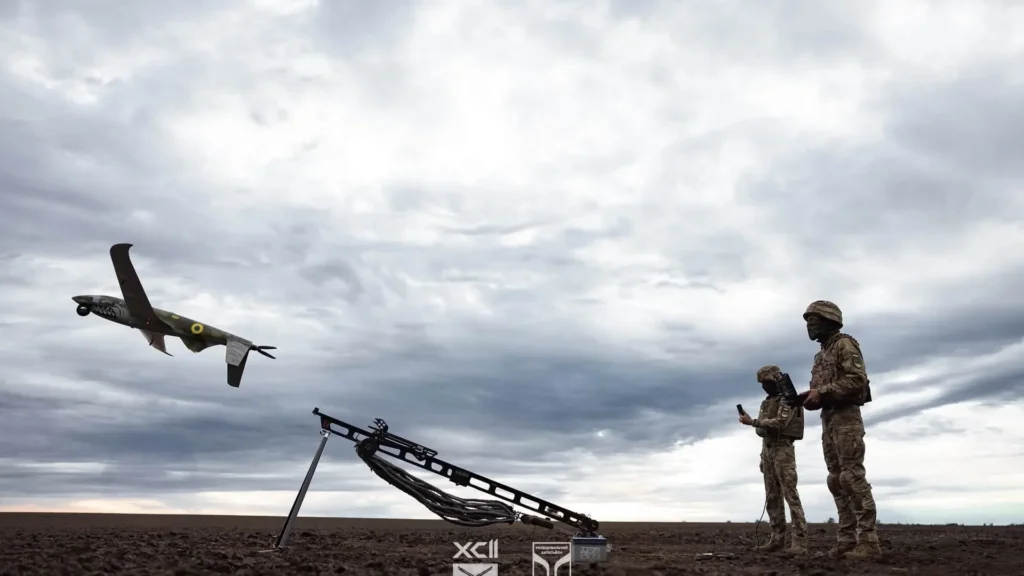
The campaign’s growth has been driven by Ukraine’s expanding drone industry, which has turned cheap, long-range unmanned aircraft into the country’s most important strategic weapon. Early in the war, Kyiv could manage only a few deep strikes a month; now it can send hundreds of drones into Russian airspace in a single night, overwhelming air defences that were built to stop missiles and aircraft rather than swarms of small, low-flying machines. Russia has responded by moving air defences to protect refineries and by trying to shoot down the drones with fighter jets, but the sheer volume of attacks has made the campaign hard to stop. Analysts say the strikes have already cut Russian refining capacity and forced Moscow to import fuel in some regions, although the full economic damage is hard to measure.
For Moscow, the strikes have become a grinding problem: refineries burn, ports close and air defences are stretched across a vast territory. Ukraine has also struck the Savasleyka airfield, hitting five jets, and hit the Transneft facility in Bashkortostan — each raid a reminder that no part of Russia’s war machine is out of reach.