
El Nino Rains Flood Piura in Peru as Ecuador Counts 34 Dead
Last Updated on November 28, 2026 12:05 pm by Janson
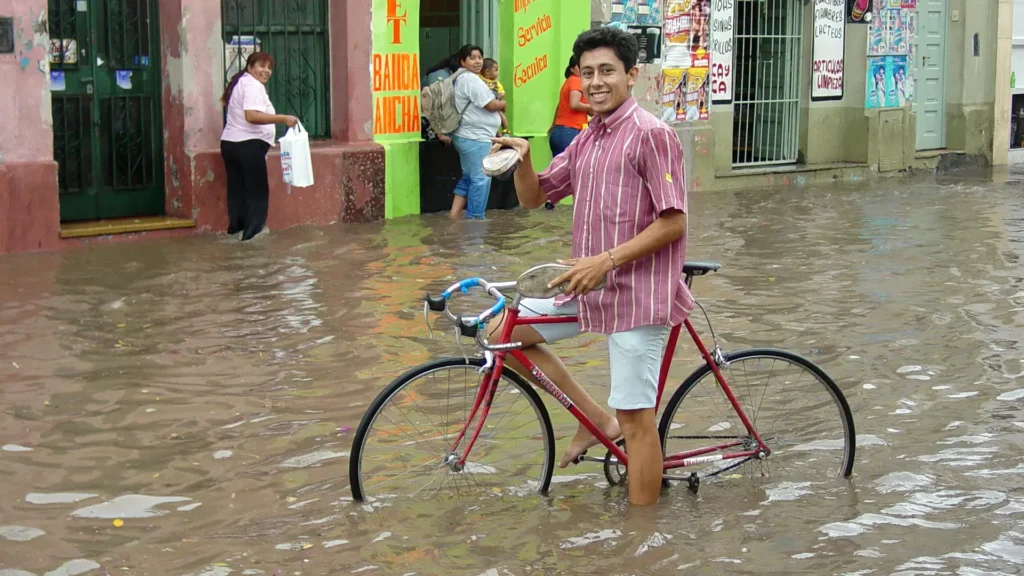
Twelve hours of torrential rain have flooded the city of Piura in northern Peru, trapping families in their homes, swamping a hospital and forcing the army to rescue residents by boat, in the first heavy downpour of an El Nino season that has already killed dozens of people across the border in Ecuador. The rain, which began on Thursday afternoon and did not stop until the early hours of Friday, turned streets into rivers and left about 2,000 families counting the damage.
In Piura itself the water rose waist-high in some streets and chest-deep in the worst-hit neighbourhoods. In Ignacio Merino, one of the districts hit hardest, rescue teams from the army and the national police worked through the night in boats, carrying out older people, patients, women and children who could not wade through the floodwater. More than 350 people were rescued in the first hours, and about 700 families were affected in that one neighbourhood alone. In some houses the water reached a metre and a half, ruining furniture and household appliances.
Hospitals and schools hit
The flooding reached into the city’s public buildings. At the Jose Cayetano Heredia Hospital, floodwater forced staff to move patients from the respiratory infections ward into the auditorium, while the most seriously ill were transferred to intensive care. The city’s Plaza de Armas, its central square, was under water, along with roads, businesses and government offices, and the canopy over a children’s play area at the Real Plaza shopping centre collapsed under the weight of the water.
Piura’s regional education authority ended in-person classes early on Friday and switched basic education to remote learning. The country’s civil defence agency, Indeci, began moving 12,632 aid items weighing more than five tonnes into the region, including 1,480 food baskets, boots, safety footwear and insect repellent. The armed forces deployed personnel and pumping equipment to clear the worst-hit neighbourhoods, though some residents complained that the pumps were slow to arrive and that some machines stopped working for lack of fuel.
Rainfall figures differ
The scale of the downpour is not in dispute, but the numbers differ sharply between reports. One account, citing figures from Peru’s weather service, Senamhi, put the rainfall at 143 millimetres at the Miraflores station and 117.6 millimetres in Piura city itself, with more than 100 millimetres at several other stations. A separate report gave much lower totals for the same storm, around 73 millimetres in Piura city. Either figure represents an extraordinary amount of rain for a city built in one of the driest parts of the Peruvian coast.
What is clear is that the rain is linked to the El Nino Costero phenomenon, the warming of the Pacific waters off Peru’s northern coast that brings heavy rain to a region that normally sees very little. Residents and officials alike described this as only the first heavy rain of the season. Senamhi has kept a red alert for moderate to extreme rain in force through 29 November, warning of thunderstorms and wind gusts of up to 45 kilometres an hour, and of more moderate to heavy rain over the following four days.
Ecuador counts the dead
Across the border in Ecuador, the same weather system has proved deadly. Reports put the toll there at 34 deaths, with some 47,000 people affected by flooding and landslides. The two countries share the same coastline and the same warming waters, and the damage on both sides of the border is a reminder of how quickly El Nino can turn a dry coast into a disaster zone.
For Piura, the floods are also a reminder of unfinished business: residents reported blocked drains and canals clogged with sediment, and analysts criticised insufficient drainage works and a slow initial response. The city has flooded before, and it will flood again unless the drains are cleared before the next storm, already forecast, arrives. The region has been hit by disaster before, and the country is still counting the cost of the latest helicopter crash in the Vraem, while on the other side of the world Australia’s east coast has also been deluged by storms and floods.