
US Forces Repel Six Drones at RAF Lakenheath, Iran Suspected
Last Updated on November 28, 2026 12:43 pm by Usman
American forces repelled about half a dozen drones that swarmed RAF Lakenheath in Suffolk earlier this month, using counter-drone technology to drive them away from one of the most important United States air bases in Europe.
The incident took place on 13 November, according to the Financial Times, which reported the story on Saturday 28 November. The drones were not brought down or recovered, so their origin and what they were carrying remain unknown.
The 13 November incident
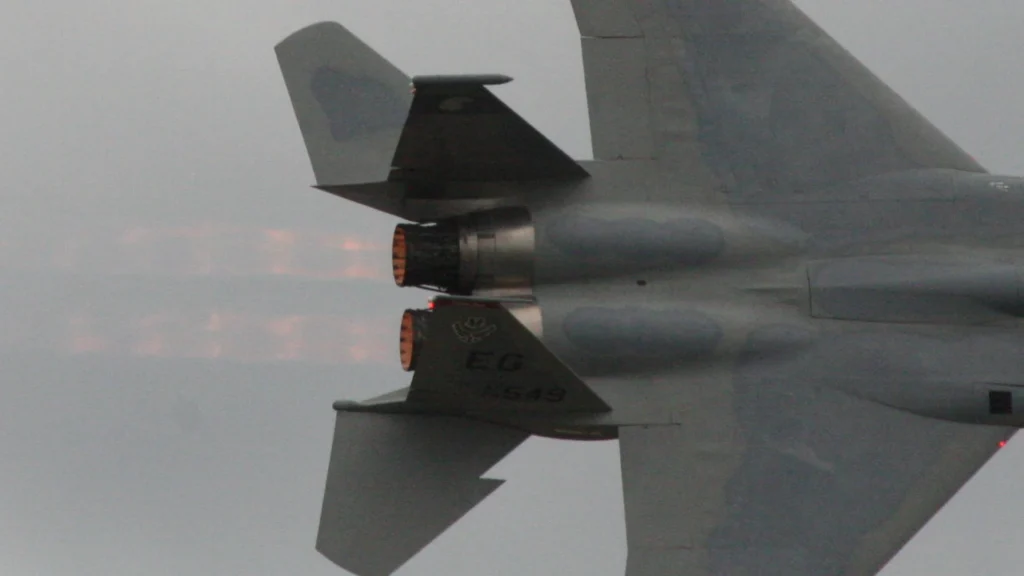
The drones appeared over the base in Suffolk, home to the US Air Force’s 48th Fighter Wing and about 7,000 personnel. It is the largest American fighter base in Europe, and its F-15 jets are a key part of the US military presence on the continent.
American counter-drone systems were used to repel the swarm. The Ministry of Defence confirmed that there was unauthorised drone activity at the base on 13 November, that it was resolved quickly, and that there were no injuries and no damage.
The ministry did not say how many drones were involved or what happened to them after they were driven off. The Financial Times reported that about six were involved, citing sources familiar with the incident.
Iran suspected, not confirmed
Sources told the Financial Times that Iran was suspected of being linked to the drone swarm. Reuters, which also reported the story, said it could not independently verify that claim.
The suspicion, if true, would fit a pattern of suspected Iranian-linked drone activity against Western targets. But without the drones themselves, investigators have no wreckage to examine and no way to prove who sent them or what they were meant to do.
The uncertainty is part of what makes drone incursions so difficult to deal with. A small, cheap drone can force a major military base onto alert, and if it is not recovered, the question of who was behind it can linger for months.
A base on alert
RAF Lakenheath has faced drone incursions before. In late 2024, a series of unexplained drone sightings over American bases in Britain, including Lakenheath, prompted a major security response and a review of base defences.
Those incidents were never fully explained either, and they led to new investment in counter-drone systems at British and American bases. The 13 November swarm is the first reported test of those systems at Lakenheath since then.
The incident comes amid heightened concern about sabotage and covert operations in Europe, with Russian sabotage in Europe up 16 per cent, according to the IISS, and Ukraine striking a rocket fuel plant at Tula in the continuing war.
How bases fight drones
Defending a base against small drones is a hard problem. The aircraft are cheap, hard to spot on radar, and can be flown from miles away. Bases now use a mix of jamming, which cuts the link between a drone and its operator, nets and other physical defences, and in some cases lasers. The challenge is cost: a single interceptor missile can cost far more than the drone it is meant to stop, which is why forces have been investing in cheaper ways to bring them down.
What happens next
The Ministry of Defence has not said whether the investigation into the 13 November incident is still open, or whether any further measures have been taken at the base. The Financial Times report is the first public account of what happened that night.
For the personnel at Lakenheath, the episode is a reminder that the base’s defences are now tested not only by manned aircraft but by small, hard-to-trace drones that can appear without warning.