
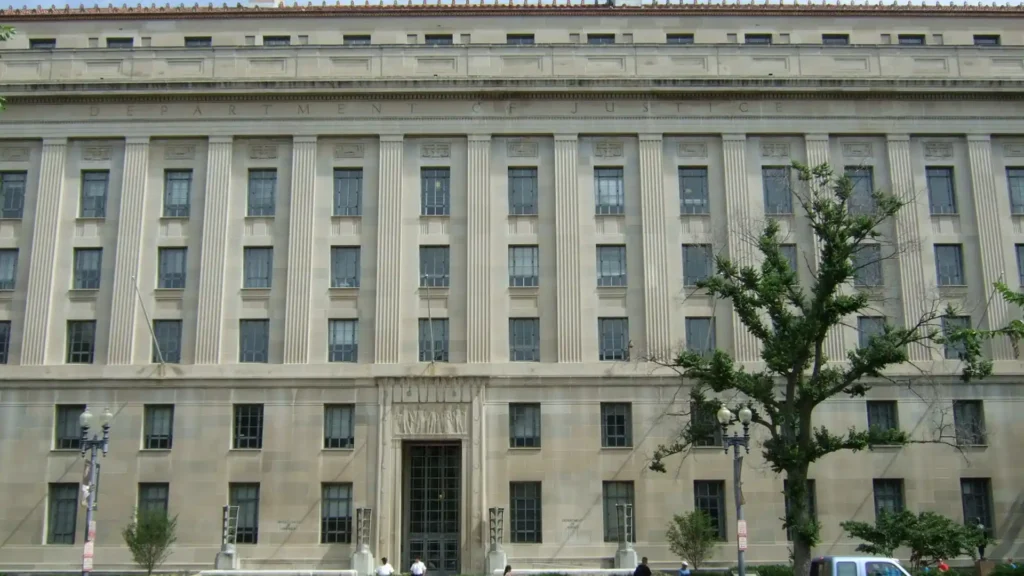
Justice Department Targets 800 in Largest Scam Crackdown
Last Updated on November 26, 2026 11:50 am by Sara
The US Justice Department has announced the largest crackdown on scammers in its history, with action taken against more than 800 defendants in over 400 cases since March.
The department unveiled the results on Tuesday, describing a surge that began after President Donald Trump signed an executive order on 6 March directing agencies to coordinate their fight against online fraud. Prosecutors have since brought new charges, secured extraditions and won guilty verdicts and sentences across 85 federal districts.
Attorney General Todd Blanche said the results were just the beginning. FBI Director Kash Patel said the operation had dismantled scam compounds on four continents and freed more than 2,200 trafficked workers.
The scale of the sweep
The headline figure comes from the FBI’s Operation Blackout, the largest single part of the effort. The bureau says it restrained nearly $17 billion in illicit funds, seized more than 14,000 digital devices, helped dismantle 29 scam compounds across Asia, Africa and the Middle East, and supported the release and repatriation of more than 2,200 people who had been trafficked to work in them.
Other agencies added their own tallies. Homeland Security Investigations reported more than 300 arrests, more than 100 indictments and about 80 convictions or guilty pleas, along with roughly $120 million seized, restrained, frozen or recovered. The Secret Service said it restrained more than $200 million, disrupted 1,780 scam domains and recovered about $119 million in business email compromise cases.
Thirty defendants were extradited to the United States, and American officials worked with law enforcement in more than 10 countries on raids of call centres and compounds that targeted Americans. In Moldova, US-trained prosecutors helped shut five call centres in October, arresting five people accused of running a fake crypto trading platform.
The crypto connection
Cryptocurrency investment fraud run from Southeast Asian scam centres was among the main targets. The State Department said US-funded and trained officers in Southeast Asia helped freeze more than $1 billion in stolen cryptocurrency and take down more than 1.4 million fraudulent websites and accounts. Its forensic tools helped analyse more than 10,000 devices and hard drives in Thailand alone.
The Justice Department’s Scam Center Strike Force said its crypto seizure team had restrained about $1.08 billion in cryptocurrency from the schemes. In a single day, the strike force restrained more than $52 million in crypto in an operation against Xinbi Guarantee, a marketplace prosecutors say provided websites and money-laundering services to scam operators.
One of the biggest cases involved the Cambodia-based Huione Group, accused of laundering billions of dollars in crypto fraud proceeds. In a separate case, federal prosecutors filed a civil forfeiture complaint in October 2025 for about 127,271 bitcoin already in US custody, worth roughly $15 billion, tied to the founder of the Prince Group, Chen Zhi.
The cost to victims
The crackdown comes as scams take a growing toll. A Gallup poll cited by the department found that 10 percent of American adults experienced a scam in the past year, either directly or through someone in their household, and that Americans lost an estimated $68 billion to scams in 2025.
Officials were careful to note that frozen money is not the same as returned money. Funds restrained by the FBI or the strike force have not necessarily gone back to victims, and seized bitcoin only enters the Strategic Bitcoin Reserve after final forfeiture, while eligible victims can petition for proceeds tied to their cases.
Still, the department presented the surge as a turning point: a coordinated, multi-agency effort against an industry of fraud that stretches from call centres in Cambodia to phones in American homes.
The sweep follows other major fraud cases this year, including Huawei’s conviction on bank fraud and trade-secret charges, and a Nigerian bust of a $227 million meth lab run by five Mexicans.