
Eetha Brings Tamasha Queen Vithabai Back to the Big Screen
Last Updated on November 28, 2026 10:34 am by Sara
A Bollywood musical about one of India’s greatest folk performers is about to bring her extraordinary life to a new generation, and it is already sparking debate. Eetha, starring Shraddha Kapoor as Vithabai Narayangaonkar, the Tamasha queen of Maharashtra, arrives in cinemas on 4 December, more than two decades after the singer and dancer’s death.
Vithabai, known as Tamasha Samradnyi, the empress of Tamasha, held audiences across Maharashtra in thrall for decades. Tamasha is the state’s traditional travelling folk theatre, a heady mix of storytelling, singing, dancing and satire, and Vithabai was its greatest star. She was outspoken and quick-witted, a troupe leader who built her fame on the stage rather than the screen, and whose devoted fans sometimes paid for a show even when she could not perform.
A life made for the screen
The film is directed by Laxman Utekar, whose last film, Chhaava, was one of the year’s biggest Hindi hits. It is based on Yogiraj Bagul’s Marathi book about Vithabai’s life, though Utekar is careful to say it is not a biopic. The film is inspired by the character in the book, he has said, and draws on only two incidents from her life to build a fictional narrative within the wider world of Tamasha, set between 1943 and 1980.
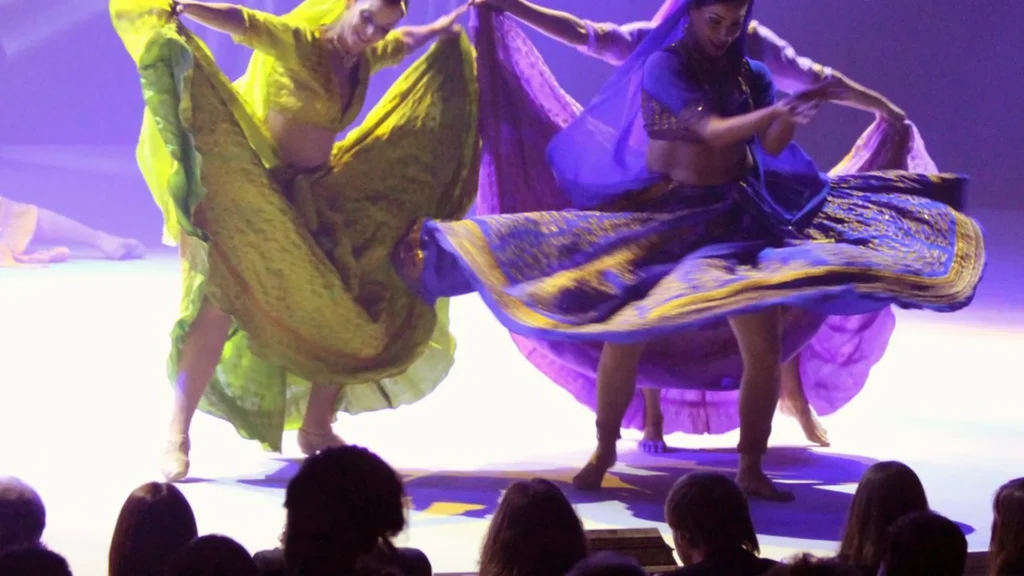
Kapoor plays Vithabai at the height of her powers, learning the Lavani and Gavlan dance forms that are central to Tamasha. The actress, whose mother is Maharashtrian, spent three months training in the dances, and the film’s trailer, released on 30 October, shows her in the kashta-style saree Vithabai favoured, performing fast-cut dance sequences to a pulsating score by the musical duo Ajay-Atul.
The name that started an argument
Eetha has also prompted criticism over identity. Utekar’s decision to rename the protagonist Vithabai Bhau Gavkar, instead of Vithabai Bhau Mang Narayangaonkar, has drawn objections from those who say the change erases the caste identity that shaped her life and her struggles.
Vithabai was born into a family of artists in Pandharpur, and the family troupe, run by her father and uncle, was her world from childhood. She grew up around the songs of Tamasha, Lavani and Gavlan, and took the family legacy forward when her father went through a rough phase. She received film offers, fame and national recognition, but she never abandoned her art or her troupe, continuing to perform even when she was nine months pregnant.
Her life was marked by both acclaim and financial hardship. She died in January 2002, and in 2006 the Maharashtra government established the Vithabai Narayangaonkar Lifetime Achievement Award in her memory, honouring outstanding contributions to Tamasha. For her admirers, the name Mang, which marks her community, is part of who she was, and changing it for the screen feels like a loss.
A folk art finds a new audience
Whatever the argument over the name, Eetha could introduce Vithabai to a generation that never saw her perform, and bring Tamasha itself to a mainstream audience that has largely forgotten it. The form, once the most popular entertainment in rural Maharashtra, has faded as cinema and television have taken over, and its surviving performers struggle for work and recognition.
The film’s trailer has already drawn praise for its energy, with Kapoor capitalising on her Marathi cultural background and delivering a commanding performance to the folk beats. The musical numbers, built around Lavani’s sinuous rhythms, are the film’s centrepiece, and the production, shot on location in villages around Nashik, Solapur, Satara and Kolhapur, aims to recreate the world of the travelling troupes.
The film arrives in a busy season for screen stars doing good off camera as well, with Florence Pugh serving Thanksgiving meals to 2,000 people on Skid Row, while reality television continues to make headlines, as Coleen Rooney’s jungle rant on I’m a Celebrity showed this week. Eetha, though, is a different kind of story: not a celebrity moment, but a tribute to a woman who kept an art form alive, one performance at a time.