
US Army Detonates 9,500 lb of Lead Azide in Iowa Blast Today
Last Updated on November 26, 2026 11:49 am by Usman
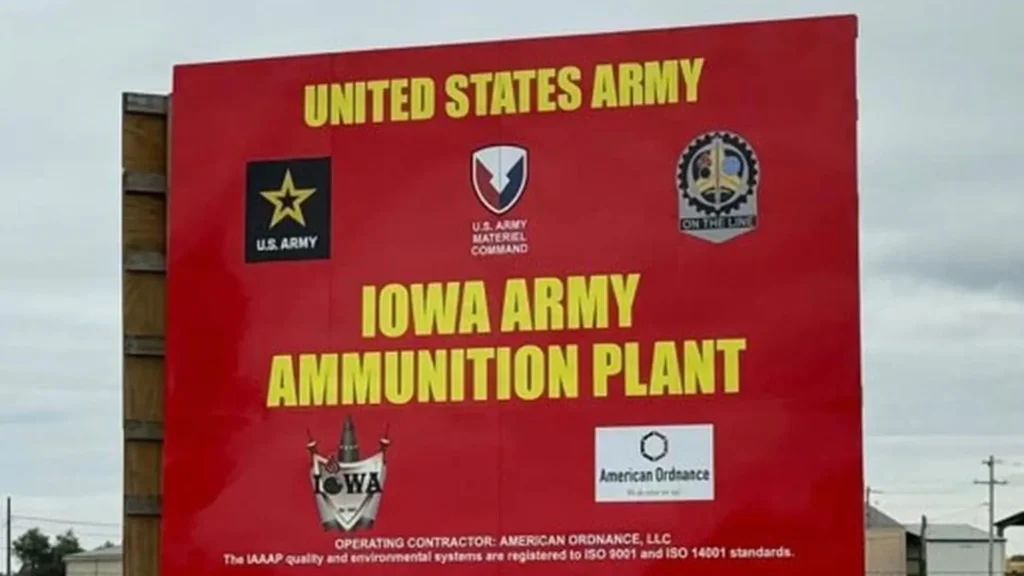
The United States Army has carried out a controlled detonation of about 9,500 pounds (4,500 kilograms) of deteriorating lead azide at the Iowa Army Ammunition Plant in Middletown, Iowa, removing a stockpile that officials warned could have exploded on its own at any time.
The blast took place on Wednesday morning at about 9am local time, when the Army detonated 68 barrels of the explosive in two successive blasts. The Army described the operation as a “HUGE success” and said every barrel had been “definitively removed”, bringing to an end a disposal plan that had drawn national attention and a last-minute court fight.
Why the stockpile had to be destroyed
Lead azide is a highly sensitive explosive used to set off other explosives, and the stockpile at the Iowa plant had been stored since 2009. Over time the material had deteriorated, and Army officials said the risk was that it could detonate without warning in an uncontrolled explosion, putting workers and nearby communities in danger.
That danger was the reason the Army chose a controlled detonation rather than leaving the barrels in place. Officials said destroying the material in a planned blast, under controlled conditions, was safer than waiting for the ageing explosive to become unstable.
The plant itself, in southeastern Iowa near the town of Middletown, is one of the Army’s main ammunition production sites, loading, assembling and packing munitions for the armed forces. The lead azide had been held there for more than a decade and a half while officials weighed how to dispose of it safely.
Shelter orders and the evacuation zone
Residents living within 20 miles of the plant were told to shelter in place until an all-clear was given, and a five-mile evacuation cone was put in place around the site. A disaster emergency was declared in three counties before the detonation, and the plume from the blast was projected to drift southwest into northern Missouri.
The precautions reflected how seriously officials took the operation. Lead is toxic, and the blast involved a large quantity of a lead-based explosive, so monitoring equipment was placed around the area to watch for any lead in the air once the detonation was complete.
A court battle before the blast
The detonation went ahead only after a court lifted a hold on the plan on Monday night, following a lawsuit brought by environmental groups. The groups had challenged the operation over concerns about lead and the effect of the blast on the surrounding area, and the legal fight continued until the day before the scheduled detonation.
No lead detected so far
Sensors operated by the Environmental Protection Agency detected no lead in the air after the blast, according to early results. The Army said the detonation had gone as planned and that all 68 barrels of lead azide had been destroyed, removing the danger the stockpile had posed for years.
The operation was watched closely well beyond Iowa. The size of the blast, the warnings given to residents and the court challenge beforehand had all drawn attention, and officials said the monitoring results would be shared as they came in.
What happens next
With the stockpile destroyed, attention now turns to the all-clear for residents and the results of continued air monitoring. The shelter-in-place order was to remain in effect until officials confirmed it was safe, and the operation closes a chapter that began when the explosive was first stored at the plant in 2009. More coverage of events in the United States can be found in our World section, with wider political coverage in Politics.