
IRGC Says Tanker Hit Mine, Fired Warning Shot at US F-16
Last Updated on November 28, 2026 6:51 am by Alexa
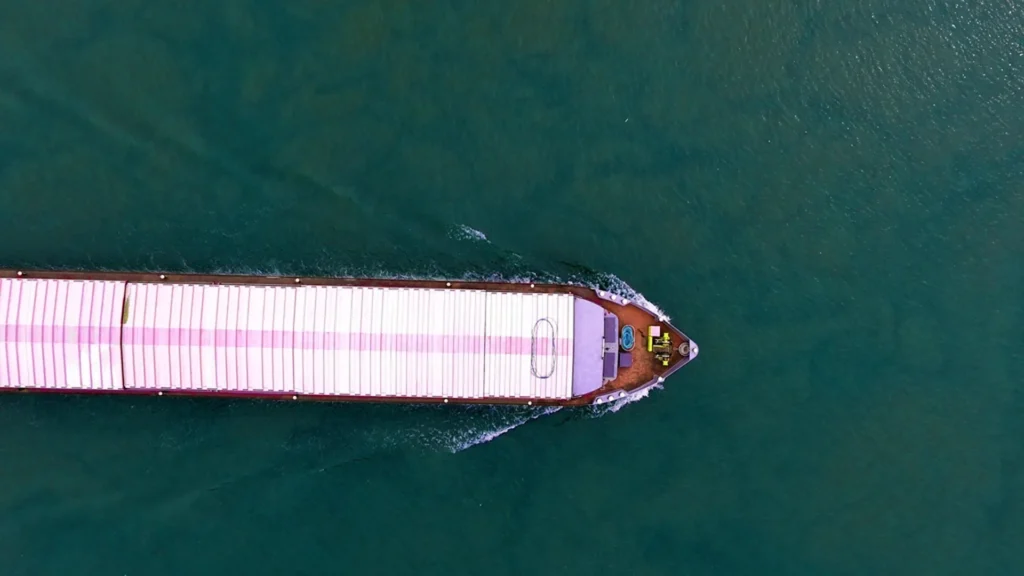
Iran’s Revolutionary Guards say an oil tanker exploded after hitting a naval mine in the Strait of Hormuz on Friday, and that Iranian air defences fired a warning shot from a surface-to-air missile at an American F-16 fighter jet nearby — the latest escalation in a week of near-daily claims around the world’s most important oil waterway.
The IRGC Navy said in a statement carried by its official outlet, Sepah News, that the tanker was trying to cross the strait covertly, north of Oman’s Al Ghanam Island, along with a second tanker, on what Tehran called an unauthorised route. One vessel struck a mine, exploded and caught fire; the other was forced to turn back, the Guards said. No vessel was named, and the statement gave no flag, cargo details, casualty figures or photographs.
Nothing about the claim has been independently confirmed. No notice has been issued by the United Kingdom Maritime Trade Operations agency, no shipowner has come forward, and the US military has not responded to the claim. That pattern has held all week: every IRGC mine announcement has arrived without a named ship or outside confirmation.
A warning shot at an American jet
The mine claim did not arrive alone. In a separate statement on Friday, the IRGC’s Aerospace Force said its air defences had fired a surface-to-air missile as warning fire at a US Air Force F-16C flying south-east of Hengam Island, at about 4 p.m. UTC, forcing the jet to break off after evasive manoeuvres. The Guards also said they had carried out ballistic missile drills, with launches towards the strait, on the same day.
Again, there is no independent confirmation of the engagement, and no US response has been reported. But the combination — a mine strike, a missile fired near an American warplane and missile drills aimed at the strait, all announced within hours — is a deliberate show of force, and a reminder that the confrontation around Hormuz now involves American aircraft as well as shipping.
The stakes are hard to overstate. About a fifth of the world’s traded oil passes through the strait, and shipping through it has already fallen to roughly 65% below pre-conflict levels, according to weekly transit data from UKMTO reported by Gulf News. Every new claim, confirmed or not, pushes freight rates and insurance costs higher and forces more shipowners to think twice about sending their vessels through.
A week of explosions
Friday’s claim is the latest in a sequence that has run almost daily. On Thursday the Guards said two tankers — one of them a supertanker carrying more than two million barrels of crude — hit mines north of Oman’s Khasab port. On Wednesday they said an LNG carrier had exploded in the strait. On Tuesday they claimed three tankers hit mines while under American escort, and on Monday they said two supertankers had been mined. In each case the vessels were described as violating or non-compliant ships on unauthorised routes, with their navigation systems switched off.
The United States has pushed back. US Central Command said on 24 November that the main Hormuz shipping routes are clear of mines, and on Thursday the US said it had disabled a tanker, the Pacific Archer, in the Gulf of Oman as part of its blockade enforcement. The gap between the two accounts — Tehran announcing a mine strike a day, Washington insisting the lanes are clear — is the central uncertainty for everyone moving oil through the Gulf.
The market is already pricing in the risk
The oil market is already pricing in the risk. Brent crude settled at $95.44 a barrel on Friday, up about 3% on the week, its first weekly gain in November, and analysts say $100 is possible if the escalation continues. For now, the facts on the water remain what Tehran claims and Washington denies — and the ships, crews and markets are caught in between. Two tankers hit mines in the Strait of Hormuz, while the US disabled the Pacific Archer in the Gulf of Oman — and on Friday, the Guards said it happened again, this time with an American jet in the sky above.