
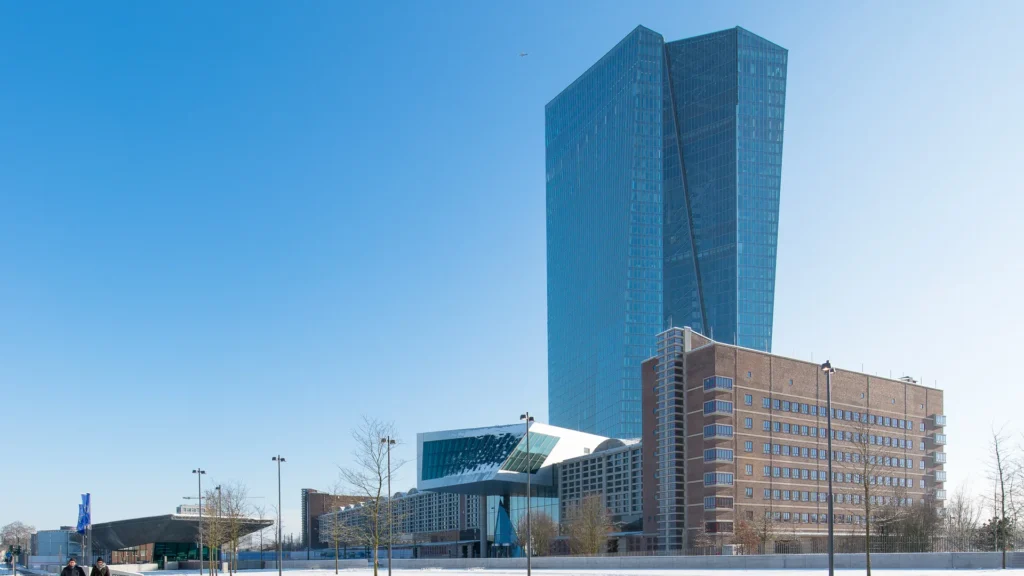
ECB May Raise Rates Again in December as Inflation Tops 3%
Last Updated on November 28, 2026 7:47 am by Hafiz
The European Central Bank may have to raise interest rates again as soon as next month, one of its senior policymakers has warned, because inflation in the euro zone is likely to stay above 3% well into next year.
Joachim Nagel, the president of Germany’s Bundesbank and a member of the ECB’s governing council, told an event in Frankfurt on Friday that policymakers were working on the assumption that inflation “could remain durably above 3%” in 2027. “This means that, on the monetary policy side, we might have to do even more. We’ll be meeting again in December,” he said.
Why inflation is proving stubborn
Inflation in the euro zone reached 3.8% in September, its highest level in three years, driven in large part by an energy shock that has pushed up prices across the bloc. The bank’s own surveys show professional forecasters have also lifted their inflation expectations, and the ECB’s wage tracker points to negotiated pay growth of between 2.5% and 2.8% for the rest of the year. With prices rising far faster than the bank’s 2% target, the case for standing still is getting weaker by the month.
The ECB left its three key interest rates unchanged at its October meeting, keeping the deposit rate at 2.5%, but President Christine Lagarde confirmed that policymakers had discussed raising them. That discussion now looks like a preview: several banks expect a 25-basis-point rise in December, which would take the deposit rate to 2.75%.
What December could bring
Nagel’s warning is the clearest signal yet from one of the council’s more hawkish members that the December meeting is live. He did not commit to a move, and the council will have fresh forecasts in front of it when it sits down. But his language — “we might have to do even more” — leaves little doubt about the direction of travel. Markets have already begun pricing in a December increase, and a move would make the ECB one of the few major central banks still tightening while others hold.
Nagel is not alone in his warning. Bank of Italy Governor Fabio Panetta has also said that with inflation set to remain above target for an extended period, further increases in policy rates could prove necessary, according to Reuters. The message from Frankfurt’s hawks is consistent: the job is not done.
The wider picture
Central banks elsewhere are moving the same way. The Bank of Canada raised its benchmark rate in October for the first time in three years, and investors now put a roughly 77% chance on another rise in December. In the United States, data showing the economy grew faster than first thought in the third quarter, while inflation rose further in October, has reinforced expectations that the Federal Reserve will raise rates next month and again in early 2027.
What it means for households
For households and businesses in the euro zone, another rise would mean costlier mortgages and loans, but better returns for savers. Savers, by contrast, would welcome higher rates after years of meagre returns on deposits — though the benefit arrives slowly, and only if banks pass the higher rate on. The tension at the heart of the ECB’s decision is familiar: raise too slowly and inflation becomes entrenched; raise too fast and growth suffers. Nagel’s message is that, for now, the risk of doing too little outweighs the risk of doing too much.
In Spain, inflation fell to 4.1% in November, while in France the Senate rejected new tax rules for crypto wallets — signs that Europe’s economic debate is moving on several fronts at once. The ECB’s December meeting will show which way the continent’s most powerful central bank jumps.