
Second Judge Blocks Trump’s Birthright Citizenship Order
Last Updated on November 26, 2026 11:51 am by Tayyab
A second federal judge has blocked President Donald Trump’s latest attempt to restrict birthright citizenship, dealing another blow to a flagship policy of his hardline immigration crackdown.
US District Judge Christopher Cooper in Washington, DC, issued a preliminary injunction on Wednesday in a class action brought on behalf of children who would be denied citizenship under the president’s August executive order. The order bars the State Department, the Department of Homeland Security and the Social Security Administration from enforcing the restrictions against any child covered by the case.
In a 67-page opinion, Judge Cooper wrote that the Citizenship Clause of the 14th Amendment “promises citizenship to practically all children born in the United States.” The ruling means the administration must now overturn two separate court orders before it can ever enforce the policy.
A second defeat in two months
Judge Cooper’s ruling follows a similar decision in September, when US District Judge Deborah Boardman in Maryland also blocked the August order through a preliminary injunction after a challenge by immigration rights groups. Together, the two rulings have left the administration with no working route to put the policy into practice.
The August executive order was itself a second attempt. The president’s original Day 1 order restricting birthright citizenship was struck down by the Supreme Court in June, in a 6-3 decision. The administration then tried again with a narrower order, signed in August, that limited eligibility in a different way — and that version has now been blocked twice.
The case turns on one of the oldest questions in American constitutional law: who counts as a citizen. The 14th Amendment, ratified in 1868, grants citizenship to “all persons born or naturalized in the United States, and subject to the jurisdiction thereof.” For more than a century, that has been read as covering nearly every child born on American soil.
What the administration argues
The administration has argued that the clause was never meant to cover the children of people in the country unlawfully, or of those here only temporarily. Supporters of the order say the amendment’s authors intended a narrower reading, and that the courts have misapplied it for decades.
Judge Cooper rejected that argument, at least for now. His injunction is preliminary, meaning the case will continue and the government can appeal. But the strength of the language — and the fact that two judges in different courts have now reached the same conclusion — makes the administration’s path considerably harder.
The ruling will stymie the president’s efforts to implement a policy he has championed since his first day back in office. Birthright citizenship has been one of the most politically charged parts of the immigration crackdown, and the administration has framed it as essential to discouraging unlawful migration.
What happens next
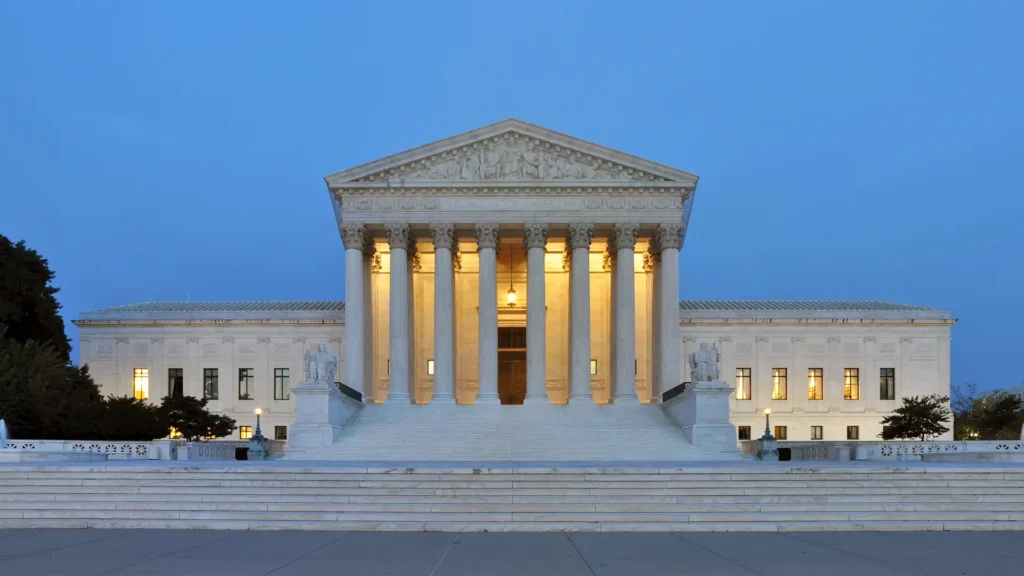
The government is expected to appeal, and the case could eventually return to the Supreme Court — the same court that struck down the first version of the order in June. Until then, the injunction stands, and children born in the United States keep the citizenship the 14th Amendment promises them.
The fight is part of a wider legal battle over immigration, from the deportation case that ended with a man starting a new life in Spain to a pastor’s campaign to overturn women’s right to vote. For now, the courts have spoken twice — and both times, the answer has been no.