
UK Seasons Are Shifting: Fewer Frosts, More Hot Days Ahead
Last Updated on November 27, 2026 12:44 am by Bilal
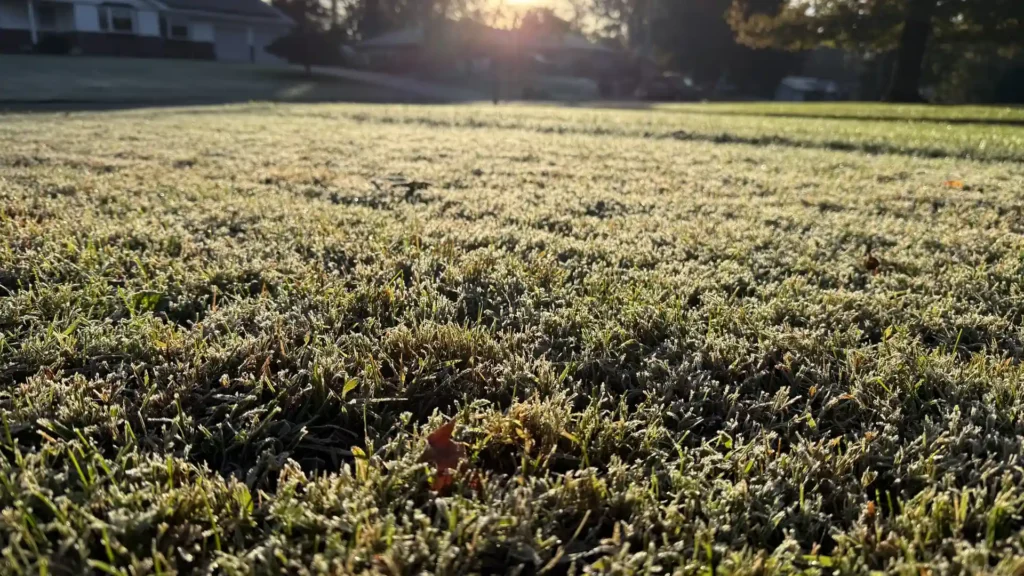
The UK’s seasons are changing, with fewer winter frosts and more hot summer days, according to new analysis from the Met Office. Across the UK, the number of winter days with an air frost — when the air temperature falls to 0C or below — was around a quarter lower in the decade to 2025 than during the period from 1961 to 1990.
The Met Office says climate change has led to these seasonal shifts, and that the changes are expected to continue as temperatures rise. “Our summer is getting wider and our winter is getting smaller,” says Dr James Pope, a climate scientist at the Met Office.
Winters are shrinking
Some of the biggest reductions in winter air frosts have been in England, Wales and Northern Ireland, where the average number of days has fallen by around 11 compared with 1961 to 1990. Southern England has seen other significant changes. In Cornwall, the average number of winter air frost days has almost halved, falling from around 18 to just 10. On the Isle of Wight, the figure has also fallen by almost half, from around 21 to 11 days.
Scotland remains the frostiest UK nation, but it has also seen a reduction, from around 45 to 38 winter air frost days. If global warming reaches 2C above pre-industrial levels, the UK could experience an average of about 24 winter air frost days, compared with 38 during the period from 1961 to 1990. The Met Office puts current warming at about 1.4C above pre-industrial levels, so the shift already under way has further to run.
Summers are widening
Summer days reaching 25C have become more common across the UK. Some of the biggest increases have been in southern England, where the average number of summer days reaching 25C has more than doubled, from just over eight to more than 16. In Essex and Suffolk, they have risen by almost 13 days in both counties. The Met Office defines a hot day as one where the temperature reaches 30C or above. Across the UK, the average number of these days has increased fourfold, from 0.3 to 1.2 per summer.
The increase is particularly striking in Greater London, where days reaching 30C have risen from an average of 1.3 to 6.1 per summer. Summer 2026 was the hottest on record, according to provisional Met Office data. There were five widespread heatwaves and 40 days of temperatures above 30C, smashing the previous record of 34 days. If warming reaches 2C, the average number of days reaching 25C could rise to around 15 per summer, compared with just over four in the earlier period.
“Humans, animals and crops are encountering extremes of temperature that we’ve not seen before,” says Thomas Crocker from the Met Office. The research also shows summer extending into autumn, and the possibility of less autumn rainfall in the future — a combination that would leave soils drier going into winter and change what farmers can grow, and when.
What it means for the years ahead
The Met Office is clear that the shift is not a one-off. “There’s still going to be some cooler summers, there’s still going to be some drier winters — but that baseline has shifted,” Crocker says. The country will still see cold snaps and wet summers, but they will sit on top of a warmer average.
The practical consequences reach into everyday life: hotter summers mean more strain on the health service during heatwaves, more demand for cooling in homes built for a cooler climate, and more pressure on water supplies in the driest months.
Dr Pope says there will always be four distinct seasons in the UK — but the boundaries between them are moving. The world has just spent six straight days more than 2C above pre-industrial temperatures, a reminder that the UK’s shifting seasons are part of a global pattern. Hubble has also released new images of the Milky Way’s central bulge as astronomers prepare for the Roman telescope’s survey.