
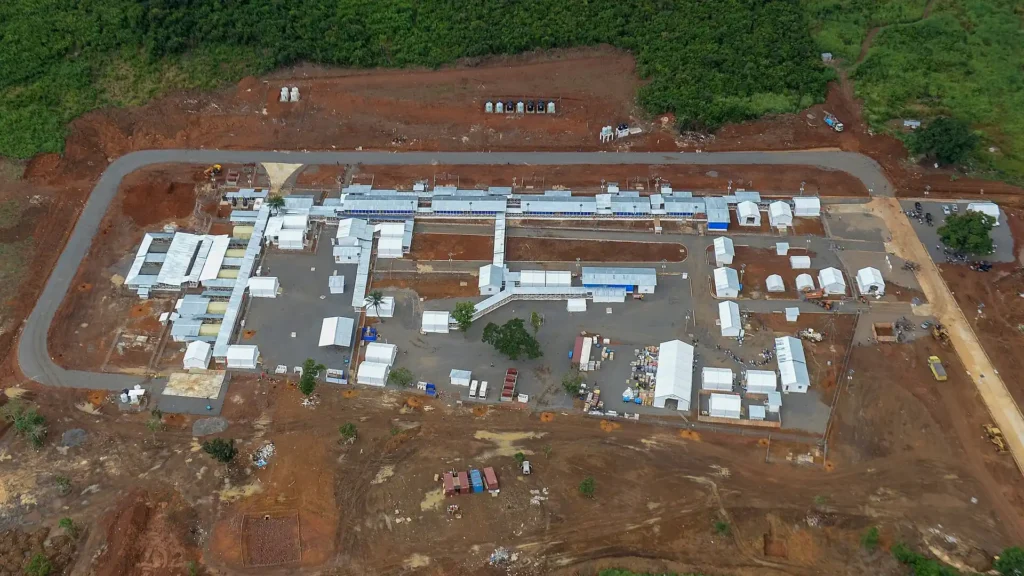
Congo Ebola Outbreak Tops 12,000 Cases as Fighting Spreads
Last Updated on November 26, 2026 8:11 pm by Bilal
The Ebola outbreak in eastern Congo has passed 12,000 confirmed cases, government data showed on Thursday, with nearly half of the 12,021 people infected having died. It is the fastest-growing Ebola outbreak ever recorded.
The outbreak, caused by the rare Bundibugyo virus, was declared in May. There is no approved vaccine or treatment for this strain of the virus, and the effort to contain it is now being wrecked by fighting between the army and rebels in the hills north of Bunia, the city at the centre of the response.
Fighting is wrecking the response
Clashes between government forces and the Convention pour la révolution populaire, or CRP, resumed on Thursday morning in Iga-Barrière, a mining town about 25 kilometres north of Bunia in Ituri province, sending new waves of displaced people toward the city. Bunia is the capital of the province and a major hub for the Ebola response.
The fighting earlier in the week had already prevented response teams from reaching some communities, disrupted the monitoring of people exposed to the virus, and left some treatment centres short of staff, Dr Catherine Smallwood, the World Health Organization’s Ebola incident manager, said on Wednesday.
About a dozen people, including two WHO personnel and Congolese health officials, were evacuated to Bunia on Tuesday after spending three full days trapped in a hospital in Akwe, north-east of the provincial capital, amid intense crossfire. The WHO temporarily moved its team from Mongbwalu, the mining town north-west of Bunia where the outbreak was first detected in May, after fighting cut off road access.
In neighbouring North Kivu province, recent attacks by another armed group displaced more than 20,000 people, causing health teams to lose track of people who had been in contact with Ebola patients, Smallwood said. Blocked roads also make it harder to deliver medical supplies, move patients between facilities and send teams to bury victims safely.
A rebel group led by a convicted warlord
The CRP is one of more than 100 armed groups operating in eastern Congo, where conflict has created one of the world’s most severe humanitarian crises. The group was founded last year by former warlord Thomas Lubanga, who was convicted by the International Criminal Court in 2012 of recruiting children under 15 and using them in fighting.
The CRP said on Tuesday that it was suspending its advance toward Bunia, while Congolese authorities said government forces had pushed the rebels back. Residents said the security situation in surrounding communities remained volatile on Wednesday, and Thursday’s renewed fighting in Iga-Barrière underlined how fragile any pause is.
The numbers show how fast the outbreak is moving. As recently as Wednesday, the official count stood at more than 11,700 infections and more than 5,700 deaths since May. Thursday’s data pushed the total past 12,000, with the death toll still running at nearly half of all confirmed cases.
Why containment is so hard
Ebola spreads through direct contact with the blood or other bodily fluids of people who are sick or have died from the disease. Stopping it requires quickly identifying and treating patients in isolation, monitoring everyone who may have been exposed, and safely burying the dead.
Every one of those steps depends on access, and access is exactly what the fighting removes. When teams cannot reach a village, cases go uncounted, contacts go unmonitored, and burials happen without the precautions that stop the virus passing to the next family. Mistrust and misinformation among residents have already fuelled violence against responders in some areas.
Health officials say the outbreak can still be contained, but only if the response can operate safely. Until the guns fall silent around Bunia, the fastest-growing Ebola outbreak in history is likely to keep growing.
Health news is moving quickly this week. The first generic version of the twice-yearly HIV prevention injection lenacapavir has reached Zambia at about $40 a year, as our report on generic lenacapavir in Zambia explains, while a major new study has redefined obesity and linked it to a sharply higher dementia risk, covered in our report on the new obesity definition. In Congo, though, the immediate question is whether health workers can get back to the communities that need them.