
Spain Votes Sunday in Snap Election That Could Shift Right
Last Updated on November 27, 2026 1:31 am by Bilal
Spain goes to the polls on Sunday in a snap general election that could end eight years of Socialist-led government and hand power to a conservative coalition backed by the far right. Voters will choose all 350 seats in the lower house of parliament, in a vote that has become a test of whether the country’s left can hold on.
Polling stations open at 9am local time and close at 8pm, with the first provisional results expected about an hour later. Practically every opinion poll points the same way: the conservative People’s Party of Alberto Nunez Feijoo is narrowly ahead, and a coalition with the far-right Vox is seen as the only combination likely to win an absolute majority in the 350-seat chamber.
Why the vote is happening now
Prime Minister Pedro Sanchez called the election on October 5, eight months early, after parliament rejected his government’s emergency housing decrees on October 2. The decrees were meant to answer nationwide protests over rising rents and evictions, which had intensified after an 87-year-old woman, Maricarmen Abascal, was evicted from her rented flat in Madrid and later died.
Sanchez also lost the support of Junts, the centre-right Catalan party that had been propping up his minority government, after it moved to protect the rights of property owners. The call was widely seen as a gamble: an attempt to harness the momentum of the housing protests and repair damage from a migration crisis in Spain’s North African enclave of Ceuta, two deadly train crashes this year and corruption investigations touching his inner circle. So far, the polls suggest the gamble is falling short.
Sanchez, who has led the Socialist PSOE since 2017, has framed the election as a stark choice. He has urged voters to deliver a larger left-leaning majority “capable of taking on the elites, achieving new social advances, and continuing to transform Spain”, and to keep the country a “bastion of social justice” rather than invite what he calls a far-right wave.
Who is ahead in the polls
The People’s Party is seen as the largest party at around 31% of the vote, with the PSOE narrowly behind at roughly 30%. Vox stands at about 18%, propelled by younger and male voters, according to pollsters. Together, the PP and Vox are projected to clear the 176 seats needed for an absolute majority — the only pairing forecast to do so.
Feijoo’s party has never governed with Vox at national level, but the two already work together in several regional governments. A PP-Vox government in Madrid would make Spain the latest European country to bring the far right into power, and would replace one of the continent’s last left-wing governments.
How the vote works, and what comes next
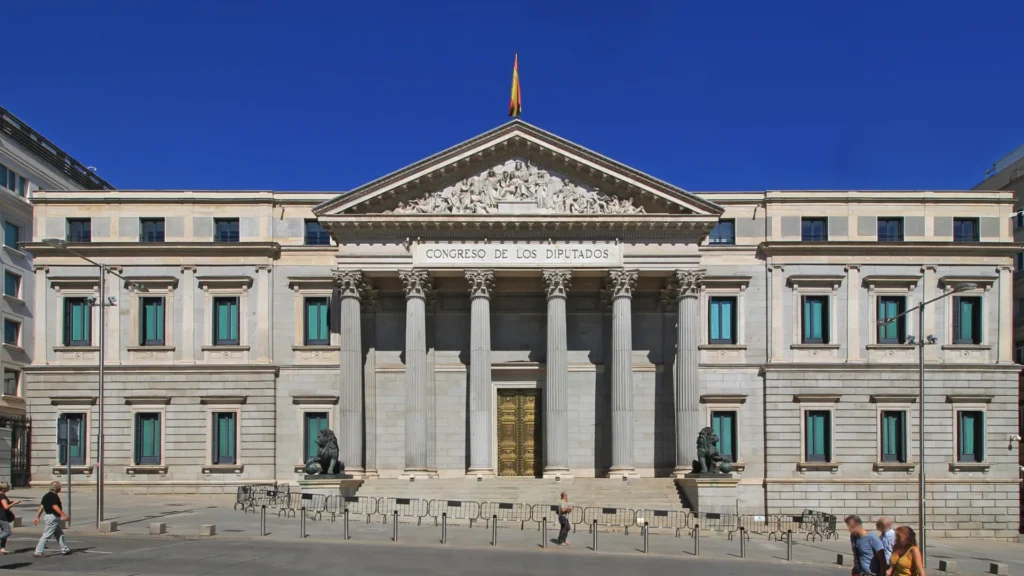
All 350 seats in the Congress of Deputies are contested on closed party lists, along with 208 of the 266 Senate seats. Only the lower house chooses the prime minister. The new lower house will meet on December 23 and elect a speaker, after which King Felipe will nominate a candidate for the premiership, usually the leader of the most-voted party. The nominee needs an absolute majority of at least 176 seats in the investiture vote, or a simple majority in a second round.
The result will shape Spain’s direction on housing, migration, military spending and relations with China and Latin America, and it opens a decisive European electoral cycle, with France, Poland and Italy all due to vote in 2027. For Sanchez, Sunday is the moment his eight-year project meets the voters. The UK and EU have published treaties aimed at cutting costs in a separate European deal. A New York court upheld Zohran Mamdani’s rent freeze in another vote on housing costs.