
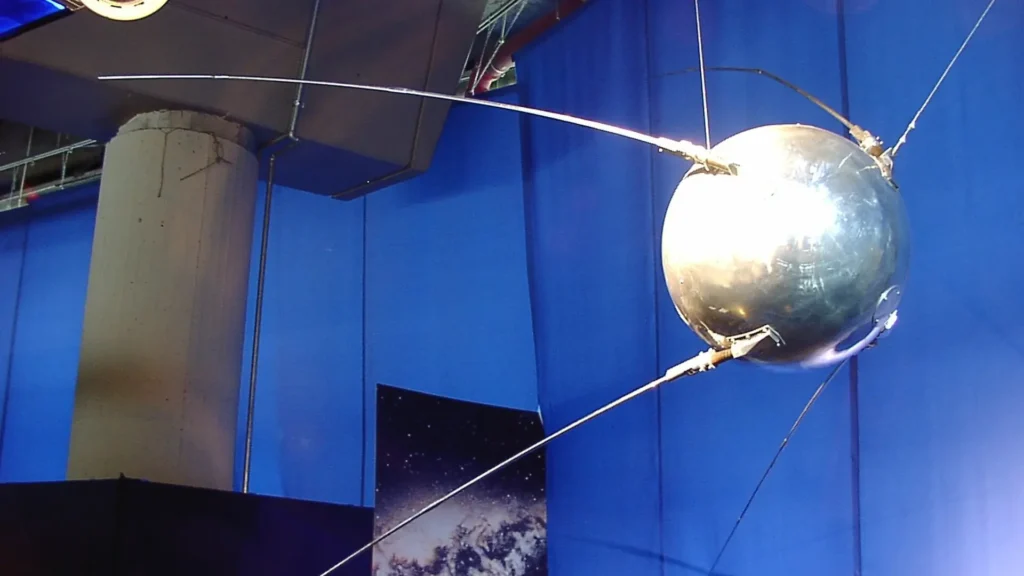
Russia May Launch Nuclear Satellite In December, NATO Warns
Last Updated on November 29, 2026 1:57 am by Usman
Western intelligence agencies believe Russia could launch a satellite carrying a nuclear warhead into orbit as early as December, according to a joint investigation by German public broadcasters and a newspaper, in a move that would break one of the oldest rules of space law.
The investigation, published on 23 November by WDR, NDR and Suddeutsche Zeitung, says Sputnik-S was assembled several years ago and stored near Moscow. Intelligence shared with several NATO allies in early November said it could launch within 60 days, and Germany’s Space Command considers a December launch possible.
What the intelligence says
Germany’s intelligence service, the BND, and the Bundeswehr passed the findings to several NATO allies, and Defence Minister Boris Pistorius has been briefed. Germany’s National Security Council discussed space security on 3 November, although details remain classified. Chancellor Friedrich Merz addressed the reports alongside NATO Secretary General Mark Rutte in Berlin.
American officials have warned about a Russian nuclear weapon in space for years: the United States warned internally in February 2023 that Moscow was working on one, and the concern became public in February 2024. In October 2026, the US Defense Intelligence Agency assessed that Russia was developing a satellite to carry a nuclear explosive. Investigators have also examined Kosmos-2553, launched in February 2022 into an unusual orbit 2,000 kilometres up, which German officials suspect tested how electronics cope with the radiation a nuclear blast would create.
Why a weapon in orbit matters
The weapon would not target the ground. Its purpose would be to disable satellites with radiation and an electromagnetic pulse, wiping out the spacecraft modern life depends on. US Space Command chief General Stephen Whiting has warned that about a third of low-orbit satellites would probably fail within hours or days of a blast, and the rest over the following months as radiation lingered.
The disruption could hit GPS navigation, banking, electricity grids, mobile networks and weather forecasting. Western militaries would face particular difficulties because they depend heavily on satellite communications and navigation. The obvious target, analysts say, is Starlink, which accounts for about two thirds of all active satellites. Placing a nuclear weapon in orbit would itself violate Article IV of the 1967 Outer Space Treaty, which bans nuclear weapons and other weapons of mass destruction in orbit, even if it were never detonated.
What Berlin and NATO are doing
Merz did not play down the reports, saying they were not new, while Rutte said the alliance would defend every inch of its territory and that its defence commitment covers space. Berlin says there is no immediate threat, but the Foreign Office was blunter about the law, saying such a deployment would be a flagrant breach of the Outer Space Treaty, which Russia has signed.
The warning has also exposed how far behind Europe is in orbit. The Bundeswehr is close to signing a roughly 15-billion-euro contract with Rheinmetall, OHB and Airbus for its own constellation of about 600 satellites, linking soldiers, drones and aircraft in real time, much as Starlink does for Ukraine. But the first satellites will not launch before 2030, and until then Canadian operator Telesat is meant to fill the gap. Berlin is also pushing for national space missions in its 2027 budget, ahead of a European Space Agency ministerial meeting in Rome in mid-December, as the race to fill low Earth orbit accelerates and NATO jets have already been scrambled over airspace violations this year.
The doubts and the denials
No intelligence documents or satellite imagery confirming the reported deployment have been made public, and the assessments have not been independently verified. The Russian embassy in Berlin said it had no information about the alleged plans and rejected them as a propaganda campaign, while the Kremlin said it had not seen the reports.
Whether or not Sputnik-S launches in December, the reports have changed the conversation in Europe’s capitals: space has become a front-line security issue, and the Outer Space Treaty, one of the last pillars of arms control, is becoming a bargaining chip with no means of verification. As Trump rewrote a NATO statement to add a warning over Ukraine, the alliance’s attention is firmly on the skies above Europe.