
Mexico Seeks US Talks Over SpaceX Rockets in Its Airspace
Last Updated on November 27, 2026 7:11 am by Bilal
Mexico is seeking a meeting with United States aviation authorities to discuss permits for SpaceX to use Mexican airspace, and potentially to relocate the company’s launch activities, after debris from a Starship test flight washed up on a Mexican beach. President Claudia Sheinbaum announced the move on Thursday, in the latest sign of growing tension between Mexico City and Elon Musk’s rocket company.
Sheinbaum said the request would go through the United States Embassy, with the aim of bringing American and Mexican space authorities together to set the rules. “What we’re seeking through the Embassy is a meeting between the US and Mexican space authorities to establish permission for the use of Mexican airspace, how often that would be permitted, and, if necessary, the relocation of the launch site,” she said at her morning press conference.
The US Embassy referred questions to the State Department, which did not immediately respond to a request for comment. The request puts Washington in the middle of a dispute that has been building for months between Mexico and a company whose rockets fly directly over Mexican territory on their way to orbit.
The debris on the beach
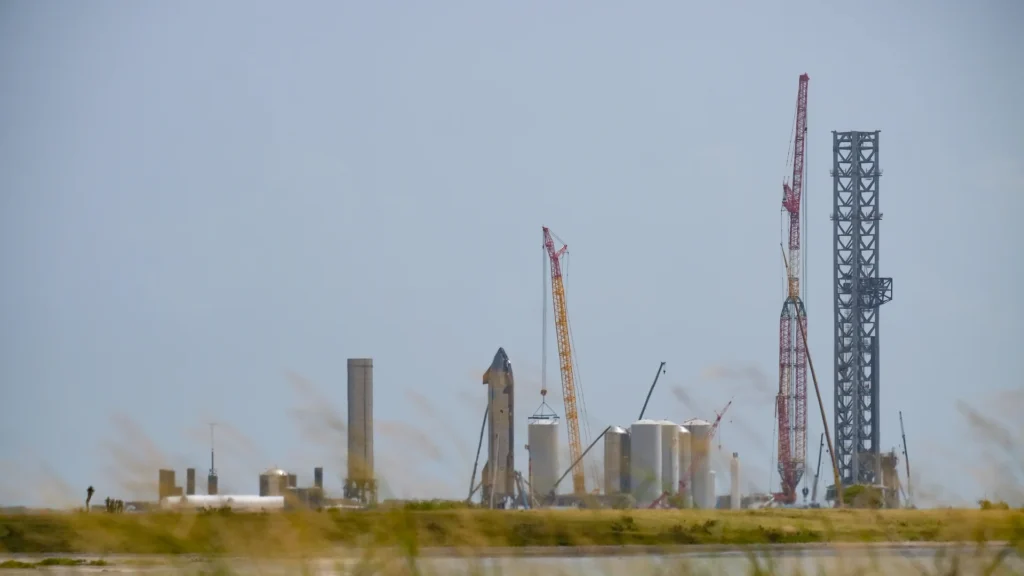
The immediate trigger was Starship Flight 15, which lifted off from SpaceX’s Starbase facility in Boca Chica, Texas, on 13 November. During the flight, the Super Heavy booster was destroyed over the Gulf of Mexico, and fragments began washing ashore at Playa Bagdad, near Matamoros in the state of Tamaulipas, from around 07:30 on 17 November.
Mexico’s environmental agency, Profepa, collected 5.9 kilograms of debris from the beach and stored it at a Mexican Navy facility, saying it would ask SpaceX to take possession of it. SpaceX has disputed that the material came from its operations, saying its partners found very little debris and that what was found is not clearly from the company, while citing independent tests showing no chemical, biological or toxicological risks from the fragments.
For Mexico, though, the question is not only about one flight’s wreckage. Starbase sits almost on the border, and every Starship launch sends a giant rocket over the Gulf and, on some trajectories, over Mexican airspace and waters. Mexican officials have grown increasingly frustrated at having no formal say over flights that cross their territory.
A launch site pushing its limits
The dispute is sharpened by the scale of SpaceX’s ambitions. The Federal Aviation Administration currently authorises 25 launches and 50 landings a year at Starbase. SpaceX has asked for a phased increase, first to 100 launches and 200 landings, and eventually to 456 launches and 912 landings a year, a cadence that would make the site the busiest spaceport on Earth.
That expansion is being reviewed under American environmental law, a process built around domestic rules that gives Mexico no formal role, even though the rockets fly over its territory. Sheinbaum’s intervention is an attempt to change that, inserting Mexico into a decision that has so far been treated as an American matter. The company’s push for hundreds of annual launches means the question of who controls the skies above the border is only going to get more pressing.
What happens next
No date has been set for the meeting Mexico is requesting, and it is not yet clear which American agencies would attend. The talks would need to cover not only permission to use Mexican airspace but also how often flights could cross it, what happens when debris falls on Mexican soil, and whether the launch site itself should move.
Relocating Starbase, a facility SpaceX has spent years and billions of dollars building, would be a drastic step, and the company has given no sign it would consider it. But Sheinbaum’s decision to raise it publicly shows how seriously Mexico is taking the issue. A neighbour that once watched SpaceX’s rockets from the sidelines is now demanding a seat at the table. The FCC has approved SpaceX’s plan for a million satellites, while Mexico’s prosecutor faces a cartel-links CIA probe.