
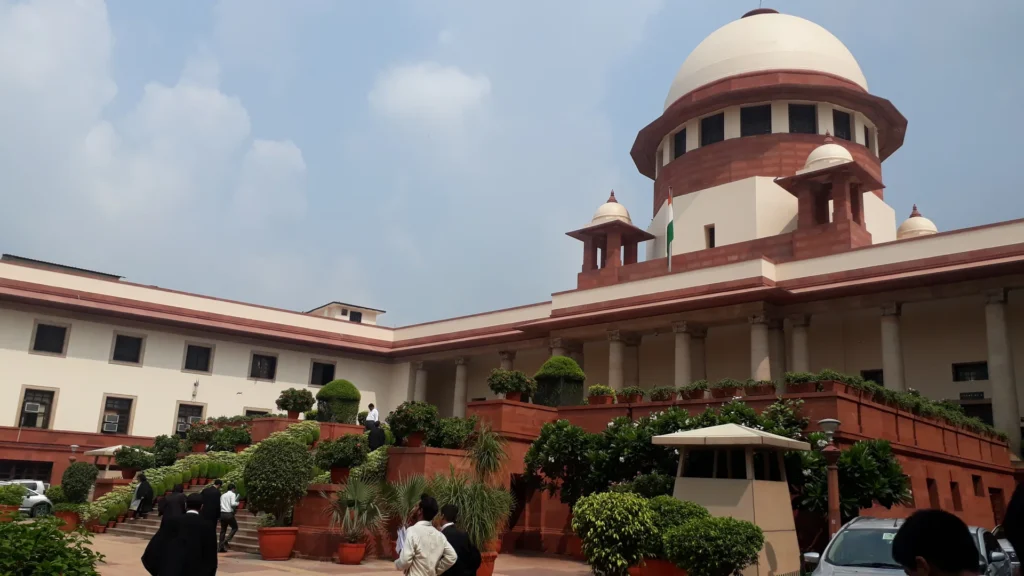
India Top Court: Judicial Member Must Confirm PMLA Seizures
Last Updated on November 27, 2026 7:11 am by Hafiz
India’s Supreme Court has ruled that the body which confirms property attachments by the Enforcement Directorate must include a judicial member, in a judgment tightening safeguards around one of the country’s most powerful anti-money laundering tools. A three-judge bench led by Chief Justice Surya Kant, with Justices Joymalya Bagchi and V. Mohana, delivered the verdict on Thursday after reserving judgment in September.
The ruling settles a long-running question about the Adjudicating Authority set up under the Prevention of Money Laundering Act (PMLA). The authority confirms provisional attachment orders passed by the Enforcement Directorate, deciding whether properties allegedly linked to money laundering can be held by the state. The court held that the final adjudication of those cases, under Sections 8(2) and 8(3) of the Act, must be undertaken only by a bench that consists of, or includes, a judicial member.
The lead case, Union of India v. J. Sekar, grew out of income tax searches in December 2016 at premises connected with a mining firm, decided alongside appeals from the high courts of Delhi, Calcutta and Telangana and a writ petition under Article 32. The appeals had challenged proceedings conducted by single-member benches of the authority without any judicial representation.
What the court decided
The court split the authority’s work in two. Issuing a show-cause notice under Section 8(1), the first step in the process, is an administrative act that simply asks the person concerned to respond, and it does not require a judicial member. But the final hearing is different: it involves interpreting statutory provisions, weighing evidence, hearing competing arguments and deciding the legal status of a person’s property.
“The determination under Sections 8(2) and 8(3) of the PMLA involves a close analysis of legal provisions, demands the appreciation of facts, and entails considerable civil consequences,” the bench said, adding that a member drawn from the field of law must form part of the bench for such decisions. The court extended the same requirement to related determinations, including those on encumbrances and leasehold interests under Section 9 and on the retention of property and records under Sections 20(4) and 21(4).
The judges also made clear what the ruling does not require. There is no legal mandate that the chairperson of the Adjudicating Authority be a judicial member, and a single-member bench can conduct final adjudication, provided that the member is judicially qualified. The court upheld the validity of Sections 6(5)(b) and 6(7) of the Act, which allow the chairperson to constitute benches of one or two members.
Two kinds of work
At the heart of the judgment is the distinction between receiving material and judging it. The authority’s early work, taking sealed reasons from the Enforcement Directorate and preserving the record, needs no legal training. Deciding whether property is tainted, by contrast, carries serious consequences for the property rights of individuals, and the court said that task demands a judicial mind from the outset.
The court rejected the government’s argument that the availability of an appeal before a judicial forum makes judicial participation at the first stage unnecessary. An appellate remedy, the bench held, cannot replace the requirement of judicial application of mind when the original decision is taken. The chairperson has now been directed to issue an administrative circular under Section 6 of the Act, ensuring that every bench passing an order under Section 8(3) includes a judicial member.
Why it matters
The judgment will operate prospectively, meaning it will not unsettle or reopen pending or decided claims, or question orders already passed before 26 November 2026. That limits the disruption to past cases while changing how every future attachment is confirmed.
For the Enforcement Directorate, whose attachment orders run into thousands of crores, the ruling adds a procedural step but also strengthens the legitimacy of its orders. For property owners, it guarantees that the person deciding whether their assets are the proceeds of crime will have legal training. In a system where attachment can freeze homes, businesses and bank accounts for years before trial, that guarantee is the point of the judgment. India’s Supreme Court has ordered warning labels on junk food, while India has blocked a Pakistani series on Netflix.