
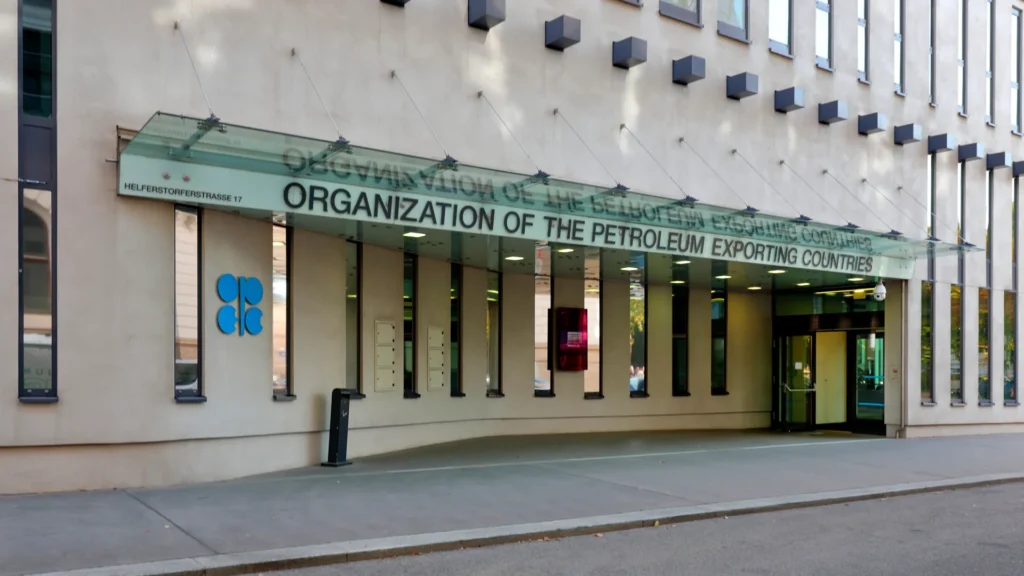
Trump Administration Pushed Venezuela, Iraq to Quit OPEC
Last Updated on November 27, 2026 2:06 pm by Bilal
The Trump administration encouraged Venezuela and Iraq to consider leaving OPEC earlier this year and stopped Venezuela from paying its annual membership dues, Reuters reported on Friday, citing ten people familiar with the matter.
The previously unreported moves targeted two of OPEC’s five founding members, marking an unusually direct challenge to an organisation that President Donald Trump has long accused of keeping oil prices artificially high. United States officials were pushing for greater oil production and investment in both countries at the time, and some worried that OPEC production limits could eventually constrain those ambitions, according to the people familiar with the discussions.
Two founding members in the crosshairs
In Venezuela, the pressure went furthest. After the United States seized Nicolas Maduro in January, the State Department opened discussions with Venezuelan officials in Washington on whether the country should leave OPEC, five people familiar with the matter told Reuters. The United States currently controls approval over how Venezuelan government funds are used, and the American side refused to allow Venezuela to pay its OPEC membership fee on the grounds that the funds should be prioritised for more important matters.
Trump himself said in August that it was up to Venezuela whether to leave OPEC. But the pressure on Caracas went far enough that Saudi Crown Prince Mohammed bin Salman intervened during the summer, persuading the Trump administration not to press the issue further, two people familiar with the matter said. The episode underlined how far Washington was willing to go in its campaign to reshape the oil producers’ club, and how quickly Riyadh moved to protect its unity.
The push was driven by a simple calculation. Trump wants major American oil companies to help Venezuela restore crude output, seeing that as part of strengthening energy security in the Western Hemisphere, but OPEC’s production policy could slow that process. For a country sitting on the world’s largest proven oil reserves, leaving the cartel would in theory free it to pump without limits, even if the political cost of walking away from the group it helped to found would be enormous.
Iraq pushed back
In Iraq, the story played out differently. United States officials held talks this summer with Prime Minister Ali Faleh al-Zaidi, encouraging Iraq’s departure from OPEC as American oil majors Exxon Mobil and Chevron planned major new investments there, two people familiar with the matter said. Al-Zaidi later raised the possibility of leaving at a government meeting.
But Iraq’s oil ministry pushed back, persuading the prime minister to keep the country in the group and consider seeking a higher production quota instead, the people said. Baghdad’s calculation was the opposite of the one Washington was making: inside OPEC, Iraq can argue for a bigger share of a managed market, while outside it would have to compete alone against far larger producers.
What Washington and OPEC say
The State Department said it could not rule out that lower-level American officials discussed leaving OPEC with the Venezuelan government this year, but that the issue was not raised by senior officials. It did not answer questions about whether it had prevented Venezuela from paying its membership fee.
For its part, OPEC has the discretion to disregard unpaid membership fees and is not planning to expel Venezuela over the issue, two OPEC sources told Reuters. The episode leaves the cartel intact but strained, with two of its founders courted by Washington and one of them kept in the fold only by the intervention of its most powerful member.
The disclosures add a new strain to an alliance already under pressure over output policy and prices. Venezuela has put its public debt at 237.5 billion dollars ahead of a restructuring, while OPEC+ has rolled over its output targets for the first quarter of 2027 — a reminder that the politics of oil and the arithmetic of production are never far apart.