
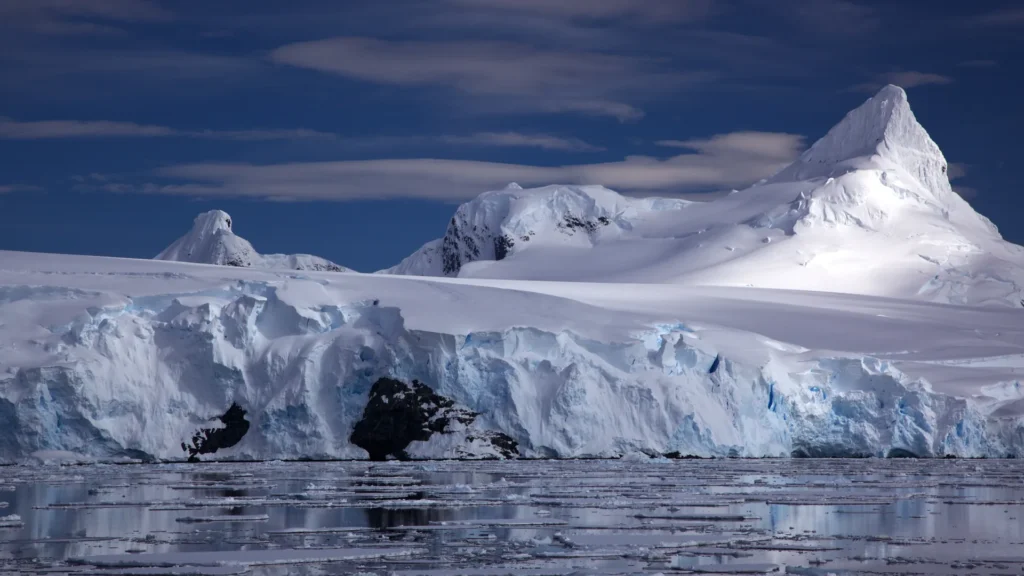
Antarctic Sea Ice Hits Lowest Level on Record in October
Last Updated on November 28, 2026 2:21 am by Sara
Antarctic sea ice has fallen to its lowest level on record for the time of year, scientists have confirmed, after a weak winter peak was followed by an unusually rapid retreat. By mid-October, the frozen ocean around Antarctica covered about 2.3 million square kilometres less than the long-term average, a shortfall of 12 per cent and the lowest figure ever recorded for mid-October.
The finding, published by the Australian Antarctic Program on Thursday, caps a winter in which the ice never really recovered. Sea ice around Antarctica normally grows through the southern winter, reaching its largest extent in September before melting back through spring and summer. This year the growth stalled early, and then the ice began shrinking weeks ahead of schedule.
The ice reached its annual winter maximum of 17.72 million square kilometres on September 11, the third-lowest peak since satellite records began in 1979. In the four weeks that followed it shed about 1.3 million square kilometres, roughly the size of Australia’s Northern Territory, and kept falling below even the extremely low levels of October 2023.
A weak winter maximum
The winter maximum is the key number in Antarctic sea ice science, because it sets the starting point for the whole melt season. A low maximum means the ice enters spring already thin and vulnerable, and this year’s peak was one of the three weakest in nearly half a century of satellite monitoring.
What worries scientists is the pattern, not one bad year: the four lowest annual winter maxima since 1979 have all come in the last four years, after decades of rough stability, with an abrupt shift to record lows in 2023.
Dr Rob Massom, a sea ice scientist with the Australian Antarctic Division, said the latest figures showed the problem was getting worse at exactly the wrong time of year. “Unfortunately, Antarctic sea ice is now also declining at a time of year when the ocean should be freezing and the ice cover should be advancing,” he said, adding that the recent patterns “are unprecedented in the satellite time series dating back to 1979, and substantially exceed natural variability in Antarctic sea ice coverage over past centuries”.
The October collapse
After the weak September peak, the retreat was swift. NASA and the National Snow and Ice Data Center reported that daily sea ice extent fell sharply through September and reached record-low daily levels from October 2 onwards, staying there for much of the month. The mid-October reading of about 12 per cent below average was lower than the previous record for the date, set in October 2023.
That 2023 season is remembered for its consequences. Poor sea ice conditions that year led to the deaths of thousands of emperor penguin chicks, which drowned or froze when the ice beneath their breeding colonies broke up before they were old enough to swim. Scientists are watching this year’s colonies closely, because the ice has now fallen even further than it did then.
The ice matters for more than penguins: it reflects sunlight back into space and insulates the ocean below, and when it shrinks, darker water absorbs more heat, making regrowth harder the following winter.
Four years of record lows
Researchers are careful not to blame one season on a single cause, but the clustering of record lows in four consecutive years has shifted the conversation from whether the ice is changing to how fast, and what is driving it.
The Australian Antarctic Division’s assessment stresses that the recent losses exceed anything natural variability has produced over past centuries, which points to a longer-term shift rather than a run of bad luck. The 2026 season, with its third-lowest maximum and record-low October extent, adds the strongest evidence yet to that picture.
Monitoring will continue through the southern summer as the melt season runs its course, and scientists will be watching whether the ice recovers next winter or whether the new low pattern holds. The Hera mission has imaged a stadium-sized crater on the asteroid Dimorphos, while China’s Shenzhou-24 carried the first Pakistani astronaut into space — and around Antarctica, the ice is telling its own story.