
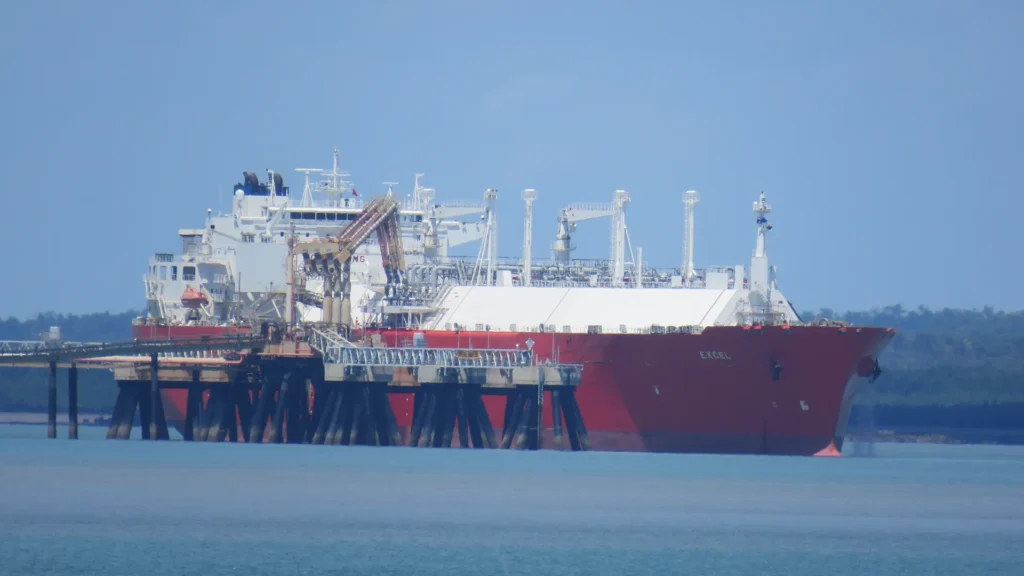
Australia Passes Law Reserving 20% of Gas for Home Market
Last Updated on November 27, 2026 11:10 am by Tayyab
Australia’s parliament has passed a gas reservation law that will force the country’s largest liquefied natural gas exporters to set aside up to 20 percent of their production for the domestic market from 2028.
The legislation cleared the Senate in a late sitting on Thursday night with the support of the opposition Liberal-National Coalition, and the lower house gave its final approval on Friday morning. It is the Labor government’s final major piece of legislation for 2026, and a policy more than a decade in the making.
What the law does
Under the scheme, gas exporters will need a licence to export, and a key condition of that licence is a domestic supply obligation of up to 20 percent of their annual export volumes. The export licensing framework is intended to start on 1 January 2027, with the supply obligations applying from 1 January 2028.
The Australian Energy Regulator will forecast domestic demand, add a 10 percent market oversupply buffer, subtract supply from non-exporters, and spread the remaining amount across LNG exporters. The package consists of three bills: the Domestic Gas Reservation Bill 2026, the Domestic Gas Reservation Levy Bill 2026 and a consequential amendments bill.
A rare bipartisan deal
The Coalition agreed to vote with Labor after weeks of negotiations, despite concerns that the scheme could discourage investment in new gas projects. “We will act in the national interest,” shadow resources minister Susan McDonald told the Senate. “We will allow the government’s proposal to move forward because we do believe in a domestic gas reservation and more gas being made available to Australia.”
Labor made one major concession to win the Coalition’s support: Western Australia received a permanent carve-out from the scheme, after lobbying from the Coalition and the state’s premier, Roger Cook. The Greens, who wanted a 25 percent tax on gas exports instead, voted against the legislation.
Cheaper gas at home?
Prime Minister Anthony Albanese said the law would put downward pressure on energy prices for Australian households and businesses, although he did not say by how much. Resources Minister Madeleine King said the scheme would create an enduring framework that brings to an end “over a decade of crisis-driven ad hoc market interventions”.
The scheme has been debated in Australia for more than a decade, with manufacturers and households long complaining that gas produced in Australia is sold more cheaply overseas than at home. Previous governments relied on ad hoc interventions, including export controls and price caps, whenever shortages loomed. King’s argument is that a permanent reservation framework will give the market certainty instead of crisis-driven fixes, and give manufacturers the confidence to invest. Critics, including the Greens, say the scheme does not go far enough, because exporters can still choose how much of the reserved gas they actually supply, and because the obligation only reaches 20 percent at most. The first test will come when the regulator sets the first obligations in late 2027, ahead of the scheme starting in January 2028.
Whether it delivers cheaper gas will be judged in the years ahead, when the obligations bite in 2028. Australia has also signed a security treaty with Solomon Islands, while in Britain, energy bills are set to rise by 26 percent in January — a reminder that the politics of energy prices is biting on both sides of the world.