
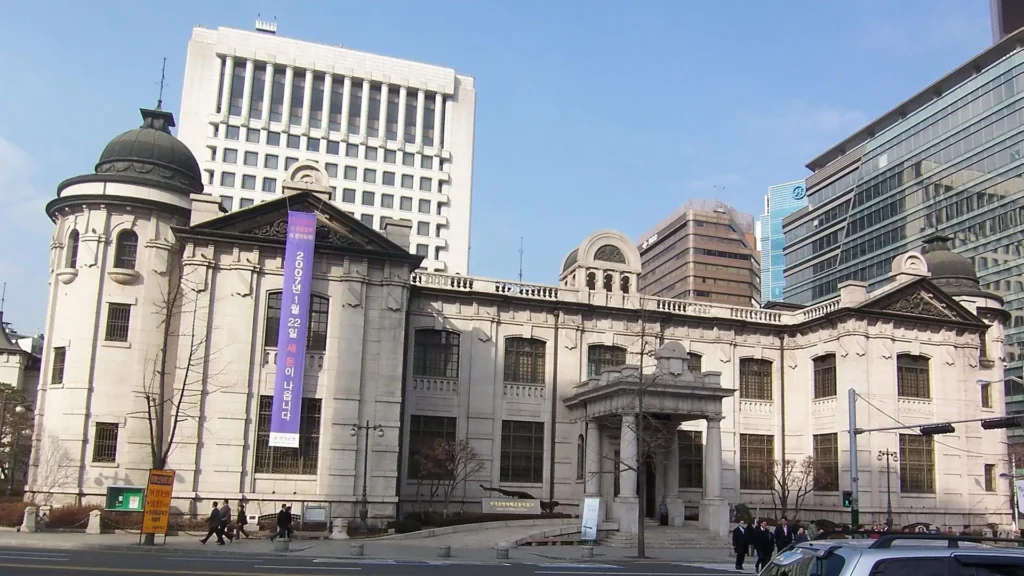
Bank of Korea Raises Rate to 3.25% as AI Boom Fuels Growth
Last Updated on November 26, 2026 6:27 pm by Muhammad
South Korea’s central bank has raised its benchmark interest rate to 3.25 percent, resuming its tightening cycle at the final policy meeting of the year as a boom in semiconductor exports drives growth and keeps inflation above target.
The Bank of Korea’s Monetary Policy Board voted five to two on Thursday to raise the base rate by a quarter of a percentage point, from 3.00 percent to 3.25 percent. It is the third increase since July, following rises in July and August, and takes the rate to its highest level since November 2024.
The decision was forecast by 32 of 34 analysts surveyed by Reuters. Two of the seven board members, Lee Soo-hyung and Hwang Kun-il, dissented and argued for holding the rate at 3 percent.
The chip boom behind the decision
The bank’s move is powered by an extraordinary run in South Korea’s chip industry. Demand for AI memory chips has driven months of strong exports, and the central bank now expects the economy to grow 3.9 percent in 2026, up from its earlier forecast of 3.3 percent, and 4.1 percent in 2027, up from 2.9 percent. That would be the fastest growth in six years.
Inflation is the other half of the story. Consumer prices rose 2.8 percent in October, above the bank’s 2 percent target, and the bank said inflation is expected to remain above target for a considerable time. The Bank of Korea said growth was strengthening and inflation was staying elevated in the high two percent range, making the hike appropriate.
The bank also pointed to financial stability risks. Household debt is still building, and the central bank warned that cheap money could add to it. The rate rise, it judged, was worth the cost even though household demand remains weak and the stock market has declined.
More rises could follow
The hike was not unanimous, but the board’s own projections point to more tightening ahead. Of the 21 rate projections for the next six months released by the bank, only six put the base rate at today’s 3.25 percent. Eight put it at 3.50 percent and seven at 3.75 percent, meaning most members expect rates to be higher within six months.
The upper end of the board’s conditional rate projections rose to 3.75 percent from 3.50 percent, leaving the door open to a rate of 3.75 percent in early 2027. Governor Shin Hyun-song, who led the meeting at the bank’s headquarters in central Seoul, has signalled that the bank will keep watching inflation and financial stability risks before deciding on the next move.
The decision comes as other central banks weigh similar trade-offs between growth and prices, and it underlines how far the AI boom has travelled from the technology sector into monetary policy. South Korea’s chip makers are now setting the pace for the whole economy, and the central bank is responding by tightening the money supply around them.
What it means for households and markets
For South Korean households, the higher rate means borrowing stays expensive. Mortgage and loan costs will remain elevated, adding pressure on families already carrying high levels of debt. For businesses, it means the cost of funding investment stays high even as export orders surge.
For markets, the signal is that the Bank of Korea is not done. The split vote shows the debate is live, but the dot plot shows where the majority leans, and traders will now watch the bank’s early 2027 meetings for the next move, much as investors elsewhere are watching America’s strong growth and sticky inflation and the Federal Reserve’s latest Beige Book reading on growth and prices.
The bank’s next test will be whether the chip boom can keep lifting growth without pushing inflation further above target, and whether households can absorb higher borrowing costs without cutting the spending the economy still needs.