
China’s ‘Supergiant’ Gold Haul Could Be Worth $300 Billion
Last Updated on November 27, 2026 6:49 am by Bilal
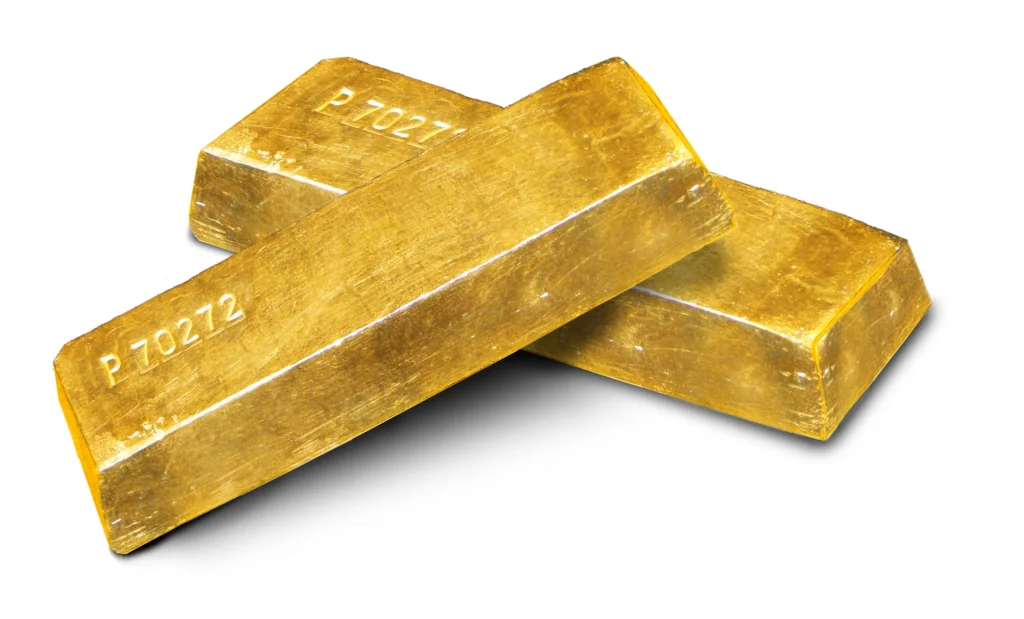
Buried beneath two Chinese provinces are gold deposits that may together hold more than 2,000 metric tons of the precious metal, among the largest hauls ever found in the country, and worth close to 300 billion US dollars at today’s prices. The finds, detailed in new research published this week, could redraw the map of the world’s gold reserves.
The larger of the two, the Dadonggou deposit in Liaoning province, contains more than 1,400 tons of gold, according to an official estimate from China’s Ministry of Natural Resources, making it the biggest single gold deposit discovered in China since 1949. At a spot gold price of around 3,550 dollars per troy ounce in late November, Dadonggou alone would have a theoretical gross value of roughly 165 billion dollars.
The second deposit, at Wangu in Hunan province, could hold more than 1,000 tons if further surveys match early estimates. When Wangu was announced in 2024 it was valued at over 600 billion yuan, about 83 billion dollars. Gold is worth far more now, and at late-November prices Wangu could fetch roughly 114 billion dollars, bringing the pair close to 300 billion dollars combined.
A deposit hiding in plain sight
The Dadonggou story is as much about geology as about gold. Scattered traces of the metal, written off as uneconomical in the 1980s, turned out to be part of a single, continuous mineral belt about 3,000 metres long and 1,500 metres wide. Every borehole drilled in the latest exploration round contained gold, according to a study in China Mining Magazine.
In November 2025, the Ministry of Natural Resources announced a proven resource of 1,444 tons of gold at Dadonggou, based on extensive drilling, higher than the estimate of more than 1,000 tons in the earlier magazine paper. The deposit is considered suitable for open-pit mining and has already passed an assessment of its economic viability for development.
A 2026 study published in the journal Ore Geology Reviews, led by resource engineer Du Jia from the University of Science and Technology Beijing, found something that excites geologists even more than the size. Dadonggou’s gold lies in flat-lying rock zones within a fine-grained metamorphic rock called phyllite, unlike most gold deposits in the region. That unusual structure could help prospectors find other deposits like it.
What the numbers really mean
The headline figures come with an important caveat. The 300-billion-dollar figure represents the estimated market value of all the gold in the ground, not its recoverable value, which depends on extraction costs and how much gold can actually be mined. Digging up 1,400 tons of gold from deep rock is a very different proposition from counting it in a survey.
For the 2026 study, Du Jia’s team used records from more than 200 drill holes and microscopic analysis of quartz crystals to model how Dadonggou formed. As the crust stretched, the model suggests, gold-bearing fluids moved through the flat zones and settled there, creating the belt earlier prospectors mistook for scattered traces.
Wangu’s story is similar. When it was announced in 2024, workers had found more than 40 gold veins holding around 300 metric tons of gold down to a depth of 2,000 metres. Three-dimensional modelling suggested the deposit could stretch to 1,000 metric tons at depths of up to 3,000 metres, a prediction the new research now supports.
Why it matters now
The discovery comes as gold prices hover near record highs and central banks around the world, including China’s own, have been buying gold at a rapid pace. China is already the world’s largest gold producer, and a deposit of this scale would strengthen its position further, reducing its reliance on imports at a time of geopolitical tension.
For geologists, the bigger prize may be the method rather than the metal. If Dadonggou’s flat-lying structure is a reliable guide, similar deposits could be hiding in plain sight across the region, written off decades ago as uneconomical. The next supergiant may already be mapped, waiting for someone to look at the old data with new eyes. Gold tumbled to a 15-month low this week on Fed hike fears, while Europe’s Hera mission imaged a stadium-sized crater on Dimorphos.