
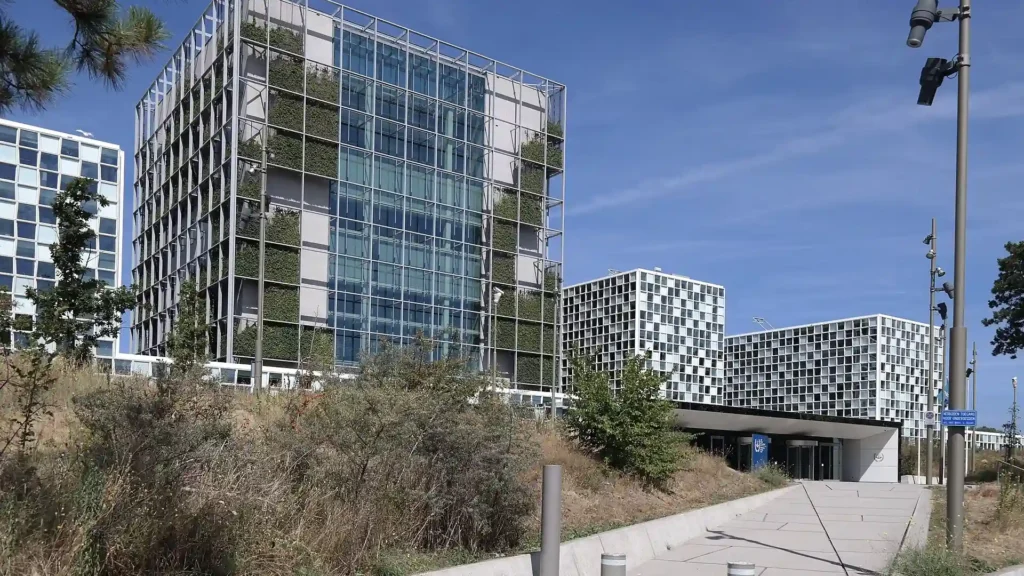
Duterte Faces ICC Trial Over Drug-War Killings on Monday
Last Updated on November 27, 2026 2:38 pm by Alexa
Former Philippine president Rodrigo Duterte goes on trial at the International Criminal Court on Monday, accused of crimes against humanity over the drug war in which thousands of people were killed.
The 81-year-old faces allegations relating to 85 murders and two attempted murders committed between 2011 and 2018, a period that covers his years as mayor of Davao City and the early years of his presidency. If he is convicted on any of the three counts of crimes against humanity, he could face life in prison.
Duterte will be asked on Monday to enter a plea, and prosecutors will then present their opening arguments. His lawyers have told the judges that he denies the charges, and his defence is expected to argue that there was no state policy to murder civilians. The trial is expected to run well into 2027, and more than 500 alleged victims will be represented in court.
The families waiting for justice
For the families of those killed, the trial has been a long time coming. Among those travelling to The Hague is Llore Pasco, a mother who lost both of her sons during the drug war. She will attend the opening of the trial on her 73rd birthday, a date she did not choose but will now never forget.
Thousands of people were killed during the six-year anti-drug campaign, many of them in police operations and vigilante-style shootings that the government described as self-defence. Human rights groups have long argued that the killings were systematic, and that the most vulnerable Filipinos, people in poor neighbourhoods with no power to push back, paid the highest price.
What the court must prove
The charges before the court focus on a fraction of those deaths, the 85 murders and two attempted murders that prosecutors say they can tie directly to Duterte’s orders and policies. But the trial will be heard as a test of something larger: whether a leader who ordered a war on drugs from the very top can be held responsible for what happened on the streets below.
A court under pressure
The proceedings will also test the court itself. The International Criminal Court is the world’s only permanent war crimes tribunal, created to prosecute individuals accused of war crimes, crimes against humanity and genocide when national courts fail to act. It has faced criticism for years over its slow pace and its record of convictions, and it is now operating under an open campaign by the United States to force its closure.
That pressure makes the Duterte trial one of the most consequential in the court’s history. A former head of state in the dock, charged over a campaign he boasted about in public, is exactly the kind of case the court was built for. A failure to make it stick would hand its critics fresh ammunition; a conviction would be its most significant verdict in years.
Duterte has always insisted that the drug war was necessary to save the Philippines from narcotics, and his supporters still defend him fiercely at home. His critics say the campaign was a licence to kill, and that the bodies in the streets were the price of a policy that targeted the poor while the powerful went untouched. From Monday, those two accounts will be tested in a courtroom in The Hague. The ICJ ruled Myanmar committed genocide in a landmark ruling, while UN experts say Vietnam abducted activists across the border.