
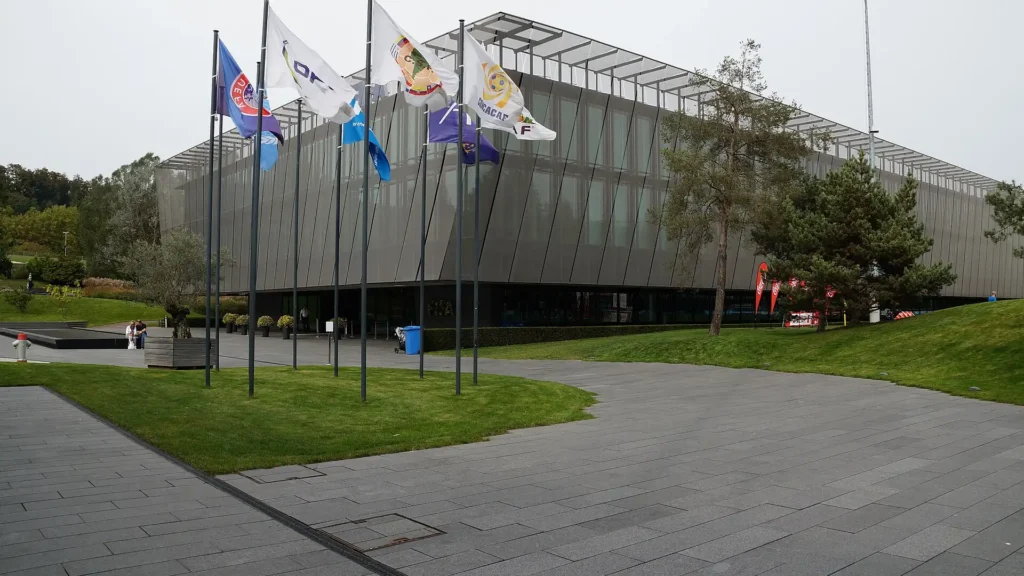
FIFA Confirms Cyber Attack Stole Personal, Business Data
Last Updated on November 26, 2026 5:57 pm by Ayesha
FIFA has confirmed it was the victim of a criminal cyber attack that gave hackers unauthorised access to personal and business information, in a breach claimed by a hacking group that says it stole more than 12 gigabytes of the world football governing body’s files.
The organisation said on Thursday that it was working closely with the relevant authorities, including law enforcement, and condemned what it called the unlawful acquisition and publication of information, particularly personal data.
“FIFA can confirm that it has been the victim of a criminal cyber attack resulting in unauthorised access to a limited set of personal and business information,” a FIFA spokesperson said. The body did not say when the attack took place, how many people or organisations were affected, or exactly what information was taken.
Who claims to be behind it
A group calling itself the Handsome Boy Hacking Club claimed responsibility for the attack. Last week, the group posted a screenshot on X of what it claimed were FIFA files, and three days later appeared to take credit for the hack when responding to a post that said more than 12 gigabytes of internal documents had been leaked.
The group says it published the files on a cybercrime forum after an attempt to extort FIFA failed. It claims the material includes identity and immigration documents, financial records, legal documents and internal information about FIFA’s management and decision-making. Those details have not been independently confirmed by FIFA, whose statement confirms only that a limited set of personal and business information was accessed.
Reporting on the breach suggests the attackers got in by impersonating FIFA staff and taking advantage of employees, rather than by exploiting a technical failure in the organisation’s systems. A person with direct knowledge of the matter told Reuters that less than 0.1 percent of all the data held by FIFA was affected, and that the intrusion appeared to target specific documents rather than a broad sweep of its systems.
What was not taken
One question hanging over the breach was whether it touched the files at the centre of the biggest scandal facing FIFA’s leadership. The same person with direct knowledge of the matter said no files from the abandoned FIFA Forward Enterprise project were accessed, and the BBC understands the data breach did not include documents relating to the proposal and the World Cup sell-off plan associated with president Gianni Infantino.
The Football Association chair, Debbie Hewitt, was granted access to those files this week after signing a non-disclosure agreement. Infantino has been under scrutiny since his secretive plan to sell stakes in the World Cup to private investors was foiled, and the question of who has seen the documents around that plan has become politically charged inside world football.
FIFA said the unlawful acquisition and publication of information was “a serious and unacceptable violation of privacy” that “can have significant consequences for the individuals concerned.” The organisation did not say whether any of the stolen data had appeared online or where it had been published, and did not respond to follow-up questions about the incident.
A growing target
The FIFA breach is the latest in a run of high-profile cyber attacks on major organisations, and it follows the disclosure this week that password manager 1Password was breached through an employee’s GitHub account. Sports bodies, with their global staff, commercial partners and vast stores of personal data on players, officials and fans, have become attractive targets for extortion groups.
For FIFA, the timing is awkward. With the World Cup approaching and its president already under pressure, a breach that exposed personal data belonging to staff and partners is the last thing the organisation needed, and the investigation will now determine how the attackers got in, what exactly they took, and whether more of the stolen material surfaces online, in a week when breaches have also hit a US intelligence network and millions of password manager accounts.