
Myanmar Refuses to Fully Comply With ICJ Genocide Orders
Last Updated on November 27, 2026 7:51 am by Muhammad
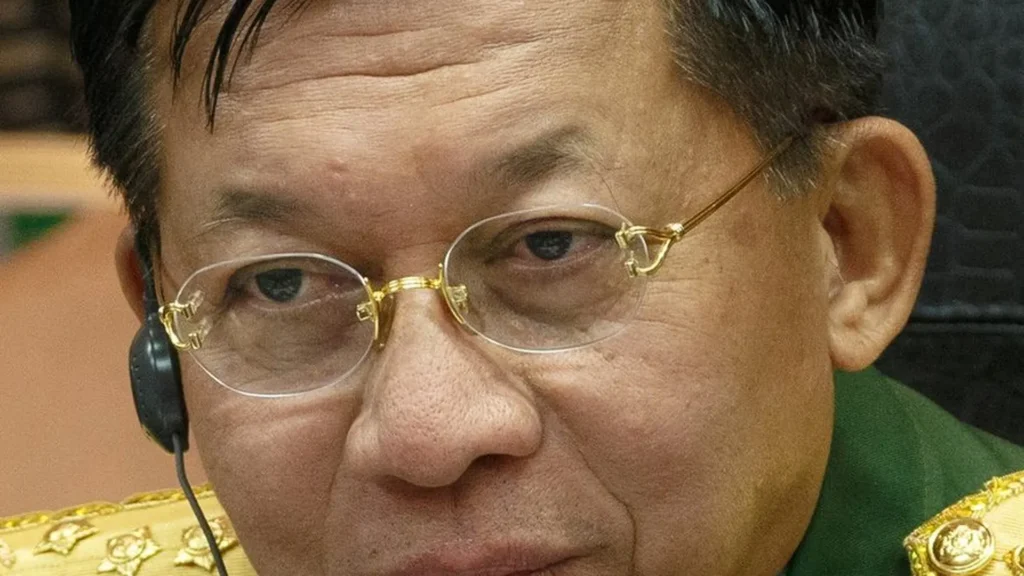
Myanmar’s military-backed president has said his government will not fully comply with the orders of the United Nations’ top court, which ruled last week that the country’s security forces committed genocide against the Rohingya. It was Min Aung Hlaing’s first public comment since the landmark ruling, and it leaves the judgment with no clear path to enforcement.
According to state media, Min Aung Hlaing told a meeting on Wednesday that Myanmar would take the actions appropriate for a responsible country, but would not comply with requirements it deemed inappropriate. He did not say which of the court’s orders he meant. He also rejected the verdict itself, saying the term genocide had damaged his country’s reputation.
The ruling, handed down by the International Court of Justice on 19 November, was historic. By nine votes to six, the court found that Myanmar’s military had committed genocide against the mainly Muslim Rohingya minority during its clearance operations in northern Rakhine State in 2017, including thousands of killings, the burning of hundreds of villages and widespread sexual violence. It was the first time in the court’s 80-year history that it had held a state responsible for genocide.
What the court ordered
The judgment came with a long list of orders. Myanmar must end any ongoing breaches of the Genocide Convention and promptly investigate, prosecute and punish those reasonably suspected of involvement in the 2017 operations. It must provide guarantees that such violations will not be repeated, and it must facilitate the return of displaced Rohingya, restore or replace lost property, help locate missing people, provide rehabilitation to survivors, and protect the Rohingya from discrimination and persecution.
The court also ordered Myanmar to pay compensation for harm that cannot be remedied through restitution, and to report back within two years on the measures it has taken. The judgment is final and cannot be appealed.
Min Aung Hlaing’s response does not engage with any of those orders in detail. His government has maintained throughout that the operations in Rakhine in 2016 to 2018 were counter-terrorism actions against an insurgent group, and its foreign ministry has said they were not carried out with genocidal intent but were limited in scope and duration, lasting only a matter of days.
A ruling with no enforcer
The problem for the court is that it has no way to make Myanmar obey. The judgment is binding, but the court has no police, no prison and no power to seize assets. Enforcement would depend on the UN Security Council, where any action can be blocked, or on individual states choosing to act.
The human cost behind the case is enormous. The 2017 crackdown drove more than 730,000 Rohingya from Rakhine State into neighbouring Bangladesh, where the refugee population in sprawling camps has now swelled to about 1.2 million. Many have lived there for nine years, with no realistic prospect of returning home safely.
The case was brought by The Gambia under the 1948 Genocide Convention, the treaty drawn up after the Holocaust that defines genocide and obliges states to prevent and punish it. Its progress through the court took years, and the final judgment was welcomed by Rohingya groups and human rights organisations as a vindication. Myanmar’s refusal to comply, announced within a week, shows how far that vindication is from delivering justice on the ground.
The man who commanded the crackdown
There is a bitter irony at the heart of the standoff. The man who commanded the 2017 operations, Min Aung Hlaing, is now Myanmar’s president, having seized power in a coup in 2021 and later taken the presidency. The court has ordered him to prosecute people reasonably suspected of involvement in operations he himself led.
That fact alone made full compliance unlikely from the start, and his first public comments confirm it. What remains unclear is whether any state or institution will try to force the issue, or whether the judgment will join the list of international rulings that are obeyed only when the losing side chooses to obey them. The court’s original ruling found Myanmar guilty of genocide against the Rohingya, and Zambia has moved to ban protests against presidential term limits.