
Indonesia Considers First Fuel Price Rise in Five Years
Last Updated on November 27, 2026 11:37 am by Alexa
Indonesia’s government is considering raising subsidised fuel prices in early 2027 for the first time in five years, as high global oil prices and a weak rupiah pile pressure on the country’s finances.
Four people familiar with the matter told Reuters that the proposal was discussed at a meeting last week attended by officials from Bank Indonesia, state energy company Pertamina, the sovereign wealth fund Danantara and the Coordinating Ministry for Economic Affairs. No decision has been reached, and the size of any increase has not been determined.
The cost of holding prices down
Keeping fuel cheap has become expensive for Jakarta. The energy subsidy budget is expected to balloon to 500 trillion rupiah, about 27.2 billion dollars, this year — 30 percent higher than originally earmarked. Stable fuel prices have helped anchor inflation, but the strain is showing elsewhere: the rupiah has fallen to record lows and Indonesia’s stock market is the world’s worst-performing this year.
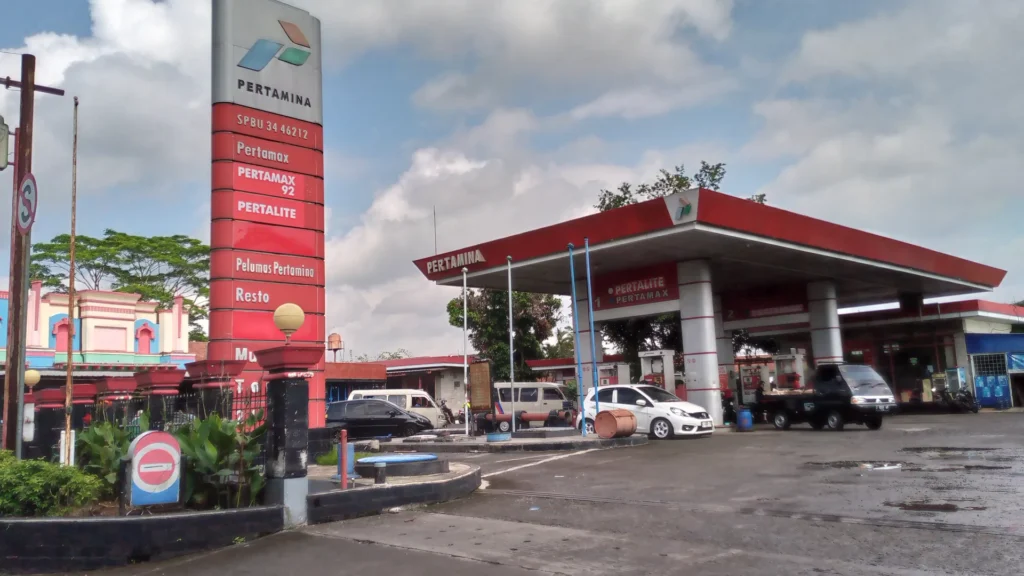
The last increase came in September 2022, when the government raised subsidised prices sharply and faced street protests. Since then, Pertalite petrol has been held at 10,000 rupiah per litre and subsidised Biosolar diesel at 6,800 rupiah, even as the market-based price of some fuel types has climbed above 20,000 rupiah per litre. The gap is paid for by the state.
No decision yet
The government has been careful not to commit. Its communication agency told Reuters that the government had promised not to raise subsidised fuel prices this year, but that the president had not given a directive for next year. Energy Minister Bahlil Lahadalia said on 7 November that prices would stay unchanged until 31 December 2026, following a directive from President Prabowo Subianto not to add to the burden on subsidy recipients.
That leaves the decision for the new year, and it will be a political one as much as an economic one. Fuel prices are among the most sensitive issues in Indonesian politics: previous increases have triggered protests and dented presidential approval ratings. Any rise in early 2027 would come as the government tries to balance its budget against the cost of the president’s flagship spending programmes.
The last increase, in September 2022, is still fresh in Indonesian memory. Then, the government raised the price of Pertalite from 7,650 to 10,000 rupiah per litre, and protests broke out in cities across the country. The government paired the rise with cash handouts to millions of low-income households — a template officials may reach for again if they decide to move in 2027.
What to watch
The key questions are how big the increase would be and who it would hit. Past reforms have tried to shield the poorest by targeting subsidies more tightly, rather than raising prices for everyone. Officials have not said whether the current proposal would follow that pattern, or whether it would simply lift the pump price across the board. Any announcement is likely to come with compensation for the poorest households, as it did in 2022, when the government rolled out direct cash transfers alongside the price rise.
For now, the proposal remains just that — a discussion among officials, with no decision taken. But the fact that it is being discussed at the highest levels, with the central bank and the sovereign wealth fund in the room, suggests the government is preparing the ground. Indonesia has had a difficult week at home, with a deadly fire at a candy factory in Cikande, while central banks across Asia are tightening policy as price pressures build.