
Tear Gas in Gazipur as Bangladesh Wage Protests Escalate
Last Updated on November 27, 2026 7:10 am by Janson
Police in Bangladesh fired tear gas shells and sound grenades to clear garment workers who blocked two national highways in Gazipur on Thursday, as protests over the country’s new minimum wage entered a second day of unrest. The workers, who say the pay rise falls far short of what they need to live on, set fire to tyres and damaged a police motorcycle before officers moved in.
The fresh protest broke out a day after a six-member wage board approved a 36 per cent increase in the minimum wage for garment workers, raising it to 17,000 taka a month, about 136 dollars, from 12,500 taka. The rise, agreed in the early hours of Wednesday after nearly 12 hours of talks, is the smallest in four decades, despite weeks of protests and calls for the sum to be doubled.
Workers had demanded 32,000 taka a month and later lowered their demand to 18,000 taka, only to see the board settle on a figure below even that reduced ask. With food, housing and transport costs climbing, union leaders say the new wage leaves the country’s four million garment workers unable to cover basic needs.
A wage rise workers call too small
The anger is not only about the number. For many workers, the board’s decision confirmed a suspicion that the process was weighted against them. The garment industry is Bangladesh’s largest export earner, supplying global fashion brands including H&M and Zara, yet the people who sew the clothes remain among the lowest paid in the world. Labour rights groups have been urging those brands to pay factories more so that workers can earn a living wage, arguing that the cost of a small increase would barely register in the price of a shirt.
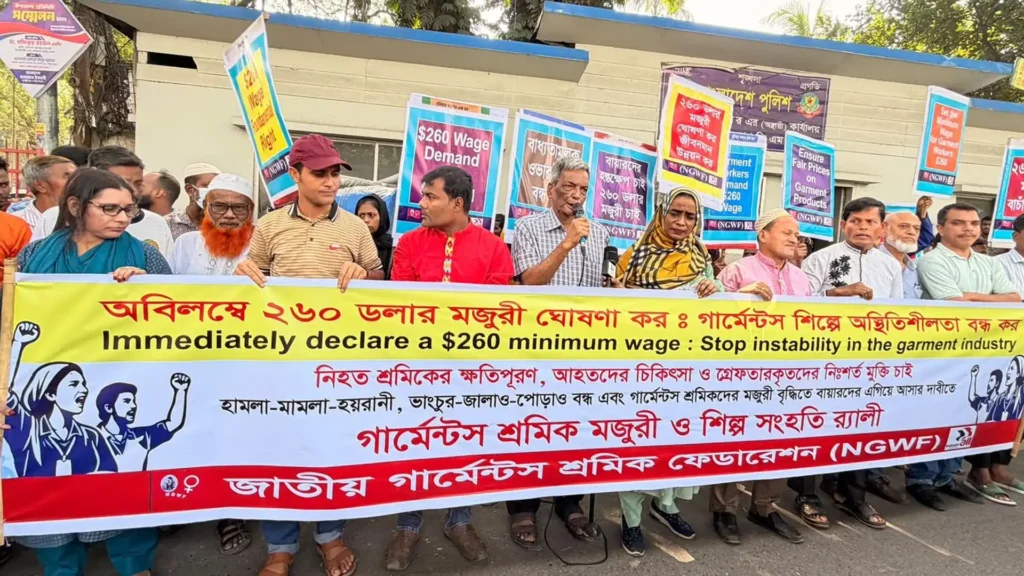
The National Garment Workers Federation has been rallying its members around a demand of 260 dollars a month, nearly double the new minimum, and its protests have drawn support from international labour campaigners. The government, meanwhile, has warned that pushing wages too high too fast could drive orders to cheaper rivals such as Vietnam and Cambodia, a fear factory owners share.
Highways blocked, factories shut
The unrest spread quickly from the Dhaka-Tangail highway at Naojore to Nayanpur Bazar on the Dhaka-Mymensingh road, two of the main arteries out of the capital. Workers surrounded a member of the industrial police, set fire to a police motorcycle and a gas-powered three-wheeler, and refused to move until officers used force, according to Mohammad Amjad Hossain, superintendent of Gazipur Industrial Police.
Factory owners shut 30 more units for the day, and 32 remained closed indefinitely, police and labour officials said. The closures add to a mounting toll: the garment manufacturers’ association said 397 factories could not operate on Tuesday, and another 84 stayed shut under the labour law’s “no work, no pay” provision. Gazipur, one of Bangladesh’s major garment manufacturing hubs, has been at the centre of the agitation from the start.
By Thursday afternoon, police said calm had been restored. “The situation is now calm, but we remain on alert,” Hossain said. Video from the scene showed officers in full riot gear advancing through smoke as workers marched in large groups, some throwing tear gas canisters back towards the police lines.
The brands under pressure
The protests put the world’s biggest clothing brands in an uncomfortable spotlight. Bangladesh’s factories make clothes for almost every major label, and the wage dispute has become a test of whether those companies will use their buying power to support higher pay. Clean Clothes Campaign, which has documented the protests, says brands must act now rather than waiting for the unrest to escalate further.
For the workers on the highways of Gazipur, the calculation is simpler. A wage of 17,000 taka, they say, does not cover rent, food and school fees for a family, and no amount of official reassurance will change that arithmetic. Until the gap between what they earn and what life costs begins to close, the protests are unlikely to end. Bangladesh’s garment workers had already rejected the wage rise, while Mumbai faced a bomb threat email targeting Jalsa, the BMC and the metro.