
IRGC Navy Chief Says Zero Hour for Blockade Break Is Near
Last Updated on November 27, 2026 9:11 pm by Bilal
The commander of Iran’s Revolutionary Guard navy has said the zero hour for breaking the American naval blockade is imminent, in the most direct threat yet from Tehran’s naval leadership. The enemy should expect movement in the air and at sea, he said, and breaking the siege is an irreversible mission.
The statement was reported at 14:29 UTC on Friday, 27 November, and carried by market wires and open-source trackers within minutes. A commander of the Guard’s aerospace force used similar language at almost the same time, saying the enemy should expect action in the air and at sea, and that breaking the blockade is a mission from which there is no return.
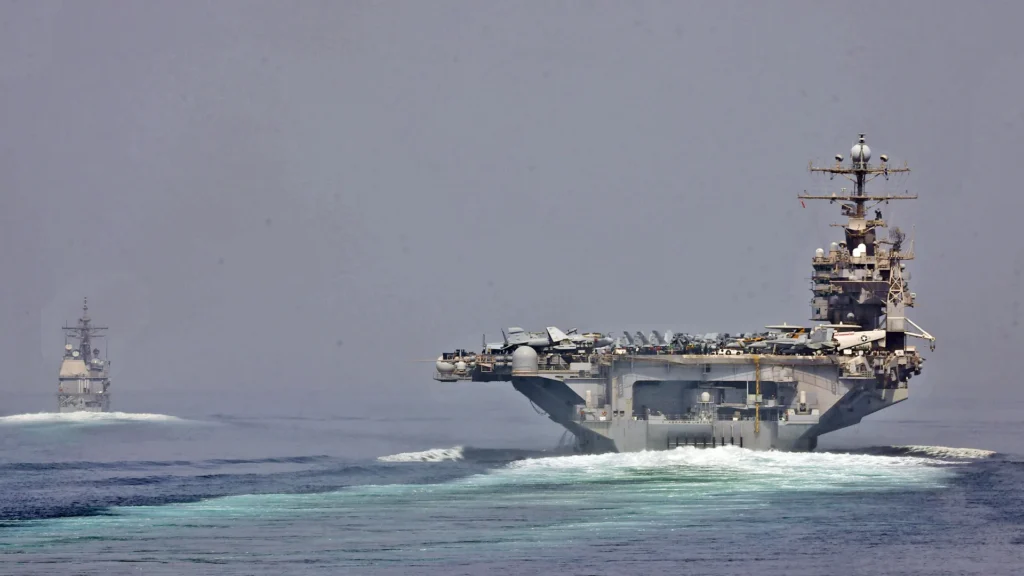
The words are the latest turn in a standoff over Iran’s oil exports. The United States has imposed a naval blockade aimed at stopping Iranian tankers from reaching buyers, above all China, as part of its campaign to cut off Tehran’s revenue. Iran has vowed repeatedly that the blockade will not stand, and the Guard’s navy, which controls the waters of the Strait of Hormuz, is the force that would have to break it.
A threat made before, then walked back
The warning needs to be read against what happened earlier this week. For four days, Revolutionary Guard-linked outlets, lawmakers and Friday prayer leaders spread claims that Iran was about to send a tanker convoy through the blockade. AI-generated images showed ships breaking through, and some reports said a tanker named Line Breaker, or Khat Shekan, had already crossed.
None of it was true. The oil tracker TankerTrackers said no tanker called Line Breaker existed. An Iran-linked liquefied natural gas tanker named Tania Star that appeared in ship-tracking data was a spoof, and the vessel did not exist. On Sunday, the Guard-affiliated Tasnim news agency said no operation had been planned for the weekend, and that the claims had grown out of proposals by some individuals in the media or on social media.
Iran’s Foreign Ministry spokesman called the reports media speculation on Monday. But Tasnim also made clear that Tehran’s position had not changed. Whether Iran will tolerate the naval blockade in the long term is not an issue of uncertainty, it said. It will certainly break it, and this has been repeatedly stated by official military and civilian officials.
What happens next
No Iranian ship has yet tested the blockade. President Donald Trump has warned that if Iranian ships try, they will end up at the bottom of the sea, like the rest of the navy. The American navy has the ships in the region to enforce the blockade, and the Guard’s navy, for all its rhetoric, has not challenged it directly.
A blockade under strain
The risks are visible elsewhere in the Gulf. The International Maritime Organization has confirmed a rise in maritime incidents in the Strait of Hormuz, the narrow waterway through which a fifth of the world’s oil passes. Heavy air-defence fire was reported over Kermanshah in western Iran on Friday, and the wire reported strikes in the last 24 hours in Sanaa, Jizan and Mashhad.
Friday’s statement may be another round of rhetoric, like the convoy claims that were walked back days ago. Or it may be the warning before an attempt. The difference matters. A test of the blockade would force the American navy to decide whether to fire, and that decision could turn a standoff into a battle. For now, the ships are still in port, and the zero hour is a promise, not an event. Two tankers hit mines in the Strait of Hormuz, while Brent crude neared 100 dollars as tanker attacks rattled supply.