
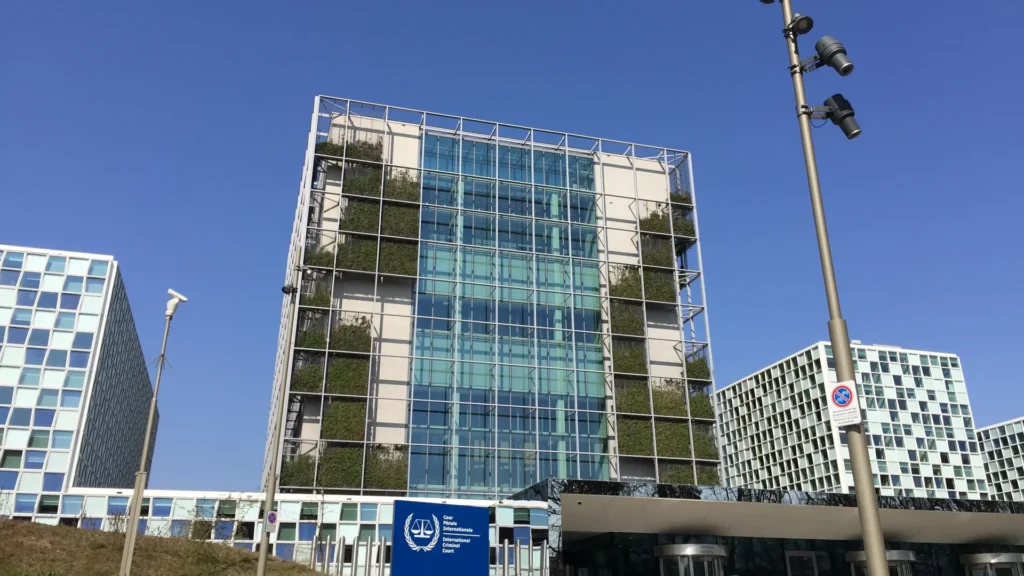
Japan Pays Its ICC 2027 Contribution Early Amid US Sanctions
Last Updated on November 27, 2026 7:24 pm by Rehan
Japan will pay its full 2027 contribution to the International Criminal Court before the end of this year, moving months early to protect the tribunal from American sanctions that take full effect in April. The decision, announced by Prime Minister Sanae Takaichi on Tuesday, is the most concrete lifeline the court has received since Washington began its campaign to dismantle it.
Takaichi told ICC President Tomoko Akane of the decision during a meeting at the prime minister’s office in Tokyo, and announced it in a post on X. Akane, a Japanese national who leads the court, had asked Japan to pay early so the tribunal would have money in hand before the sanctions bite. She thanked Japan after the meeting, saying she was extremely grateful and that the court would spend the money wisely, for the ICC to survive and to pay salaries for its staff.
Japan normally sends its contribution in April or later. Paying by the end of December means the court will have the funds before the American measures take full effect in April 2027, a timetable that matters because sanctions can freeze the court’s access to banking and payments. The early payment is, in effect, practical treasury management as much as it is politics: money in the bank before the door closes.
The court’s biggest backer
Japan is not a minor donor. It supplies about 15 per cent of the court’s budget, making it the single largest financial contributor, ahead of Germany, France, Britain, Italy, South Korea and Canada. In 2026 it contributed 4.6 billion yen, about 28.8 million dollars, or nearly 15 per cent of the court’s annual budget, according to the foreign ministry. The court’s total budget is roughly 34.5 billion yen, so Tokyo’s share is the difference between a functioning institution and one that cannot pay its staff.
That weight is what makes the decision significant. The United States, Japan’s closest security partner, is pushing to dismantle the court through sanctions and by encouraging member states to leave. Washington sanctioned Akane herself in August 2026, alongside senior trial lawyer Abdoulaye Seye. Takaichi, who leads a nationalist administration that pushes hard on defence and intelligence, refused to abandon the court or its Japanese president. Instead she moved the funding timeline forward so the court has money lined up for the fiscal year starting in April 2027.
A court under pressure
The ICC, based in The Hague, was created by the Rome Statute, the treaty Japan joined on 17 July 2007. It prosecutes genocide, war crimes and crimes against humanity when national courts are unwilling or unable to do so. Its work has made it a target: the United States has long opposed the court, and the current campaign of sanctions is the most aggressive attempt yet to shut it down by cutting off its money and its people.
Akane’s request for early payment was itself a measure of that pressure. A court that has to ask its biggest donor to pay four months early is a court worried about its own survival, and her public gratitude after the meeting underlined how much the promise mattered. The foreign ministry said Takaichi told Akane that the government of Japan will continue to strongly support the ICC and President Akane in order to enable the ICC to fulfil its role and functions as originally envisaged.
What happens next
The question now is whether other major funders follow Tokyo’s lead. Germany, France, the United Kingdom and Canada all matter to the court’s budget, and if several of them also pay early, the sanctions would lose much of their force. If they do not, Japan’s payment alone buys the court time, but not safety. For now, the court’s president has the money to pay her staff into the new year, and the court’s biggest backer has shown that it will not walk away. Rodrigo Duterte faces an ICC trial over drug-war killings, while Myanmar has refused to follow the world court’s orders on the Rohingya.