
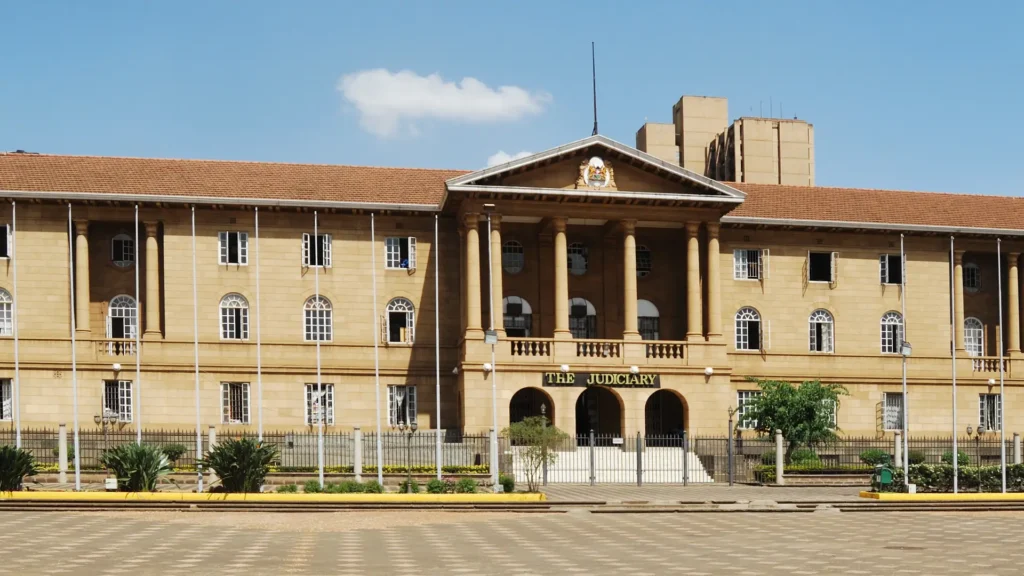
Kenya Court Blocks US-Backed Ebola Site Over Constitution
Last Updated on November 26, 2026 8:58 pm by Ayesha
A Kenyan court has ruled that the government breached the constitution by allowing the construction of a US-backed Ebola quarantine facility at a military air base in central Kenya.
High Court Judge Patricia Nyaundi ordered all further work at the 50-bed facility to stop until the government discloses the full terms of its agreement with the United States. The ruling is a sharp rebuke to a project that has already sparked deadly protests, a contempt finding against a cabinet minister, and a national debate about how far a government can go in the name of a health emergency.
The case was brought by the Law Society of Kenya and the Katiba Institute, a constitutional watchdog, which argued that the deal was struck in secret and without the public participation the constitution requires.
What the court found
Justice Nyaundi found that the government had breached Article 10 of the constitution, which sets out the national values and principles of governance, and Article 35, which requires the state to publish information that affects the public. The government had failed to make public the full terms of its agreement with the United States, along with the health, environmental, biosafety and security assessments, approvals and protocols governing who would be admitted to the facility and how they would be treated.
The judge ordered the health secretary to disclose all of the documents and information within 45 days, to the public, the petitioners and the court. Until the court is satisfied that those orders have been complied with, no further construction work can take place and the facility cannot be opened.
Nora Mbagathi, the executive director of the Katiba Institute, said the judgment confirmed that no health emergency and no deal with a foreign government is above the constitution, calling it a win for transparency and due process.
A facility that sparked deadly protests
The 50-bed tented facility sits inside Laikipia Air Base, near the central Kenyan town of Nanyuki. It was intended to quarantine people exposed to the Ebola virus, including American citizens. Officials in the Trump administration had said Americans exposed to Ebola abroad would be sent to the facility rather than flown home, and the US government planned to commit 13.5 million dollars to Kenya’s Ebola preparedness efforts.
Residents living near the base protested against the project, fearing that bringing Ebola-exposed people into their community could trigger an outbreak that Kenya’s fragile health system could not handle. The protests turned deadly, and the case quickly became a test of whether the government could push through a sensitive foreign deal without telling the public what it had agreed to.
The High Court first suspended construction in late May, hours after the Katiba Institute filed its petition, just before the facility was due to open. The court later found Health Minister Aden Duale in contempt for failing to comply with the orders halting construction. President William Ruto said in June that he had approved the facility after President Donald Trump asked Kenya to support it, citing decades of cooperation with Washington on health programmes.
The Ebola emergency behind the case
The ruling comes as the Ebola outbreak in neighbouring Democratic Republic of Congo grows into the fastest-spreading the world has ever seen, with more than 12,000 confirmed cases and nearly half of those infected dead. The outbreak is caused by the Bundibugyo strain of the virus, for which there is no vaccine and no proven treatment, and fighting between rebels and the army has repeatedly blocked health teams from reaching affected areas.
That emergency is exactly why the facility was built, and exactly why the court said the government still had to follow the rules. A health crisis, the judge made clear, does not suspend the constitution. The government must now choose between disclosing a deal it fought to keep secret, or leaving the facility unfinished at a time when the region’s worst Ebola outbreak is still growing.
The ruling comes as the Ebola outbreak in neighbouring DR Congo passes 12,000 cases, as our report on the Congo Ebola outbreak explains, and as US-funded health monitoring faces cuts of its own, covered in our report on the famine monitor halting its reporting.