
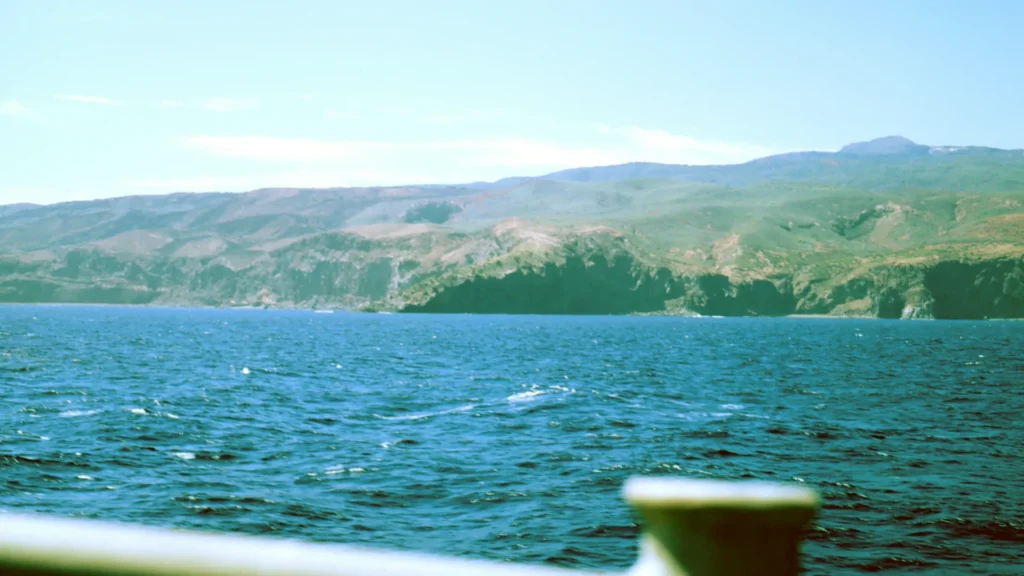
Magnitude 5.7 Earthquake Strikes Off Mexico’s Baja Coast
Last Updated on November 27, 2026 11:37 am by Tayyab
A magnitude 5.7 earthquake struck the Revillagigedo Islands region off Mexico on Thursday, the strongest earthquake recorded anywhere in the world in the past day.
The quake hit at 15:26 UTC on 26 November, at a depth of 10 kilometres, according to the United States Geological Survey. Its epicentre was in the eastern Pacific Ocean, about 348 kilometres south of Cabo San Lucas, in the remote volcanic archipelago southwest of the Baja California Peninsula.
No damage reported
Despite its strength, the earthquake caused no reported damage or casualties. The USGS issued a green alert for the event, its lowest level, indicating a low likelihood of casualties or damage. Only one person reported feeling the shaking to the USGS.
The remote location explains the lack of impact. The Revillagigedo Islands are a small, sparsely inhabited archipelago far from the Mexican mainland, and the epicentre lay in open ocean with no major population centres within the main shaking zone. No tsunami warning, watch or advisory was issued by the Pacific Tsunami Warning Center or the USGS.
The strongest quake of the day
The earthquake was the largest of 33 earthquakes of magnitude 2.5 or more recorded worldwide in the 24 hours to Friday morning, and one of nine of magnitude 4.5 or more. The USGS gave the event a significance index of 500 on a scale that runs to 1,000, based on its magnitude, felt reports and estimated impact.
Earthquakes of this size are not unusual in the region. The Revillagigedo Islands sit near the boundary between the Pacific Plate and the Rivera Plate, one of the most seismically active zones off Mexico’s Pacific coast, where the ocean floor is slowly being pushed beneath the continent. Thursday’s quake was reviewed by seismologists at both the USGS and the European-Mediterranean Seismological Centre, which agreed on a magnitude of 5.7.
A smaller 4.3 magnitude tremor was recorded in the same region about half an hour before the main quake. The Revillagigedo Islands are a group of four volcanic islands — Socorro, San Benedicto, Roca Partida and Clarion — lying hundreds of kilometres off Mexico’s Pacific coast. They are uninhabited except for a small naval station on Socorro, and are known among divers for the giant manta rays and sharks that gather in their waters. Their isolation is what keeps events like Thursday’s quake from becoming disasters: there is almost nothing there to damage.
Why it matters
The quake is a reminder of how much of the world’s seismic activity passes almost unnoticed. A magnitude 5.7 earthquake on land near a city would be a major news event; in a remote stretch of ocean, it registers as little more than a line in a catalogue. Monitoring networks still track every one of them, because the same fault systems that produce harmless offshore quakes can, on another day, produce the ones that do real damage.
Seismologists will keep watching the region for aftershocks in the coming days. The USGS catalogue shows the Revillagigedo area produces regular tremors, and while Thursday’s event caused no harm, the same plate boundary has generated far larger quakes in the past. For the handful of people stationed on Socorro Island, it was likely the strongest shaking they will feel all year — and for everyone else, a quiet reminder that the ground beneath the Pacific never truly rests.
Natural hazards have been making headlines across the region this week. A bushfire on Flinders Island has burned 13,000 hectares and put homes at risk, while a mine collapse at a flooded gold mine in Indonesia underlined how quickly routine work can turn dangerous.