
Tata Trusts Challenge Chandrasekaran Reappointment in Court
Last Updated on November 27, 2026 1:31 am by Ayesha
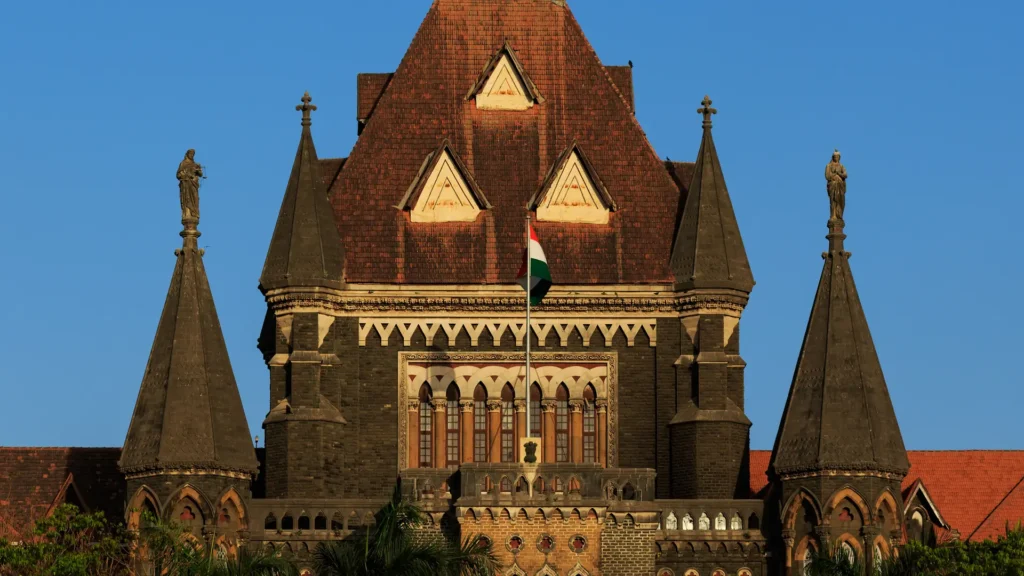
The Tata Trusts have gone to the Bombay High Court to challenge the reappointment of Natarajan Chandrasekaran as executive chairman of Tata Sons, in a legal fight that has split one of India’s most powerful business houses. Two trusts filed suits on Thursday arguing that the board resolution approving a fresh five-year term for Chandrasekaran is invalid and should be declared void.
The Sir Dorabji Tata Trust and the R. D. Tata Trust are asking the court to declare the September 17 board resolution illegal and to restrain Tata Sons from acting on it. They say the resolution was passed in violation of the company’s Articles of Association, and they have claimed damages of 65 crore rupees — 50 crore from one trust and 15 crore from the other — plus interest at 18% a year.
The vote at the centre of the dispute
At the September 17 meeting, the Tata Sons board approved Chandrasekaran’s reappointment for a third five-year term, from February 21, 2027 to February 20, 2032, by a vote of 4 to 1. Directors Venu Srinivasan, Harish Manwani, Anita M. George and Saurabh Agrawal voted in favour. Tata Trusts chairman Noel Tata voted against the resolution, and Chandrasekaran abstained.
The trusts’ case turns on Articles 104B and 121 of the Articles of Association, which they say require the affirmative support of a majority of the directors nominated by the Tata Trusts for certain major decisions. The two trust-nominated directors are Noel Tata and Venu Srinivasan — and because they disagreed, the trusts argue the required support was never obtained. They say the casting vote exercised by Harish Manwani, who chaired the meeting, cannot substitute for that approval, because a casting vote applies only to an equality of votes at board level and cannot override the protective provisions for trust nominees.
Tata Sons, for its part, maintains that the resolution was validly passed. The Sir Dorabji Tata Trust has also asked the court to bar the board chairman from using a casting vote in future when the two trust-nominated directors disagree.
How the row began
The dispute has its roots in August. On August 12, Chandrasekaran emailed the board to say he would not seek reappointment when his current term ends on February 20, 2027. The next day, the Sir Dorabji Tata Trust and five other trusts passed resolutions respecting that decision and asked the company to help set up a selection committee under Article 118 to find a successor.
Then, at the September 17 meeting, Chandrasekaran told the board he had reconsidered and was willing to serve another five-year term. He recused himself as an interested director, Manwani took the chair for the item and exercised his casting vote, and the resolution was recorded as passed. The trusts say that sequence produced a resolution that was void from the start.
What happens next
The matter was mentioned in the Bombay High Court on Thursday, November 26, first before Justice Arif S. Doctor, who recused himself, and then before Justice Abhay Ahuja, who scheduled the hearing for Friday, November 27. Senior advocate Janak Dwarkadas, briefed by the law firm Cyril Amarchand Mangaldas, appeared for the trusts.
The timing matters. The Tata Sons board is due to meet again on November 30, when the agenda includes confirming the minutes of the September 17 meeting and a proposal concerning the public listing of the company. The trusts have sought interim relief ahead of that meeting so that a similar dispute over a casting vote cannot arise again.
The stakes are high because the Tata Trusts control about 66% of Tata Sons, the holding company at the top of the Tata group, which spans steel, cars, software, airlines and consumer goods. A court ruling on how far the trusts’ special voting rights reach will shape the governance of one of India’s largest conglomerates for years. UK energy bills are set to rise 26% in January in another cost-of-living squeeze. The US Federal Reserve’s Beige Book reported sticky inflation alongside modest growth.