
Iran Army Chief: Hormuz Stays Shut Until Demands Are Met
Last Updated on November 29, 2026 6:30 am by Tayyab
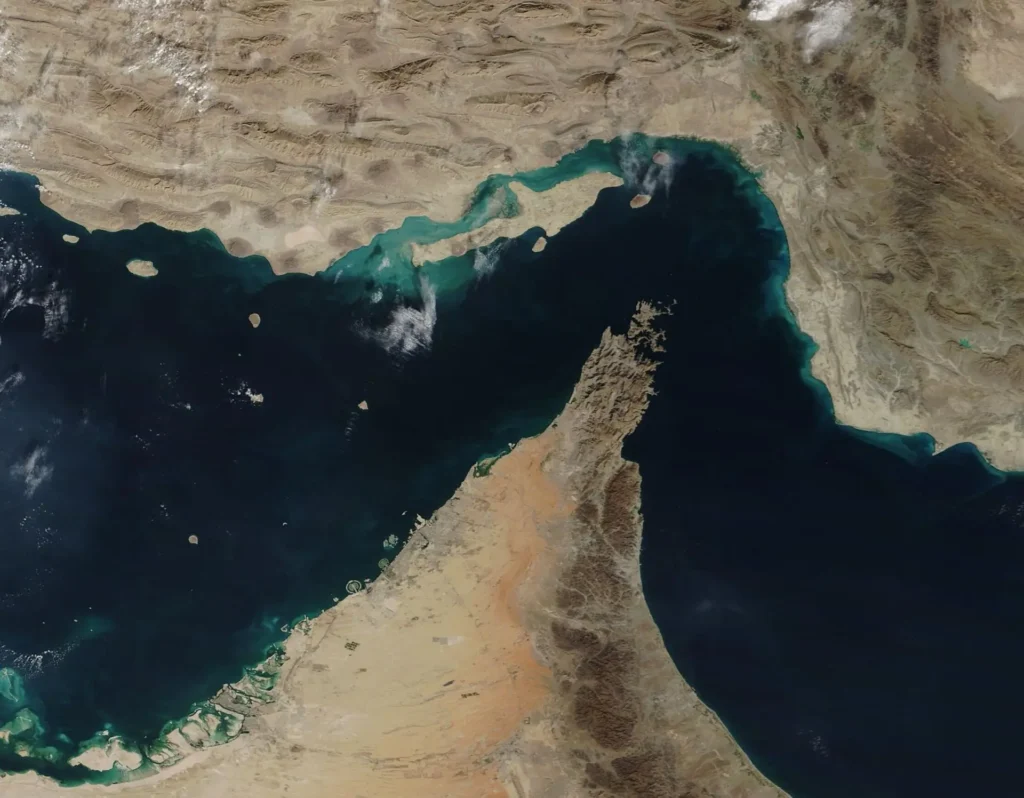
Iran’s army chief has said the Strait of Hormuz will remain closed until Tehran’s conditions are met, in the clearest statement yet that the vital shipping lane will not reopen soon.
Major General Amir Hatami, the commander-in-chief of the Iranian Army, made the remarks on Saturday in a message marking the Army’s Strategic Navy Day, which is observed on November 28. He praised the sailors involved in the mission to keep the strategic strait closed, and said the navy was ready to confront any enemy that attacked Iran without hesitation.
What Hatami said
According to Iran’s state news agency ISNA, Hatami said the Strait of Hormuz will remain closed until Iran’s conditions are met. In a separate account of the message, carried by the Tasnim news agency, he said the closure stands under the leadership and command of the Supreme Leader, Ayatollah Seyyed Mojtaba Khamenei.
Hatami said the Iranian Navy, working alongside the country’s other armed forces, had exposed the weakness of its adversaries in the Strait of Hormuz and the Gulf of Oman. He said the navy had made the enemy taste the bitterness of repeated defeats at sea, and he praised its sailors for their part in what he called a sacred mission.
He also said the Army’s Strategic Navy considered itself obliged to strengthen Iran’s naval capabilities and to severely punish any aggressor, adding that it was determined not to relent in avenging those killed, particularly the sailors of the Dena and Jamaran.
The seven conditions
Iran has never published a single official list of the conditions for reopening the strait, but Iranian officials have described seven demands in public statements over recent months. They were restated by the parliament speaker, the foreign minister, the army spokesman and the national security council secretary.
The first three concern the American naval presence and economic pressure: an end to the US naval blockade, the lifting of oil export sanctions, and the release of frozen Iranian assets. The fourth extends the demand to all American sanctions, not only those tied to oil. The fifth requires a halt to military operations against Iran and its allies, explicitly including Lebanon, Yemen and Iraq.
The sixth demands that Washington explicitly announce the war is over. The seventh calls for full compensation for war damage, although that condition has drawn less consistent support from other Iranian officials. Together, the demands amount to a sweeping reversal of American policy, and there is no sign that Washington is prepared to meet them.
Nine months of closure
The strait has been closed since February 28, when Iran first shut the waterway. The closure has been enforced by the Revolutionary Guard and, increasingly, by the regular armed forces, whose public alignment with the campaign marks a shift from the early months, when the Guard claimed the mission almost exclusively for itself.
The closure has already had consequences at sea. The US military said on Friday it had disabled a commercial ship, the Pacific Archer, after it tried to run the American blockade from the Iranian port of Bandar Abbas. The ship was disabled in the Gulf of Oman, and its civilian crew was unharmed.
What happens next
With the strait closed for nine months and Iran’s conditions unmet, there is no obvious path to reopening. Messages between Washington and Tehran are still being exchanged through intermediaries, including Pakistan and Qatar, according to Iran’s envoy in recent interviews, but the exchanges have slowed and the proposals under review have not produced a breakthrough.
Hatami’s message makes clear that Tehran sees the closure as a success rather than a burden. For shipping, energy markets and the countries that depend on the strait, the message is that the disruption will continue for as long as Iran’s demands go unanswered, even as Ukraine secured 700 million dollars in NATO air defence funding and Saudi Arabia intercepted a Houthi cruise missile near Riyadh. The stand-off continues while North Korean launderers moved 600 million dollars through Thorchain and Binance.