
Iran’s Khamenei Demands ‘New Birth’ of the Basij Militia
Last Updated on November 27, 2026 7:59 pm by Usman
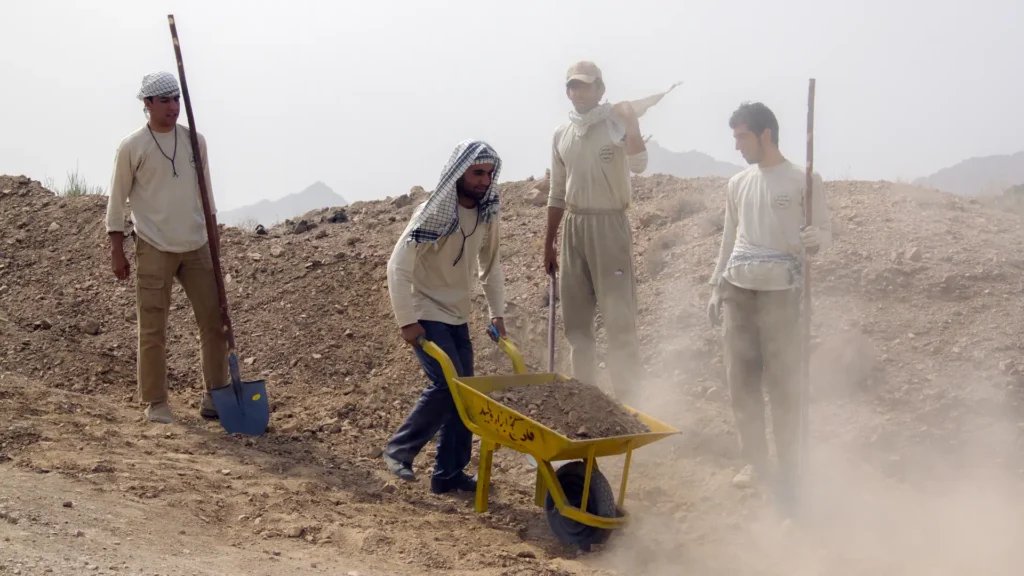
Iran’s supreme leader has called on the Basij, the vast volunteer militia linked to the Revolutionary Guards, to undergo a radical transformation and a new birth, and to work towards making every Iranian a member of the force. The message, issued on Thursday for Basij Week, is the most sweeping call yet from a leader who has barely been seen in public since taking power nine months ago.
Mojtaba Khamenei, who became supreme leader in March after his father was killed in the opening strikes of the war that began in February, delivered the appeal in writing, through a series of posts on his official X account. He urged the organisation to draw on a wider pool of supporters, including people who share its ideology but are not formal members, and to spread what he called the Basij spirit through the conduct of its own members.
The language was striking. The Basij must undergo a transformation and a new birth, he said, through bold, firm and precisely studied steps. We must move forward with long, firm, calculated strides towards realising the motto: every Iranian is a Basiji.
A force built for mobilisation
The Basij, formally the Organisation for the Mobilisation of the Oppressed, was created in the first year of the Islamic Republic as a nationwide volunteer network. It came to prominence during the eight-year war with Iraq in the 1980s, and in the decades since it has become a central part of Iran’s domestic security apparatus, involved in ideological indoctrination, neighbourhood patrols and, at moments of crisis, the suppression of protests. Its members are drawn from every walk of life, and its leadership has long claimed that its influence extends far beyond its formal membership, with soldiers, police officers, officials and parliamentarians all counting themselves part of it.
Why the call comes now
The call for expansion comes at a difficult moment for the country. Iran faces severe economic strain, continuing American sanctions and the prospect of winter energy shortages, nine months after a war that devastated parts of its military and political leadership. The government has responded with a series of mobilisation drives, including the Janfada programme, which asks volunteers to register for training and help defend the country, and a Basij energy campaign under the force’s newly appointed commander.
That commander, Hossein Taeb, took the post on 10 August. Speaking at a Basij Week gathering, he outlined ambitions that go beyond Iran’s borders, saying the next stage in the organisation’s development would be to spread its ideology internationally. The supreme leader’s message and the commander’s speech together point in the same direction: a force that is to grow larger, reach deeper into society and project its ideas further abroad.
A leader who stays out of sight
One detail of the announcement stands out. Khamenei, the third supreme leader of the Islamic Republic, has yet to appear in public since taking the role. His call was issued in writing rather than in person, and his absence has become one of the defining features of his leadership. Where his father was a constant public presence, the son governs through statements, and the Basij message is the latest example.
That distance makes the message harder to read. Is the call for a new birth a sign of confidence, an attempt to rebuild a force that was damaged in the war, or a recognition that the leadership needs a broader base of support as it faces economic hardship and the threat of further conflict?
For now, the direction is clear. The organisation is to be remade, enlarged and pushed into every corner of Iranian life, with the stated goal that every citizen should consider themselves a member. Whether that ambition is achievable is another question, but the call itself shows how the leadership intends to govern: not by narrowing its base, but by trying to widen it. Jared Kushner has confirmed US-Iran talks, with Trump keeping his options open, while Iranian women on death row have drawn protests and appeals.