
France Protest Turnout Falls Sharply As Marches Stay Calm
Last Updated on November 29, 2026 8:17 am by Sara
Turnout fell sharply at largely peaceful demonstrations across France on Saturday, as the weekly Saturday mobilisations that have run since October showed signs of losing momentum.
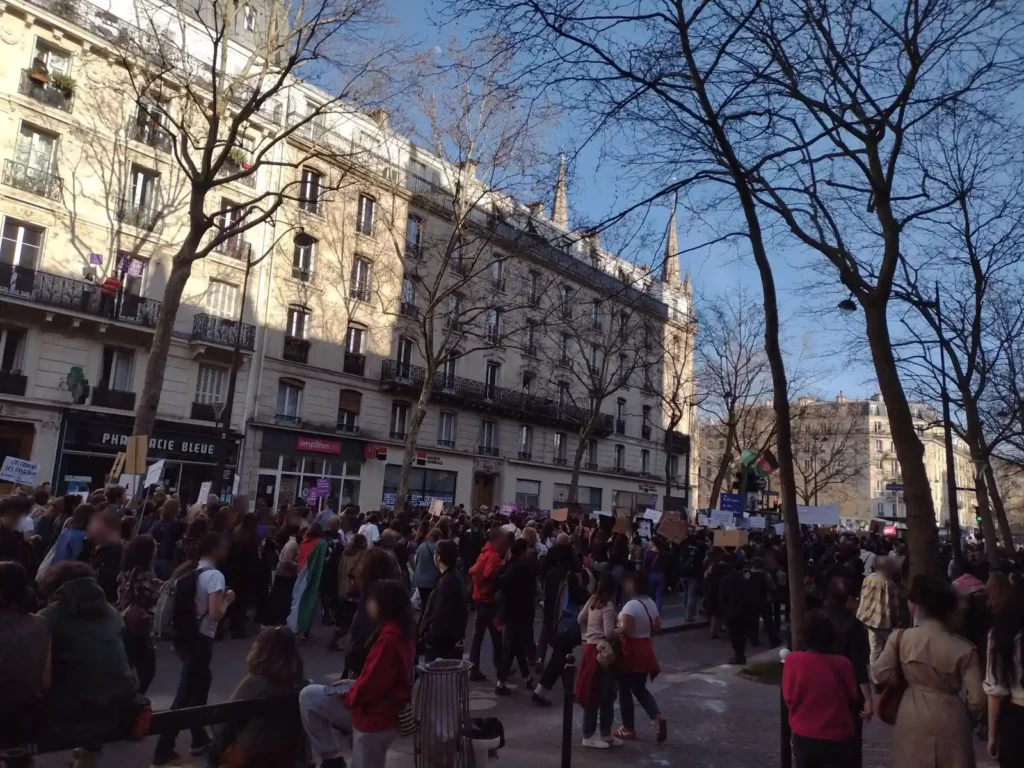
The Interior Ministry said 44,500 people took part in protests around the country, including 12,500 in Paris. That compared with 82,500 across France, including 21,500 in Paris, for the previous protest on 21 November, a fall of almost half in the space of a week.
The marches were held over violence against women, the cost of living and student rights, and took place in more than thirty cities. About 70,000 security forces were deployed across the country to ensure the protests took place safely and to deter disorder, and the day passed largely without serious incident.
Two marches through Paris
In Paris, two separate marches proceeded along different routes, reflecting tactical divisions among the organisers. The feminist collective NousToutes marched from Place de la Republique to Nation, while the feminist strike movement and allied unions and associations marched from the Pantheon to Place d’Italie.
Both marches drew crowds carrying placards against gender violence and the rising cost of living, and both ended peacefully. Organisers put the turnout higher than the official count, as they have at every mobilisation, but the gap between the ministry’s figures and the organisers’ claims has become a familiar feature of the Saturday protests.
The decline follows a steady fall from the first mobilisation on 17 October, when the ministry counted 550,000 people nationwide. The counts have dropped week by week since, from 146,000 on 7 November to 106,000 on 14 November, then 82,500 and now 44,500.
Violence in Biarritz
Sporadic acts of violence were reported, notably in the southwestern city of Biarritz, where seven police officers were injured. The incident was the exception on a day that the authorities described as largely peaceful, and no major disorder was reported in Paris or the other large cities.
The heavy police presence, with 70,000 officers deployed, reflects the government’s determination to keep the marches under control after earlier protests in the autumn produced clashes. The scale of the deployment itself has become a talking point, with critics questioning whether such numbers are needed for demonstrations that are now drawing far smaller crowds.
A movement losing steam
The falling numbers raise questions about how long the Saturday mobilisations can sustain themselves. The protests began as a broad movement against the cost of living and violence against women, drawing hundreds of thousands in their first weeks, but the steady decline suggests that many of those who marched in October have stopped coming.
Organisers insist the movement is not over, pointing to the dozens of cities where marches still took place and to the breadth of the issues involved, from student rights to household budgets. They argue that the counts understate the true level of support, and that the protests will continue into the winter.
For now, though, the figures tell their own story. A movement that once filled the streets of Paris with more than 100,000 people now draws 12,500 in the capital, and the government will be hoping the trend continues. Whether the marches fade away or find a second wind may depend on whether the cost of living pressures that brought people out in the first place begin to ease. The protests are part of a restless picture across Europe, as protests in Tirana demand the Albanian prime minister’s resignation, Spain votes in a snap general election, and Taiwan’s voters back a nuclear referendum.