
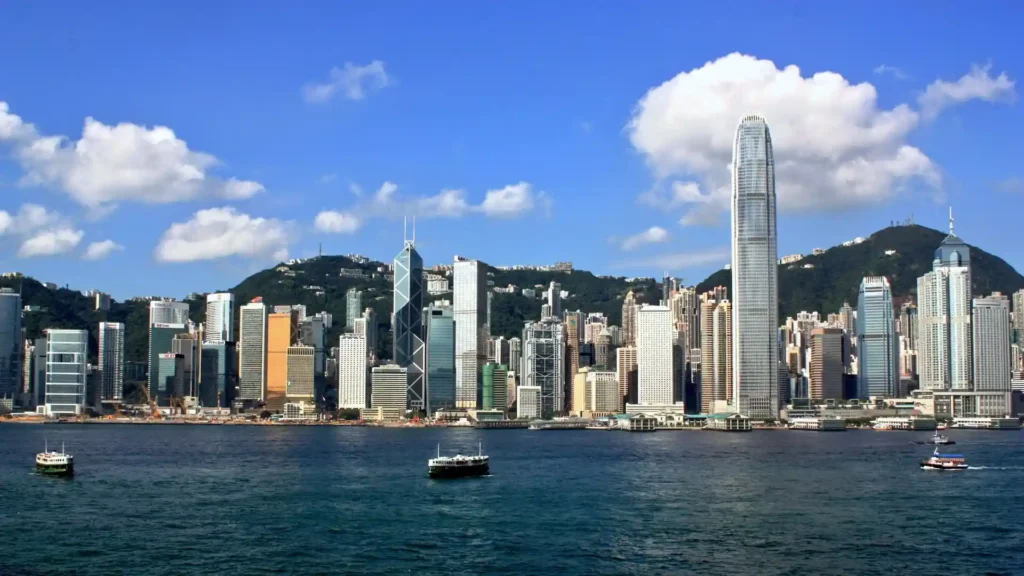
Hong Kong Swaps Data Centre Megawatts For AI Capital Power
Last Updated on November 29, 2026 7:38 pm by Sara
Hong Kong has lost the race for data centre megawatts, and it no longer seems to care. The city has officially fallen out of the global top 10 for data centres in 2026, yet it has quietly re-engineered itself into something its rivals cannot match: mainland China’s indispensable semiconductor re-export lifeline, its primary offshore AI capital-markets conduit and a common-law regulatory sandbox for cross-border financial AI.
Judging Hong Kong’s role in the global semiconductor and AI competition by physical server-farm megawatts misses a far deeper structural transformation. Far from being sidelined, the city has turned a retreat from hosting mega-clusters into a different kind of dominance, one measured in trade flows and capital rather than concrete and cooling towers.
The numbers behind the pivot
The scale of the trade pivot is visible in official customs figures. According to Hong Kong Census and Statistics Department data and trade analyses, semiconductors re-exported through Hong Kong to mainland China reached 124 billion US dollars in the first five months of 2026 alone, accounting for a record 52 percent of China’s 239 billion dollar total chip imports, up from roughly one-third a decade ago.
By September, monthly semiconductor exports hit an all-time high of 345.7 billion Hong Kong dollars, about 44.15 billion US dollars. Meanwhile, electronics, led by AI processors and memory devices, expanded to 80.1 percent of Hong Kong’s total merchandise exports in the first seven months of the year, powering the city’s fastest monthly export growth in seven decades.
Why the server farms moved on
Hong Kong’s retreat from physical mega-cluster hosting reflects hard economic and regulatory math rather than policy neglect. In Cushman and Wakefield’s 2026 Asia Pacific Data Centre Construction Cost Guide, Hong Kong ranks among the region’s five most expensive build markets alongside Tokyo, Singapore, Seoul and Sydney.
Once Washington folded Hong Kong into mainland China’s semiconductor export-control perimeter and barred frontier AI accelerators from entering the territory, global cloud operators had little commercial reason to build their biggest campuses there. In CBRE’s 2026 Asia Pacific Data Centre Trends and Outlook, Hong Kong’s active data centre capacity reached 687 megawatts with 653 megawatts in upcoming supply, supported by resilient enterprise, financial institution and AI inference demand.
The chip lifeline
As of the first quarter of 2026, Hong Kong hosts approximately 58 operational colocation data centres, according to CBRE. A further 653 megawatts sits in the development pipeline, meaning the market could nearly double in power terms by 2030, yet most of that supply is already spoken for before it opens, and new entrants face multi-year waits simply to secure power allocations.
The market was valued at 3.62 billion dollars in 2025 and is projected to reach 5.81 billion dollars by 2031, a compound annual growth rate of 8.2 percent. Some forecasters are considerably more bullish, with IMARC Group projecting the market reaching 21.3 billion dollars by 2034.
Priced out, but plugged in
The clearest signal of how supply and demand have shifted comes from pricing. According to Structure Research, wholesale leasing prices have risen by approximately 90 percent since the start of 2026, driven almost entirely by surging demand from Chinese technology companies deploying AI inference workloads in Hong Kong. Wholesale prices now reach as high as 180 dollars per kilowatt, and CBRE confirms retail colocation rates reached 295 dollars per kilowatt per month, up from 270 a year earlier.
Structure Research estimates that 90 percent of recent leasing deals in Hong Kong have been concluded with Chinese tenants, from household names like ByteDance to a new wave of AI start-ups emboldened by the global success of DeepSeek. Hong Kong may have lost the megawatt race, but it has won the trade that matters more, as Nvidia’s Blackwell chips reached Shanghai, Apple tied Gemini to Siri’s private cloud compute, and Bitcoin ETFs suffered record 5.39 billion dollar outflows in November.