
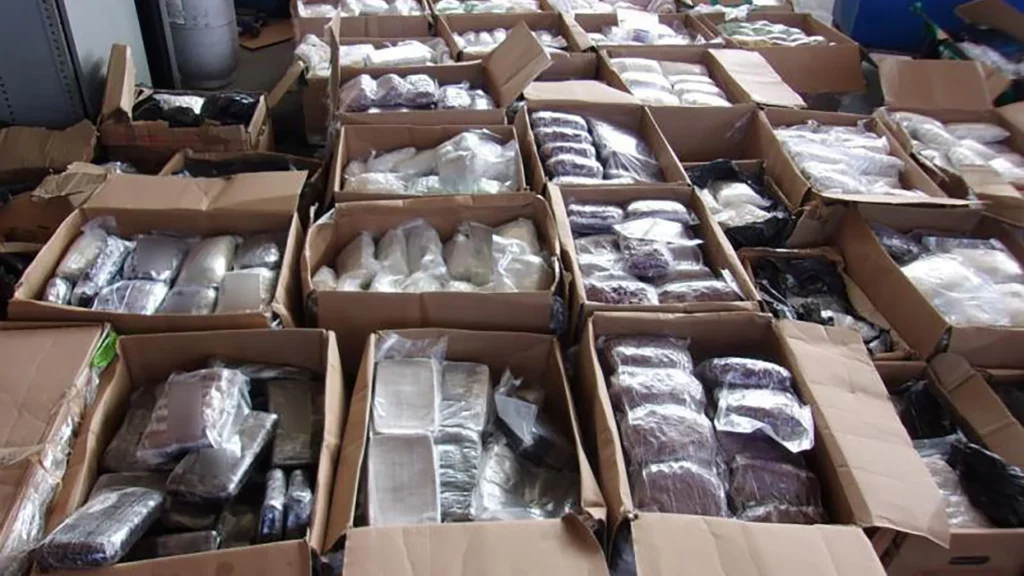
DEA Let 1.4 Million Fentanyl Pills Go Unseized, AP Finds
Last Updated on November 27, 2026 10:36 am by Ayesha
Agents from the United States Drug Enforcement Administration watched at least 1.4 million counterfeit fentanyl pills move through hotels, apartments and storage units without seizing them, according to a major Associated Press investigation published this week.
The pills were trafficked between August 2024 and April 2025 while agents closed in on what officials called the largest fentanyl bust in American history. The AP based its count on thousands of pages of court documents, investigative records, detailed wiretap reports and 12 hours of DEA surveillance footage.
Almost all of those pills remain unaccounted for. The tally does not include drug deals mentioned in the records that had no specific pill count, or deals that were not watched by the DEA, so the true figure could be higher.
Watched from every angle
The investigation describes one Sunday in August 2024 when federal agents monitored a fentanyl deal from every angle, staking out the parking lot and lobby of an Albuquerque hotel while a surveillance plane circled overhead. A buyer arrived, met a courier, and left eight minutes later carrying a backpack holding as many as 100,000 counterfeit pain pills. Agents made no arrests that day.
It was not a one-off. The AP found that dealers moved large packages of pills in plastic bins and duffel bags through highly trafficked hotels, apartment complexes, Airbnb rentals and self-storage facilities in six states, with much of the activity centred on New Mexico.
Other shipments agents watched included 370,000 pills at an Albuquerque park and playground, and 200,000 pills ferried by couriers driving in tandem cars to a home in Santa Fe. One Extra Space self-storage unit stocked with fentanyl was opened nearly 500 times.
The target was an alleged trafficking ring led by Heriberto Salazar Amaya, a 38-year-old Mexican national, which prosecutors say generated as much as $2 million a month in sales. Salazar Amaya was arrested in April 2025 and has pleaded not guilty. His trial is scheduled for next year.
A tactic called letting drugs walk
The DEA has at times allowed traffickers to keep operating under strict surveillance when agents suspect they are moving drugs, so as not to spook bigger targets. The strategy is known in law enforcement as permitting drugs to “walk”, and it has long been used with cocaine, heroin and marijuana as well as fentanyl.
The agency has said its decisions in this case were lawful and coordinated with federal prosecutors, and it denied ever knowingly allowing the trafficking of fentanyl.
The new findings contradict that denial, and the fallout has been wide. The AP’s reporting has prompted a congressional oversight inquiry, a criminal investigation by New Mexico’s attorney general, a Justice Department inspector general review announced in August, and a $153 million administrative claim filed by the city of Albuquerque on 19 November.
Two milligrams of fentanyl can be a lethal dose for most people, and laboratory testing has found that seven out of every ten pills seized by the DEA contain a lethal dose. The AP did not link any specific overdose or death to the pills that went unseized, but the scale of the trade is stark: the DEA seized more than 47 million fentanyl-laced counterfeit pills in 2025 alone.
Why it matters
Fentanyl remains the deadliest drug threat in the United States, and the investigation raises hard questions about the balance between building a big case and stopping poison from reaching the streets. Agents waited eight months between that first watched hotel deal and the takedown, and in that time more than a million pills slipped through.
No court or oversight body has publicly found that any agent broke the law. But with a federal inspector general review, a state criminal investigation and a nine-figure city claim all open, the DEA’s decisions in New Mexico will be examined for a long time to come. The Justice Department has separately carried out its largest scam crackdown, charging 800 defendants, while authorities in Nigeria uncovered a meth lab worth $227 million — a reminder that the drug trade the DEA is fighting stretches far beyond one American city.