
Ukraine Sinks Russian Warship in Libya in Long-Range Strike
Last Updated on November 26, 2026 11:49 am by Bilal
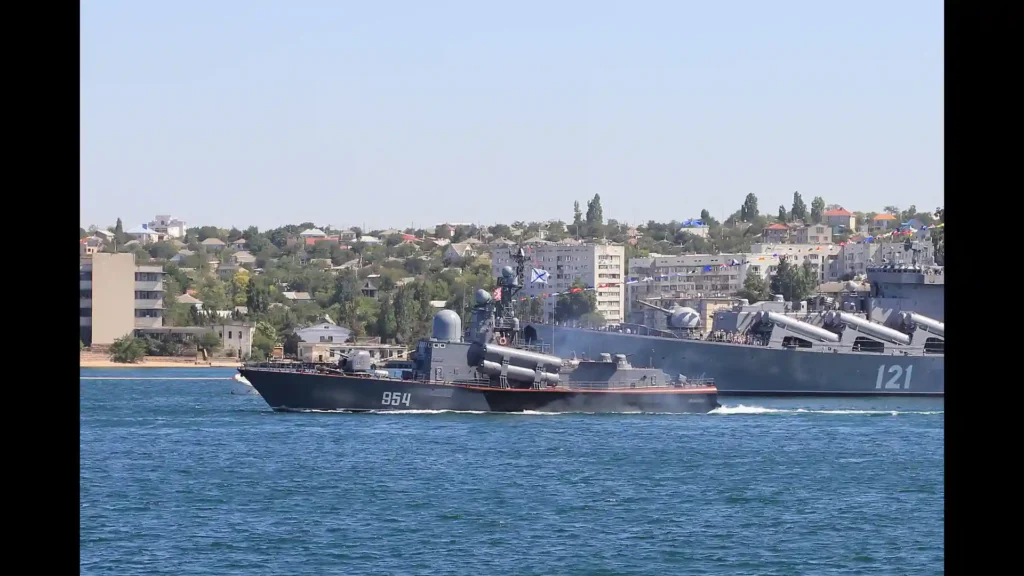
Ukraine has said it carried out a long-range naval drone attack on a Russian warship docked in Libya, sinking the vessel at a naval base in the eastern city of Benghazi.
President Volodymyr Zelenskyy said on Monday 23 November that Ukrainian forces were behind the strike, which had taken place the day before. He described the operation as exemplary, saying seven Ukrainian-made naval drones were used in the attack on the corvette Merkury.
The strike took place about 1,900 kilometres from the front lines in Ukraine. The distance makes it one of the longest-range attacks of its kind since the war began, and it shows how far from home Ukrainian forces are now able to reach Russian military targets.
What happened at the Benghazi base
According to Kyiv, the seven naval drones struck the Merkury while it was docked at the Benghazi naval base, and the warship sank. A Ka-27 helicopter that was aboard the vessel was destroyed in the attack, Ukraine said.
A second strike hit the Russian cargo ship MV Angara off Benghazi, according to Ukraine. Kyiv says the Angara was carrying weapons, although no independent confirmation of the cargo has been published.
Satellite imagery from Vantor and Planet Labs published after the attack appears to show the Merkury capsized and partly submerged beside the quay where it had been moored. The images have become the clearest public evidence so far of the damage to the vessel.
Two Libyan sailors die and Haftar forces vow a response
Two Libyan naval personnel died on 24 November of wounds they suffered in the attack, Libyan officials said. Their deaths brought the conflict in Ukraine directly into a Libyan port, and into a country that has itself been divided by years of fighting.
The eastern-based Libyan National Army, the forces loyal to Khalifa Haftar, vowed retaliation after the strike. The Benghazi base sits in territory under their control, and the attack on a foreign warship in their port is a serious challenge to their authority over the area.
Libya has been split between rival governments and armed groups since 2011, and foreign powers have long competed for influence there. Russia has built up a military presence in the east of the country, and the arrival of its warships in Libyan ports has drawn attention well beyond the region.
Kyiv calls the strike self-defence
Ukraine’s Foreign Ministry spokesman, Heorhii Tykhyi, said on 24 November that the strikes were an act of self-defence under Article 51 of the United Nations Charter. The article gives states the right to defend themselves against an armed attack.
By framing the operation in those terms, Kyiv is arguing that a Russian warship is a legitimate target wherever it is found, because Russia is waging war against Ukraine. The argument is likely to be tested in the weeks ahead, as other governments weigh in on whether an attack in a third country’s port falls within the bounds of self-defence.
The strike also raises questions for Libya itself. The attack took place in a port controlled by one Libyan faction, killed Libyan sailors, and has now drawn the country’s rival authorities into a dispute that began far from their shores.
Russia silent as a joint inquiry begins
Russia has not confirmed the loss of the Merkury, and has said little in public about the attack. Libya and Russia have opened a joint investigation into what happened at the base.
For now, the confirmed facts are the sinking of a Russian corvette, the destruction of a helicopter aboard it, the reported strike on the cargo ship Angara, and the deaths of two Libyan sailors. What happens next will depend on the findings of the investigation, and on whether the eastern Libyan forces carry out the retaliation they have promised. More coverage of the war can be found in our World section, with wider political coverage in Politics.