
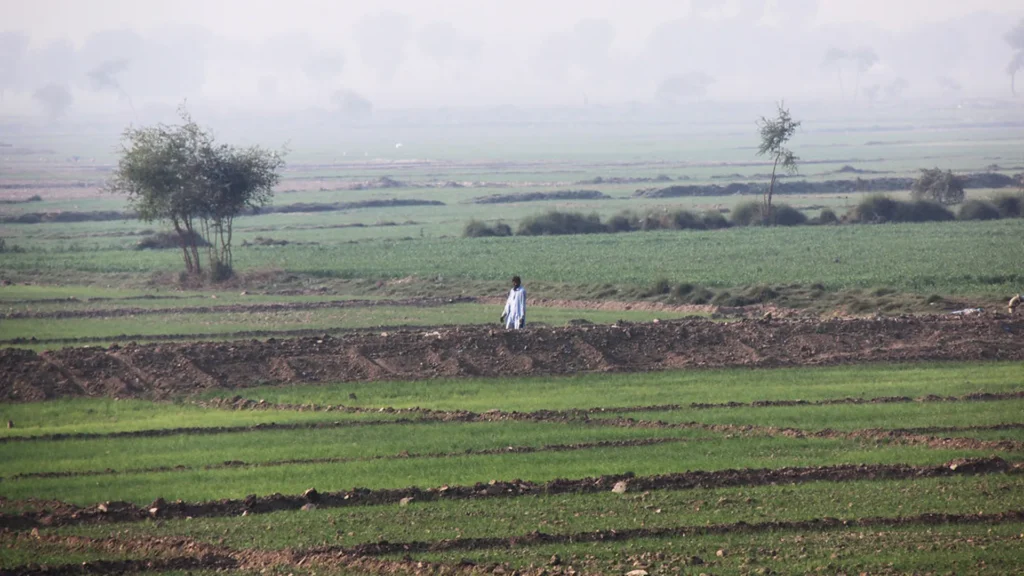
ADB Approves $468 Million in Loans for Pakistan Farming
Last Updated on November 27, 2026 6:18 pm by Muhammad
The Asian Development Bank has approved two loans worth 468 million dollars to improve water and farming in Pakistan, in a package aimed at helping hundreds of thousands of people cope with a changing climate. The bank announced the financing on Friday, saying it would strengthen community resilience, boost rural livelihoods and improve food security for about 728,000 people in two provinces.
The money is split between two projects, one in Khyber Pakhtunkhwa and one in Punjab, and both are designed around the same problem: Pakistan’s farmers are increasingly at the mercy of weather they cannot predict. Floods, droughts and shifting rainfall patterns have made harvests less reliable, and the bank’s loans are meant to give farming communities the infrastructure they need to keep producing through the shocks.
Both loans are concessional, which means they carry softer terms than commercial borrowing, with lower interest rates and longer repayment periods. That matters for a country that is already carrying heavy debts and needs to spend on climate adaptation without adding to its fiscal strain.
Two loans, two provinces
The larger share of the money goes to Punjab. A loan of 260 million dollars will fund the Integrated Hill Torrent Management Project, which is designed to deal with one of the province’s most destructive natural hazards: flash floods that pour down from the hills after heavy rain.
The second loan, worth 208 million dollars, is for the Khyber Pakhtunkhwa Resilient Irrigated Agriculture Livelihoods Development Project. It will help farmers in the districts of Nowshera, Swabi and Upper Chitral to increase their productivity and their incomes, through irrigation systems built to withstand disasters and modern farming technology. The project will construct and rehabilitate irrigation channels so that water reaches fields reliably, even when the weather does not cooperate.
The two projects are complementary. Punjab’s scheme is about managing too much water when it arrives all at once, while Khyber Pakhtunkhwa’s is about making sure water is available when farmers need it. Together, they cover the two extremes that climate change is making more common: floods on the one hand, and unreliable water supplies on the other.
Why the money matters
Agriculture is the backbone of Pakistan’s economy and the main source of income for millions of rural families, most of them small farmers. When a flood destroys a crop or a drought withers it, the damage is not just economic: it threatens the food supply of entire communities and pushes families deeper into poverty.
The timing is significant. Pakistan has suffered repeated climate disasters in recent years, including devastating floods that damaged crops, homes and infrastructure across the country. Each disaster has underlined the same lesson: the farming system needs to be rebuilt to withstand shocks, not just repaired after them. The ADB’s financing is part of that longer effort, funding the kind of infrastructure that takes years to build but protects livelihoods for decades.
Climate pressure on farming
The bank’s country director for Pakistan, Emma Fan, said the projects would make a significant contribution to strengthening food security while responding to growing environmental pressures and the impacts of the changing climate. Her comments reflect a shift in how development lenders think about agriculture in South Asia: it is no longer just about growing more food, but about growing it in a way that survives the weather.
For the farmers in Nowshera, Swabi and Upper Chitral, the practical benefits are straightforward: irrigation that works, water that arrives when it is needed, and farming methods that can cope with a hotter, less predictable climate. For the communities in Punjab’s hill areas, the benefit is protection from floods that have repeatedly swept through their fields and villages. In both cases, the money is being spent on the unglamorous infrastructure, canals, drains, retention ponds and flood defences, that makes the difference between a bad season and a catastrophe. India says its trade deal with the United States is nearing completion, while the European Commission is moving to fine Bulgaria over its budget deficit.