
Boy, 7, Takes First Steps With Robotic Exoskeleton Help
Last Updated on November 29, 2026 3:50 pm by Bilal
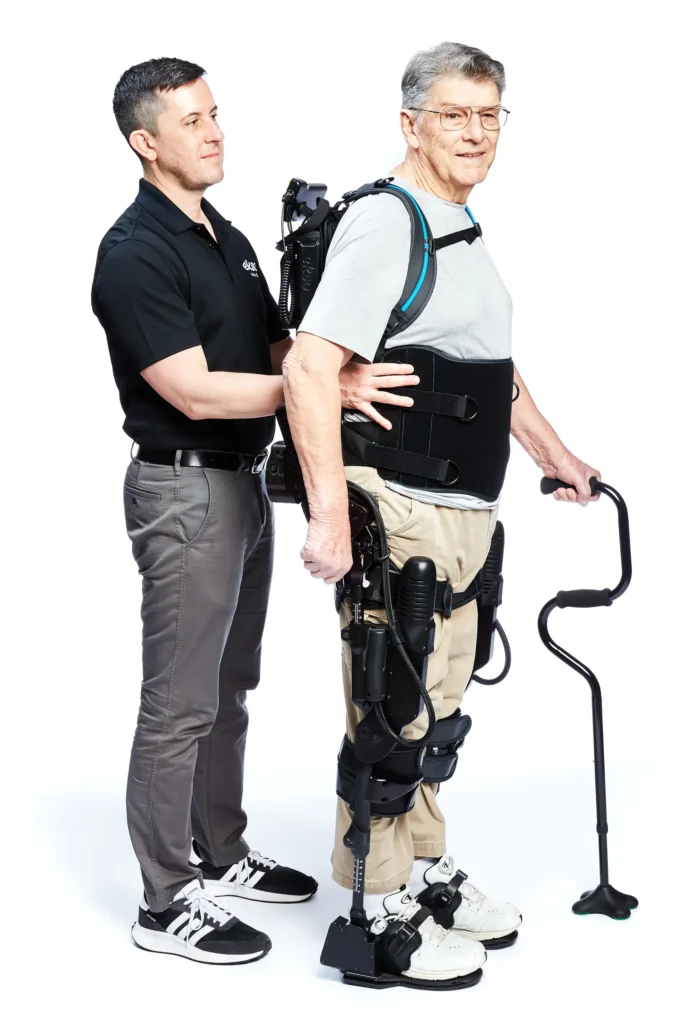
A seven-year-old boy has taken his first steps with the help of a robotic exoskeleton, in a moment his family described as the one they had waited his whole life for. Ellison Fishwick, from Shrewsbury, walked for more than 20 minutes outside during a trial at a special clinic in Wales, taking more than 1,000 steps.
Ellison has a rare form of drug-resistant epilepsy which has affected his strength and his development. He was diagnosed when he was just seven weeks old, two weeks before the first coronavirus lockdown, and he experiences up to 100 seizures a day. He has never been able to walk or talk, and his parents had watched other families share their children’s first steps, wondering whether it would ever be possible for them.
A device from Canada
The walking frame, which has robotic legs attached, was developed by Trexo Robotics in Canada in 2019. It is designed to help people with a range of mobility issues caused by conditions including cerebral palsy, muscular dystrophy and brain injury. While the frame supports the body, the robotic legs help the user move their legs in a walking motion, and the machine can be adjusted and controlled by parents and carers.
The demonstration frame became available in the UK for the first time this year. Ellison’s mother Olivia learned about it on Instagram and got in touch with the company, and the family were invited to try it at the clinic in Wales. The device also reports the user’s own effort level, confirming how hard Ellison was working to walk, and it is designed to help build strength, endurance and confidence, with health benefits that include improved posture and digestion.
The 65,000-pound question
The device costs 65,000 pounds, and it is not currently funded by the NHS. Ellison’s parents have started a fundraiser to buy one, and they believe the exoskeleton is his best chance of walking. Trexo Robotics says it understands the difficulty when devices are not locally funded and is planning to work directly with NHS authorities.
The National Institute for Health and Care Excellence notes that any new technology must go through a formal evaluation to ensure clinical effectiveness and value to taxpayers before NHS funding can be considered. For families like the Fishwicks, that process takes time they feel they do not have, and fundraising has become the only route to a device that could change a child’s life.
Why the first steps matter
For Ellison, the trial was more than a demonstration. His parents say the exoskeleton could give him lifelong independence, stronger bones and muscles, and the confidence that comes from moving under his own power. The family hope that owning a device would let him practise every day, at home and at school, rather than only during a clinic visit.
Stories like Ellison’s are also a reminder of how assistive technology is changing what is possible for children with complex needs. A frame that was a prototype in Canada seven years ago is now walking a seven-year-old boy through his first steps in Wales. As the WHO warned of measles immunity gaps in South-East Asia, England announced a curriculum overhaul covering financial literacy and misinformation, and Tetra Pak was ordered to pay $74 million in China antitrust damages, one family in Shrewsbury is counting the steps that matter most to them: more than 1,000, and counting.